
3D Study Reveals Shroud Image as Hidden Sculpture
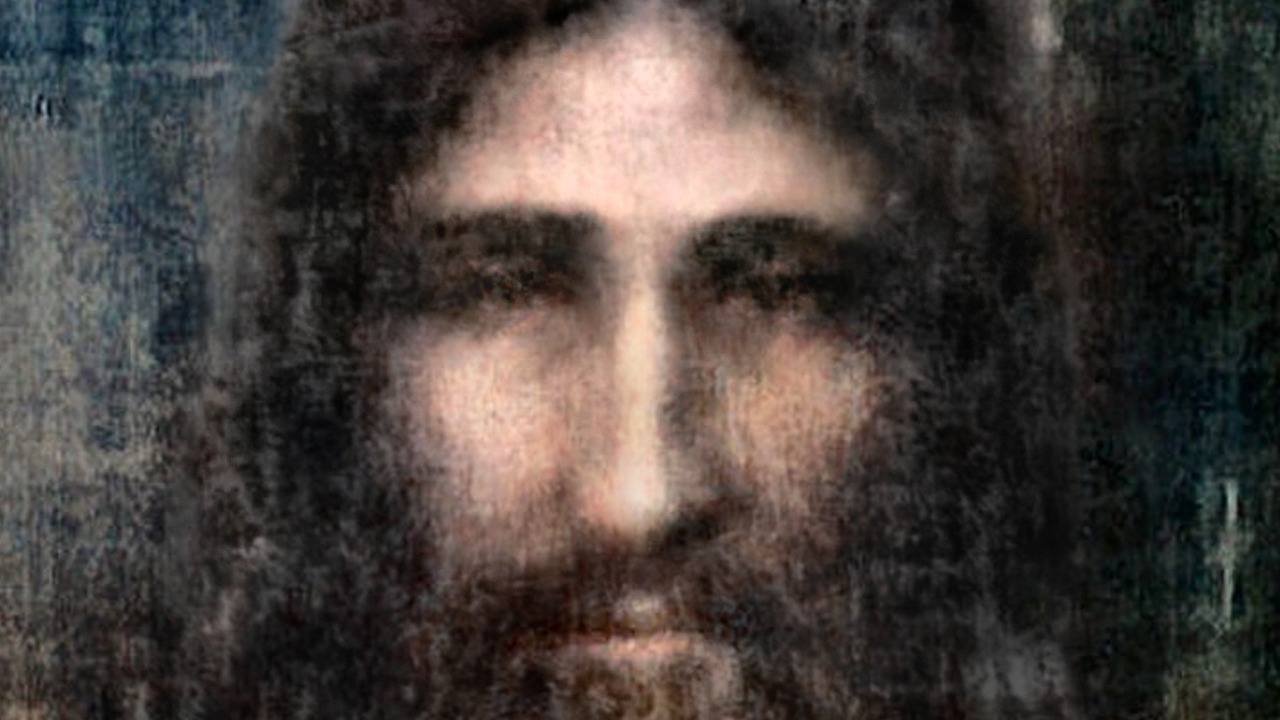
From Burial Cloth to Digital Puzzle
The Shroud of Turin has long been considered a fragile relic, a linen that once wrapped the body of a crucified man. However, recent advancements in 3D modeling suggest it may be more than just a burial cloth—it could be a carefully crafted sculpture. This new perspective challenges traditional views and repositions the Shroud as a sophisticated artwork, one that encodes a haunting image in two dimensions while adhering to three-dimensional rules.
If this interpretation is correct, the Shroud would shift from being a contested relic to a piece of art created with advanced anatomical and optical planning. This reframing does not necessarily debunk the Shroud’s significance but instead forces both believers and skeptics to consider the level of intention and technology involved in its creation.
Understanding the Shroud of Turin
Traditionally, the Shroud of Turin is described as a long linen that once wrapped the body of Jesus after his crucifixion, preserving an imprint of his wounded form. In Christian tradition, it functions as both a relic and a photograph, capturing the moment between death and resurrection. The cloth, housed in the cathedral of Turin, has drawn the attention of physicists, chemists, art historians, and theologians for over a century.
However, closer examination of the Shroud has revealed inconsistencies. Early photography showed that the faint body image behaves like a negative, with tonal values reversing when captured on film. Later studies found that the image sits on the outermost fibers rather than soaking through the cloth. These anomalies set the stage for modern digital analysis, which treats the Shroud as a three-dimensional puzzle that must obey geometry, gravity, and human anatomy if it ever truly wrapped a corpse.
What 3D Analysis Actually Measures
The term “3D analysis” might sound like a buzzword, but in this context, it refers to specific modeling techniques that test how a flexible sheet should drape over a solid form. A Brazilian 3D digital designer recently built virtual models of a human body and low relief sculptures, simulating how a cloth of the Shroud’s dimensions would fall, fold, and crease over each surface. By comparing these simulations to the actual image on the linen, he asked a crucial question: which scenario reproduces the Shroud’s pattern of contours, distortions, and shading most faithfully?
According to reports, the designer concluded that the Shroud’s image aligns more closely with a sculpted form than with a real human body, especially when treated as draped over a shallow relief rather than wrapped around a full torso. This study frames the Shroud as an analog 3D print, where the distance between the cloth and the sculpted surface is encoded as variations in image intensity.
The Case for a Disguised Sculpture
Once you accept this premise, the Shroud no longer looks like a passive witness to a burial but rather a deliberate sculptural project. The Brazilian designer’s modeling suggests that the linen was laid over a low relief figure, with the image forming primarily where the cloth touched or nearly touched the raised surfaces. This geometry would naturally produce a front and back imprint without the severe lateral distortions expected if a sheet were wrapped tightly around a cylindrical torso or limbs.
Other technical work supports this contact-based reading. A recent paper on image formation emphasizes “3D encoding” as a distance-to-intensity correlation through contact, arguing that the tonal values on the cloth track how far each point of the linen would have been from the underlying form. This same study highlights “anatomical accuracy” and “forensic precision” in the trauma details, which aligns with what you would expect from a skilled sculptor working from devotional imagery of Christ rather than from a decomposing corpse.
How the Modeling Undermines a Real Body
The most striking part of the new 3D work is not that a sculpture can reproduce the Shroud’s image, but that a real body apparently cannot. One study compared how fabric should fall on an actual human form to the pattern seen on the linen, focusing on how the cloth would crease around the head, shoulders, and limbs. The analysis found that the expected distortions from wrapping a three-dimensional body do not appear on the cloth.
Instead, the image preserves proportions that make sense only if the linen was kept relatively flat over a shallow form, with minimal side wrapping. This means that multiple reports now state the Shroud of Turin was not laid on Jesus’ body but rather on a sculpted model, a conclusion echoed in coverage that describes how the 3D comparison “didn’t match the observed pattern” when a real human body was used as the reference.
New Findings Converge on “Art, Not Relic”
As these modeling results circulate, they are being folded into a broader scientific narrative that treats the Shroud as a work of religious art rather than a physical remnant of the crucifixion. One detailed summary of the digital work notes that the new 3D analysis suggests the Shroud image is not a miraculous snapshot of Jesus but something created as medieval religious art. This framing does not deny the object’s power but relocates its origin from a first-century tomb to a workshop where artists and patrons experimented with new ways to visualize the Passion.
Other coverage has been even more blunt, reporting that the Shroud of Turin never wrapped Jesus’ body and that it was “just art,” in the words of one summary of the study’s claims. In that account, the Brazilian designer theorizes that the cloth was engineered to evoke the trauma suffered by the Savior without ever touching an actual corpse, a conclusion that dovetails with the low relief sculpture hypothesis and the distance-to-intensity encoding described in the 3D approach paper.
What the Archaeometry Study Adds
The digital designer’s work did not unfold in a vacuum. A recent peer-reviewed study published in the journal Archaeometry also used 3D models to test whether the Shroud’s image could plausibly come from a real human body. That paper, discussed in a technical forum, concluded that the cloth’s image is more consistent with a controlled artistic setup than with the messy realities of a wrapped corpse. The convergence between the designer’s simulations and the peer-reviewed modeling gives the sculptural hypothesis a firmer scientific footing.
In practical terms, the Archaeometry work reinforces three key points. First, the cloth’s front and back images line up in ways that are difficult to reconcile with a body that would have shifted under its own weight. Second, the absence of side images and the limited distortion of facial features argue against full wrapping. Third, the intensity of the image appears to track the notional distance between cloth and form, exactly what you would expect if the linen had been draped over a sculpted figure and treated with some medium or process that recorded contact and near-contact zones.
Historical Context: A Medieval Innovation
If the Shroud is a disguised sculpture, the obvious question is when and why such an object would have been made. Historical surveys of the cloth’s public appearances note that it enters the European record in the late Middle Ages, at a time when relics and passion imagery were central to popular devotion. Within that medieval context, a low relief sculpture covered by a linen that bears a mysterious imprint would have been a powerful tool for preaching and pilgrimage.
Reports on the Brazilian designer’s work mention that the Shroud’s image has even been compared to known sculptures associated with Princess Marie José of Belgium, suggesting that artists and patrons have long experimented with sculptural models to understand or reproduce the cloth’s features. The new 3D analysis does not prove a specific workshop or patron, but it does make a medieval origin, rooted in the artistic and devotional culture of the time, look far more plausible than a first-century provenance.
Why Believers Still See a True Face of Christ
None of this means the Shroud has lost its religious resonance. For many Christians, the cloth has always been less about forensic proof and more about contemplation of Christ’s suffering. Iconographers in particular have treated the face on the linen as a template for depicting Jesus, arguing that its proportions and expression capture something essential about his dual nature as both man and God.
From that perspective, the sculptural hypothesis can even be seen as a kind of vindication. If a medieval artist used a low relief figure and a carefully managed cloth to encode a haunting image, then the Shroud becomes a testament to how seriously earlier generations took the task of visualizing the Passion. The “Anatomical accuracy” and “Forensic precision” that scientists now praise would simply reflect the same drive for realism that shaped other late medieval crucifixion scenes, only here translated into a hybrid of sculpture, textile, and what we might now call proto-photography.
Media Coverage and Public Reaction
The recent wave of reporting has amplified these scientific and devotional tensions. One broadcast summary framed the latest modeling as new findings that suggest the Shroud of Turin did not hold the body of Jesus Christ more than 2,000 years ago, emphasizing that the cloth most likely never wrapped a corpse at all. That kind of language is designed to grab attention, but it also reflects a genuine shift in how technical experts are willing to describe the object in public.
At the same time, more specialized outlets have leaned into the modeling details, explaining how 3D simulations, distance-to-intensity correlations, and forensic trauma mapping all point toward a sculptural origin. One analysis notes that the Shroud of Turin matches a medieval sculpture, not a real human body, and that 3D models hint the cloth was draped over a low relief figure rather than a corpse. Public reaction has followed predictable lines, with skeptics embracing the “just art” framing and many believers insisting that even a medieval origin would not erase the Shroud’s spiritual significance.
What This Means for the Shroud’s Future
For now, the 3D work does not close the book on the Shroud so much as rewrite its table of contents. If the sculptural hypothesis continues to hold up under scrutiny, curators in Turin will be caring not for a first-century burial cloth but for a unique fusion of sculpture, textile, and image-making that pushed the limits of medieval technology. That would place the Shroud alongside other enigmatic artifacts that blur the line between art and experiment, from camera obscura setups in Renaissance studios to the early photographic plates of the nineteenth century.
As a journalist, I find the most compelling part of this story is not whether the cloth once touched Jesus’ skin, but how much ingenuity it took to create an image that still confounds modern tools. The fact that a new 3D analysis can argue for a disguised sculpture at all is a tribute to the unknown hands that shaped the original form. Whether one sees those hands as guided by faith, artistry, or both, the Shroud’s power now lies in the tension between what the cloth appears to show and what its three-dimensional secrets are finally starting to reveal.
More from HAWXTECH.NET
Chinese satellite hits Starlink with a 2-watt laser from orbit
USGS says lava could reach 1,500 ft as thousands get ready to leave
7 Apps That Secretly Record You—and How to Delete Them
A 6.0 magnitude earthquake was just reported in the U.S.

Posting Komentar untuk "3D Study Reveals Shroud Image as Hidden Sculpture"
Posting Komentar