
4 Ways Engineers Defy Physics Laws
Challenging the Universality of Physical Laws
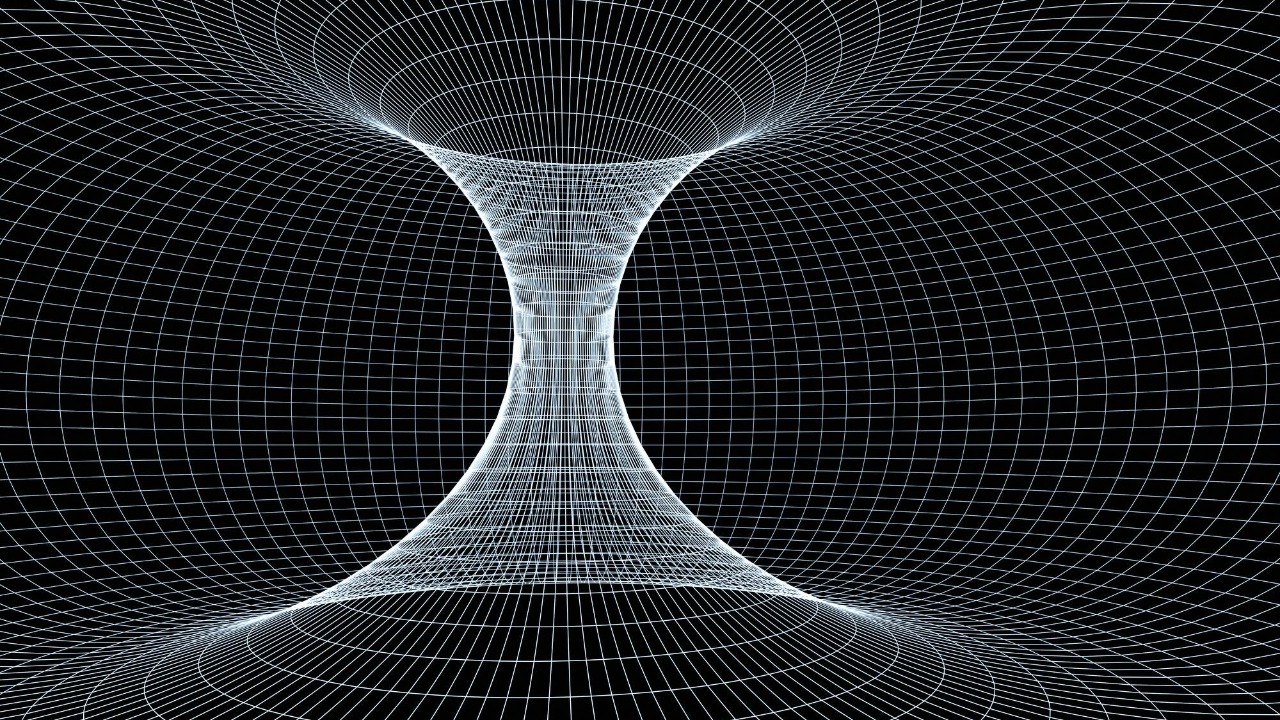
The concept of physical laws as absolute truths is being reevaluated by engineers and scientists who are exploring whether these laws apply uniformly across the universe. A key question arises: do the same equations govern every corner of the cosmos? Researchers are analyzing data from distant galaxies and quasars to test if fundamental constants, such as the fine-structure constant, vary across space. If even minor changes are detected, it could have significant implications for technologies like satellite design, navigation systems, and deep-space probes.
Philosopher Nancy Cartwright has suggested that powerful explanatory laws in physics may not always reflect reality accurately. She argues that these laws are often idealizations that hold only in controlled environments. Engineers are beginning to adopt this perspective, treating constants like the elementary charge or the speed of light as measurable inputs rather than unchangeable truths. This mindset allows for the development of technologies that can adapt if future observations reveal different rules in other parts of the universe.
Alpine’s Torque Vectoring for “Lightness” in Automotive Design
Alpine's torque vectoring technology exemplifies how software can make a heavy car feel lighter. The system uses precise control of electric motors to redistribute power between wheels, creating a sense of agility without altering the car's actual mass. By overdriving an outside wheel during a turn and reducing power elsewhere, the system generates yaw moments that mimic the handling of a much lighter vehicle.
From a physics standpoint, Alpine is not breaking Newton’s laws but rather exploiting them. The technology manipulates weight transfer, tire slip angles, and available friction to reduce understeer and drag. This approach could serve as a model for future electric performance cars, where software-defined handling allows engineers to achieve sports-car-like responses in vehicles burdened by battery packs. This innovation effectively bends the perceived consequences of inertia and gravity.
Pushing Boundaries of Invisibility Cloaks Despite Physical Limits
Engineers are continuously pushing the limits of invisibility cloaks, despite the constraints imposed by nature. Metamaterials have already demonstrated the ability to bend light around small objects, and researchers have created cloaking materials that guide electromagnetic waves to make objects appear invisible from certain angles. These designs rely on manipulating how light interacts with subwavelength structures, effectively shaping the path of photons.
However, detailed calculations suggest that a human-scale cloak is nearly impossible due to the physical limitations of scattering and absorption. A cloak that works across visible wavelengths would need to be impractically thick and lossy, either dimming the scene or distorting colors. While true invisibility akin to Harry Potter’s cloak remains out of reach, partial cloaking for sensors or narrow frequency bands is still a viable area of research for defense and privacy applications.
Manipulating DNA with Light for Genomic Insights
Manipulating DNA with light offers new insights into genomic structures. On 2024/09/09, a team at Princeton reported using optically driven forces to bend DNA strands. By attaching responsive elements to the double helix, they transformed photons into tiny mechanical tools, enabling a new method to study how genomic structures fold and loop within cells.
This work treats the genome as an engineered object whose shape can be adjusted within the boundaries of molecular physics. Researchers can now impose controlled deformations and observe how regulatory regions respond, opening new possibilities for therapies that exploit the physical organization of DNA. This approach represents a subtle bending of the rules that typically keep chromosomes in their native configurations.
Additional Insights
Further exploration into scientific advancements reveals intriguing developments. Archeologists have uncovered evidence suggesting the existence of 10-foot giants in a Nevada cave. Astronomers have tracked an object entering the solar system at an unprecedented speed. Toyota's water-powered engine could potentially challenge the dominance of electric vehicles. Additionally, NASA has discovered giant underground structures on Mars, raising new questions about the planet's geological history.

Posting Komentar untuk "4 Ways Engineers Defy Physics Laws"
Posting Komentar