
Ancient Shells Emit Shocking Sounds, Revealing Lost Use
Uncovering the Secret of Ancient Conch Shells
Ancient conch shells, discovered at Neolithic archaeological sites that date back 6,000 years, have revealed a surprising use by early humans. These oddly shaped shells may have been used as tools to produce extremely loud noises, according to recent research.
The experiments conducted by archaeologists Miquel López-Garcia and Margarita Díaz-Andreu from the University of Barcelona in Spain involved simply blowing into the shells. The results were astonishing: a deafening sound recorded at up to 111.5 decibels—comparable to the noise of a car horn or chainsaw.
This innovative approach by the researchers suggests that the people who lived in the Catalonia region where these shells were found might have used them as long-distance signaling devices. This discovery opens up new possibilities about how ancient communities communicated across vast areas.
The Role of Conch Shells in Prehistoric Times
Conch shells, which are the shells of large sea snails, have been found at numerous archaeological sites. This has led to speculation about their potential uses, whether musical or otherwise. Previous experiments with these ancient shells have shown that our ancestors may have used them as horns, with the oldest known example dating back 17,000 years.
In Catalonia, many conch shells have been discovered at sites from the late 5th and early 4th millennia BCE. While some researchers believe these shells could have been used for sound production, there has been limited investigation into their specific functions.
López-Garcia and Díaz-Andreu aimed to change this by conducting a detailed physical study of 12 conch shells collected from five different archaeological sites.
How the Shells Were Used
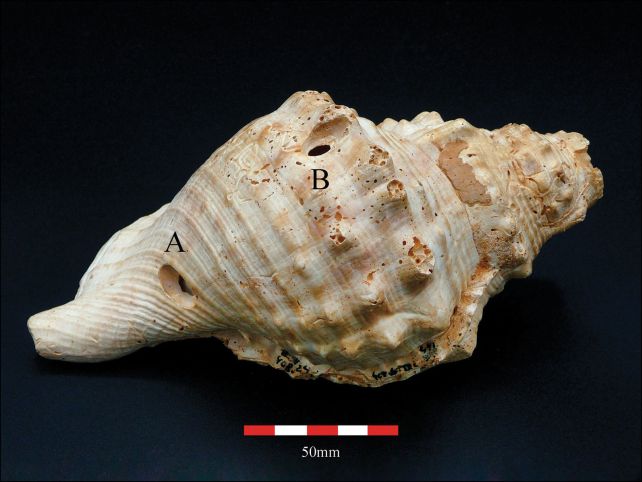
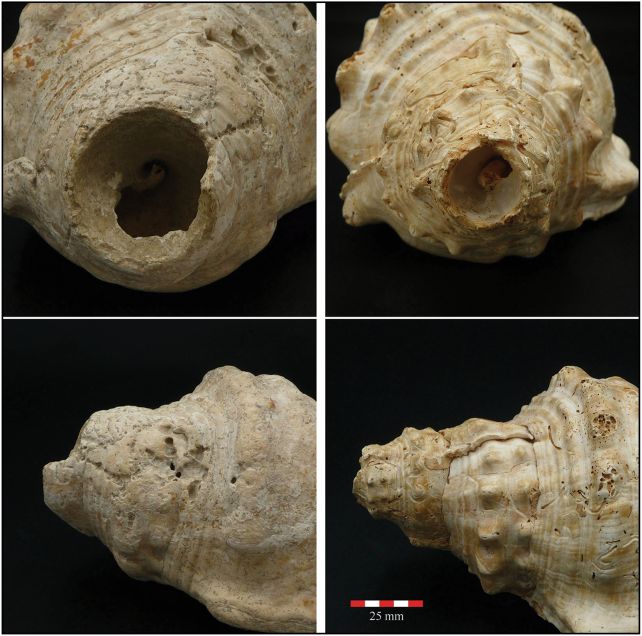
The researchers noted that all 12 shells had their apexes removed—the tippy-top whorl of the spiral structure. This removal is essential if a shell is to be used as a horn, as it creates a hole through which the user can blow.
Several of the shells also showed biological marks left by other creatures, such as worms and carnivorous mollusks. This is significant because it suggests that humans collected the shells after the original inhabitants had died, and the shells were empty. In other words, the shell itself was the desired artifact, not the snail inside, which could have been used as food.
Of the 12 shells, only eight were intact enough to test. Two of those had small holes that the researchers thought may have been deliberately made to help modify the sound's tone.
The Sounds Produced
López-Garcia, who is also a professional trumpet player, was able to get sound out of all eight shells. Seven of them produced volumes greater than 100 decibels—about the loudness of a motorcycle. He also managed to produce up to three distinct pitches in two of the shells, although the higher the note, the less stable the sound.
Using other trumpet-playing techniques, such as changing the sound with a hand and altering pitch with the mouth, also destabilized the sound. Covering up the holes on the two shells that had them had no effect, indicating that the holes were natural, not deliberately created to change the sound of the conch.
Possible Uses of the Conch Shells
Taken together, these findings suggest that while the conch shells could produce a few musical notes, their sheer volume makes long-distance communication the more plausible primary use. This would have been particularly useful for Neolithic farmers whose activities likely covered large areas.
"The shell trumpets are capable of producing high-intensity sounds and would have been highly effective for long-distance communication," López-Garcia says. "However, they are also capable of producing melodies through pitch modulation, so the possibility that these shells were also used as musical instruments with an expressive intention cannot be ruled out."
It’s even possible that the makers of these conches were experimenting with ways to treat sleep apnea. While this is speculative, it highlights the ingenuity of ancient humans in using available materials for various purposes.
Conclusion
The research, published in Antiquity, sheds light on the potential uses of conch shells in prehistoric times. These ancient artifacts may have served both practical and artistic functions, offering insight into the lives of early humans.



Posting Komentar untuk "Ancient Shells Emit Shocking Sounds, Revealing Lost Use"
Posting Komentar