
Exclusive: Hassabis Predicts AGI in a Decade
The Road to AGI: A Transformative Journey Within Reach
What if the most transformative technology in human history is just a decade away—and we’re still missing the final pieces to build it? This question underpinned Demis Hassabis’ remarks at the Axios AI+ SF Summit, where the Google DeepMind CEO outlined both the technical challenges ahead and the risks already emerging. 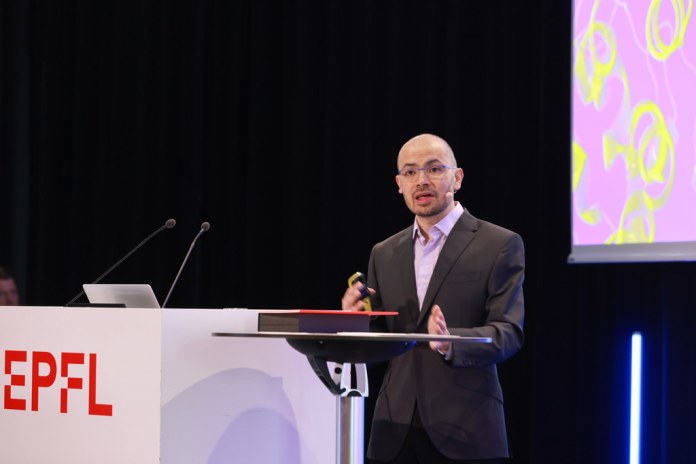
Hassabis was clear: “Quite close. I think we’re like 5 to 10 years away if you were to ask me.” However, he emphasized that current large language models, even those at the forefront like Gemini, are not yet artificial general intelligence (AGI). Scaling laws remain central—pushing model size, compute, and data to their limits—but he expects “one or two more big breakthroughs” on the order of Transformer or AlphaGo before systems can match the full cognitive range of the human brain.
Current Limitations and Future Possibilities
The limitations of today’s architectures are well-documented. Transformer-based models excel at pattern recognition and multi-modal reasoning but, as highlighted in recent technical analyses, still lack persistent long-term memory, true world modeling, and the ability to learn continuously without retraining. Even with 100k+ token context windows, their “memory” is a flat buffer, not an evolving store of experience. Researchers like Gary Marcus and Stuart Russell have argued that without richer conceptual representations and goal-setting mechanisms, scaling alone will not yield general intelligence.
Hassabis’ own view is for a hybrid path: exploit scaling to the maximum while investing in next-generation reasoning systems. DeepMind’s “thinking paradigm” builds on reinforcement learning heritage from AlphaGo, layering deliberate multi-step reasoning over neural outputs. In chess and Go, enabling this “thinking” yields performance leaps of over 600 Elo points. The latest Gemini models integrate parallel reasoning processes called DeepThink that cross-check and optimize outputs, a capability Hassabis calls “reasoning on steroids.”
Measuring the AGI Gap
The AGI gap is now quantifiable. A multi-lab framework measuring ten broad human cognitive abilities recently scored GPT-5 at 57% of AGI, with deficits in visual reasoning, world modeling, spatial navigation memory, and continual learning. Visual reasoning remains brittle: on Apple’s SPACE benchmark, GPT-5 scores 70.8% versus humans at 88.9%. World modeling benchmarks like Meta’s IntPhys 2 show only marginally better-than-chance performance. The most stubborn shortfall is continual learning—today’s models are “frozen” after training, incapable of accumulating knowledge over weeks or months without retraining. Experts see this as the one capability likely to require a genuine breakthrough rather than incremental engineering.
The Competitive Landscape
For Hassabis, the competitive context is as important as the technical one. Google’s Gemini leap has already triggered a “code red” at OpenAI, reversing the post-ChatGPT dynamic in which Google was playing catch-up. Frontier labs are converging on core capabilities—general reasoning, multi-modal understanding, coding proficiency—but diverging in strategy. OpenAI and DeepMind drive dense, generalist architectures at massive compute scales; Anthropic emphasizes safety and alignment; Meta and Mistral pursue efficiency via mixture-of-experts and open weights; Chinese labs leverage domestic data and supercomputing for rapid deployment.
The Race Against Misuse
Yet the road to AGI is not just a race for capability—it’s also a race against misuse. Hassabis warned that “catastrophic outcomes” such as AI-assisted cyberattacks on energy and water infrastructure are “probably almost already happening now,” even if current tools are not yet highly sophisticated. The U.S. Department of Energy’s CYSAT platform, designed to detect anomalies in SCADA networks for hydropower, exemplifies the kind of defensive AI he sees as essential.
As intrusion techniques leveraging AI get more sophisticated, so must detection and response systems, featuring hardened architectures, anomaly detection at the protocol level, and AI-red-teaming to preempt exploits. The scaling trajectory toward AGI will require unprecedented compute. Hassabis is in awe of the physics: “We turn sand into thinking machines,” he says, though he also recognizes a looming infrastructure challenge. Data center build-out is needed not just for training but for inference-time reasoning, where high-value tasks may justify letting models “think” for long periods. This is where energy and climate issues intersect, as the needs for power and cooling for exascale AI clusters rise.
Balancing Innovation and Responsibility
Advocates point out that AI-driven breakthroughs in areas like fusion and materials science could offset their own environmental footprint, but that equation depends on timely technical and policy alignment. It is a clear signal to investors and executives: AGI is now a definable engineering target, no longer a speculative horizon, and one with measurable gaps and a plausible 5–10 year timeline. The differentiators will be who can integrate scaling with paradigm-shifting innovations, close the last capability gaps—especially continual learning—and deploy securely in a world where the same systems that promise “radical abundance” could, in the wrong hands, disrupt critical infrastructure.

Posting Komentar untuk "Exclusive: Hassabis Predicts AGI in a Decade"
Posting Komentar