
How IBM Transformed with AI
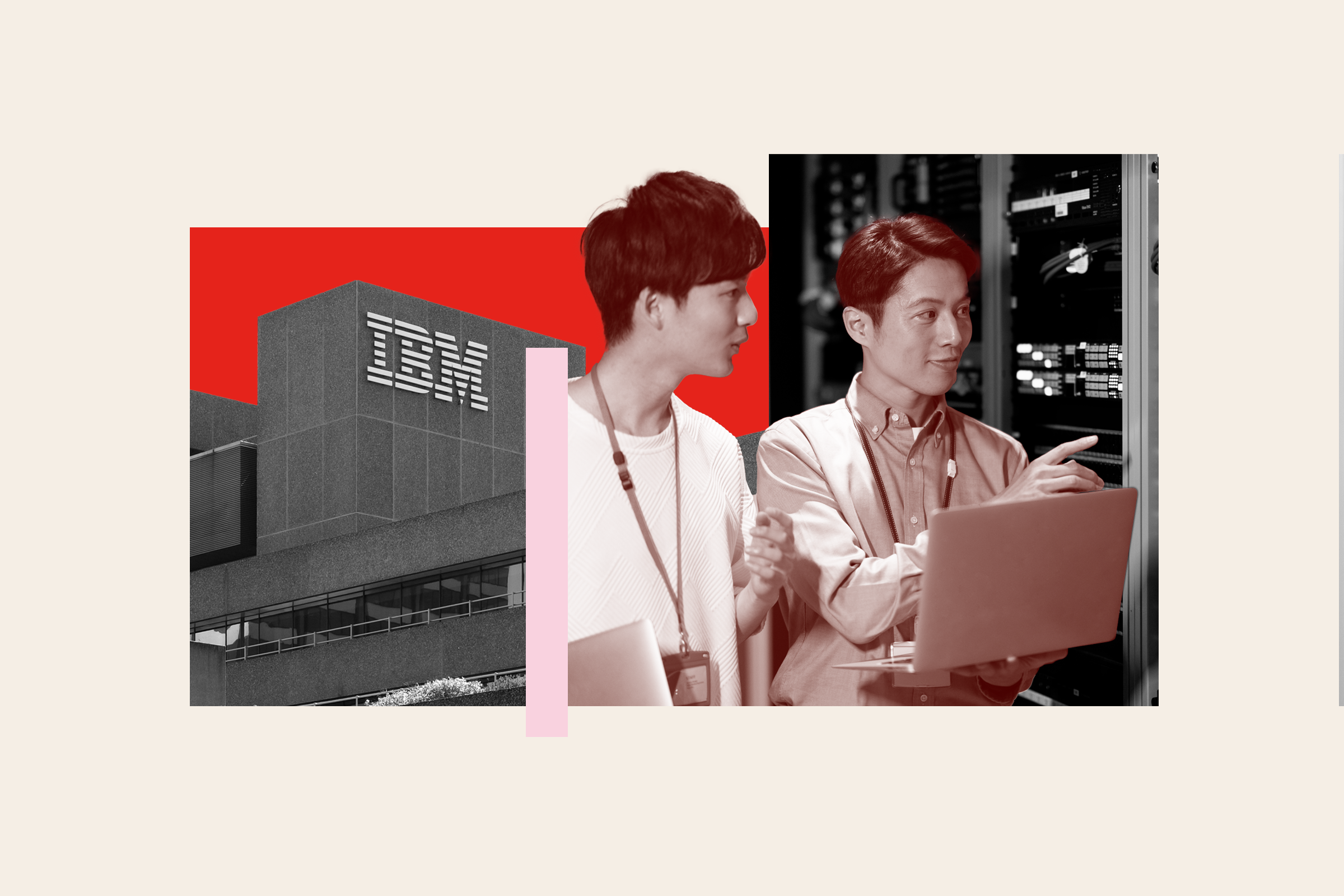
The Evolution of IBM: From Safe Bet to AI Disruptor
There is an old saying: “Nobody ever got fired for buying IBM.” For decades, this phrase was more than a wry joke—it was a reflection of the near-mythic status of Big Blue in the world of business technology. The company’s mainframes powered the world’s banks, its computers helped put men on the moon and its “business machines” were so ubiquitous that “IBM” became shorthand for “work.” But the true meaning of the phrase was always about more than just reliability and scale. It was a nodding wink in the C-suite: Play it safe, stick with the tried and true and you’ll keep your job—even if you miss the next big thing.
IBM’s history is a study in both the power and peril of incumbency. At its peak, IBM was the backbone of global commerce and the most valuable technology company in the world. But as the technology landscape shifted—first to personal computers (another IBM innovation), then to mobile and cloud computing, and now to generative AI—IBM found itself adrift.
The irony is that IBM was no stranger to AI. Its Deep Blue supercomputer famously defeated chess champion Garry Kasparov in 1997, and Watson stunned the world by winning Jeopardy! in 2011. Yet despite these headline-grabbing technological triumphs, IBM’s core business and culture remained largely unchanged. The company stagnated through the late 2010s and early 2020s, its stock price languished and its reputation as an innovator faded.
A New Era Under Arvind Krishna
Mohamad Ali, senior vice president of IBM Consulting, experienced this arc firsthand. Ali spent 14 years at IBM during its boom years, then left in 2009, taking on CEO roles at two technology firms. “We’ve been at these apexes, and then these troughs,” Ali told HAWXTECH.NET. “Once we lost a little bit of entrepreneurial spirit, it wasn’t the right place for me and I left.”
He returned to IBM in 2023 attracted by CEO Arvind Krishna’s vision for IBM’s future—and the opportunity to lead a radical transformation. Krishna had recognized that the rise of generative AI was an existential moment for the company and that incremental change would not be enough. This was not just a technology upgrade. It was an all-or-nothing bet on the future. The company needed to become its own most demanding customer, using AI to transform every aspect of its operations before selling those solutions to others.
“If we can’t be the best user of this technology, we shouldn’t be in the AI business,” Ali said. “And if we can, then not only should we be in the AI business, but we should be the leader in using AI, at least in the enterprise.”
The Client Zero Initiative
IBM’s “Client Zero” initiative was as radical as it was expansive in scope. The company decomposed its entire operations into 490 distinct workflows, identified 70 as low-hanging fruit and began building AI assistants—eventually creating over 3,000 digital workers to automate and augment tasks across the business. Every employee—from HR to finance to supply chain—was trained in AI tools and encouraged to build their own digital assistants.
The results were dramatic. So far, IBM has unlocked $3.5 billion in productivity gains and counting. Revenue growth swung from negative-3 percent to plus-5 percent over three years, outpacing the S&P 500 and S&P Tech Index. R&D investment rose from 9 percent to 12 percent of revenue. Employee engagement soared, with 150,000 participating in AI hackathons and 119,000 completing agentic AI education. And over the past year, IBM’s stock has risen 36 percent—more than doubling the gains of the S&P 500.
IBM didn’t just “buy AI.” “We didn’t just go buy a whole lot of Copilot or Gemini licenses, hand them out and say, ‘Good luck,’” Ali explained. It rebuilt its workflows, redefined roles and created a culture where employees compete to build the best digital workers. “We enabled the workforce to build the AI to solve their problems, and we gave them training—which was probably the most important thing.”
Cultural Change and Leadership Commitment
What IBM did was a transformation orchestrated from the top, with the CEO and executive team meeting weekly to drive the agenda forward. The company established a transformation steering committee, a project management office, a productivity discovery team and an employee engagement team. Progress was measured and reported quarterly, with the company controller ensuring the numbers were real.
Work itself was reimagined. In HR, for example, IBM saw a 47 percent reduction in time-to-fill positions and a 40 percent reduction in operating budget. In supply chain, 90 percent of purchase order processing was automated, saving $315 million over three years. In IT, 86 percent of top issues were addressed by AI-powered support, freeing up human talent for higher-value work.
But perhaps the most important change was cultural. IBM turned AI adoption into a grassroots movement. Employees in tax, HR and finance began building their own digital workers, competing to see who could drive the most productivity. “They don’t just feel like they’re driving productivity,” Ali says. “They feel like they’re building their skills. They’re being a vanguard of new capabilities and technologies. And they really embrace it.”
Lessons for Business Leaders
In this era of AI transformation, many business leaders today are still stuck in the old “nobody got fired for buying X” mentality. They treat AI as a checklist item—like choosing between Microsoft Office and Google Workspace. But as IBM’s experience shows, AI transformation is not about buying software; it’s about changing how work gets done.
Ali recounts a conversation with a CFO at a major telco: “He leans over to me and says, ‘I have 1,900 AI pilots and not a dime of benefit to my bottom line.’” Ali’s advice was clear: Stop treating AI as a series of isolated experiments and start with a top-down commitment to reimagining how work gets done. The real payoff comes when leadership sponsors a comprehensive approach, workflows are redesigned for human-plus-digital collaboration and employees are empowered to build and adopt new tools. Only then does AI move from hype to real impact.
IBM’s journey underscores that the hardest part of AI transformation is not the technology, but the culture. For a company of IBM’s scale and history, pivoting from a risk-averse posture to an innovator’s mindset was a monumental task. Success depended on top-level sponsorship, radical transparency, employee empowerment and a willingness to disrupt itself. IBM spun off legacy businesses, acquired open-source pioneer Red Hat and brought in outside leaders to drive change.
The Future of AI Transformation
IBM’s transformation offers a playbook for others, but it’s not a recipe that can be followed by simply buying the right tools. The real lesson is that AI is not a product—it’s a process. Success requires rethinking workflows, roles and even business models. Cultural change is non-negotiable. Without buy-in from leadership and employees, AI projects will stall or fail.
The “Client Zero” approach—using AI to solve your own hardest problems first—builds credibility and expertise before selling solutions to others. Relentless measurement of productivity, cost savings and adoption builds momentum. And investing in people—through training, incentives and grassroots engagement—is as important as investing in technology.
IBM is now applying the lessons of its own transformation to help clients drive change at scale. A striking example is Riyadh Air, Saudi Arabia’s newest national airline, launched in 2023 by the Public Investment Fund as part of the Kingdom’s Vision 2030 plan to expand its appeal for international visitors and support its ambition to become a top global tourism destination. Unlike Saudia, the country’s historic flag carrier, Riyadh Air was designed from the outset to be digital-first, aiming to serve over 100 destinations by 2030 and set new standards for guest experience and operational agility.
As Adam Boukadida, chief financial officer of Riyadh Air, put it: “We had a clear choice—be the last airline built on legacy technology or the first built on the platforms that will define the next decade of aviation. With IBM, we’ve stripped out fifty years of legacy in a single stroke.”
If the old IBM was the safe bet because it minimized risk, the new IBM is showing that the only real risk is standing still. In the age of AI, the winners will be those who are willing to tear down and rebuild—not just their technology, but their culture.
As Ali puts it, “We’re trying to be the disruptor—which is not a thing we have always done. Because if we don’t disrupt it, we know somebody’s going to disrupt it. That means us.”
The lesson for every executive: The era of “nobody ever got fired for buying IBM” may be over. But the future belongs to those willing to fire their old assumptions—and reinvent themselves for the AI age.
Cheat Sheet: Five Takeaways from IBM’s AI Transformation
- AI is not a product—it’s a process.
- You can’t just buy AI and bolt it on. Success requires rethinking workflows, roles, and even business models.
- Cultural change is non-negotiable.
- Without buy-in from leadership and employees, AI projects will stall or fail.
- Start with your own “Client Zero.”
- Use AI to solve your own hardest problems first. Build credibility and expertise before selling solutions to others.
- Measure relentlessly.
- Track productivity, cost savings, and adoption. Share results transparently to build momentum.
- Invest in people.
- Training, incentives, and grassroots engagement are as important as technology.
Correction 12/10/25 at 8:40 a.m. ET: This article was updated to correct outdated information regarding supply chain and IT support savings.
Related Articles
4 Quiet Ways AI Is Transforming the SaaS Industry
Joe Rogan Says Jesus Could Come Back as a Robot
New NATO Allies’ Arctic Laser Base Will Counter Russia and China
Start your unlimited HAWXTECH.NET trial

Posting Komentar untuk "How IBM Transformed with AI"
Posting Komentar