
I Played a 1977 Text Adventure Game and Was Surprised
A Glimpse into the Legacy of Zork
Microsoft recently made the first three Zork games open-source, a move that serves as a crucial step in preserving an essential part of gaming history. This gesture allows enthusiasts and developers to preserve, compile, and run these classics on their own machines, ensuring that this piece of digital heritage remains accessible for future generations. While it may seem like a simple act, the implications are far-reaching, especially when considering the monumental impact of the Zork series.
The original Zork was released in 1977, well before the advent of the Nintendo Entertainment System (NES) and during the height of consoles like the Atari. This places it firmly in the "vintage" category of video games, making it a rare and valuable artifact. Given its historical significance, I felt compelled to experience it firsthand.
A Surprisingly Smooth Experience
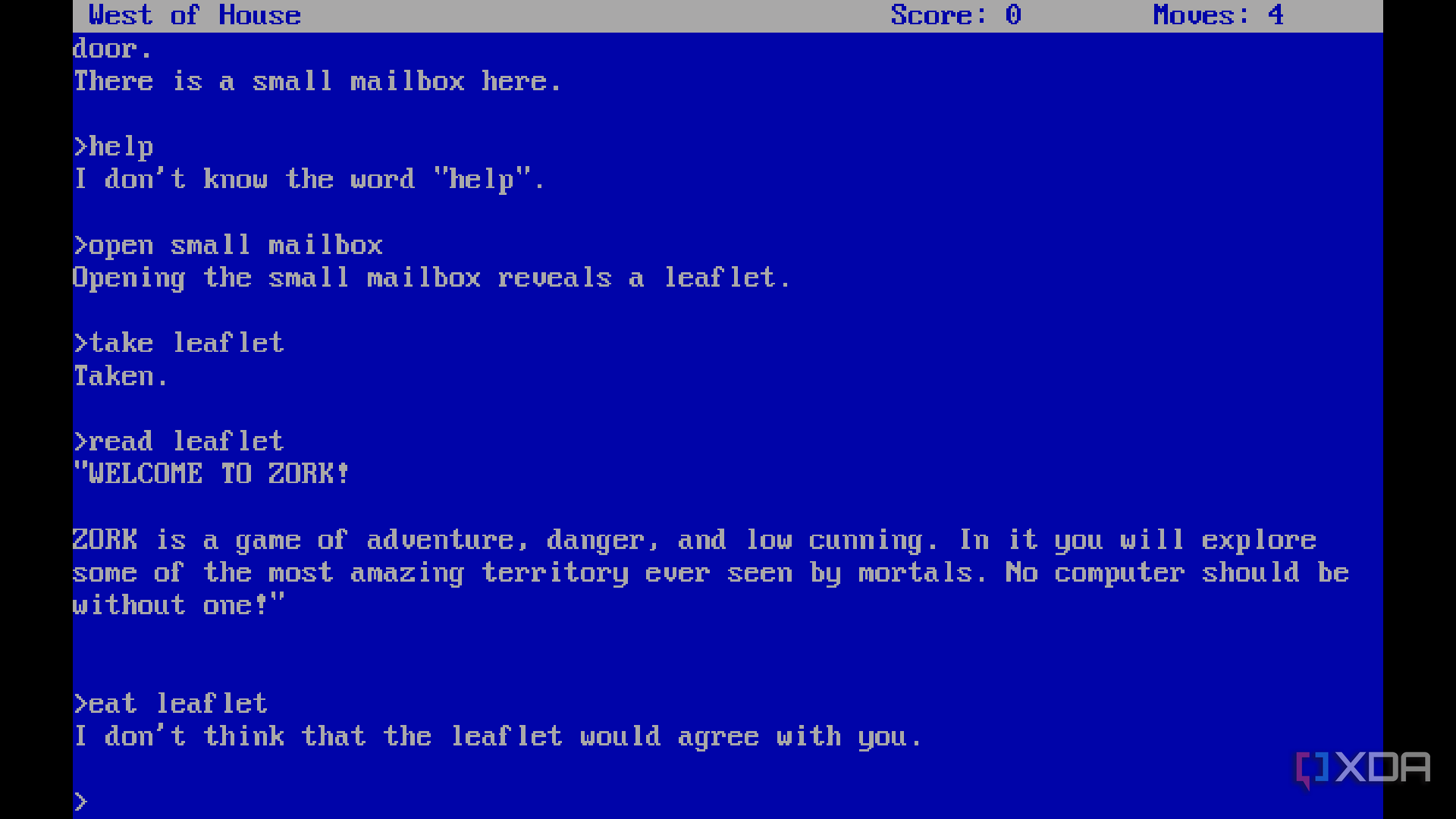
I was pleasantly surprised by how easy it was to play Zork. As the first text-based adventure game, I expected the controls to be a bit clunky or unintuitive. However, the game's engine was surprisingly solid and thoughtfully designed, allowing me to navigate the world without feeling lost or frustrated.
There were some minor issues, such as when the game instructed me to "climb down a canyon wall," which resulted in an error. After a bit of trial and error, I found that "climb down cliff" worked perfectly. Beyond those small hiccups, I had a great time exploring the world of Zork and collecting anything that wasn't nailed down.
No More Traps from the Past
When I approached Zork, I had a similar sense of caution as I did with other text-based adventures like The Lord of the Rings and The Hitchhiker's Guide. These games often featured traps that could ruin an entire playthrough if not handled correctly. For example, in The Hitchhiker's Guide, failing to feed a dog a sandwich at the start could lead to dire consequences.
However, I quickly realized that Zork didn't employ such harsh mechanics. When I climbed a tree and found a fragile bejeweled egg, I expected to need a specific action or item to retrieve it without breaking it. Instead, a simple "take egg" allowed me to collect it effortlessly. This made the game much more forgiving than I anticipated.
A Fun and Engaging Game
I expected Zork to be somewhat lacking in fun due to its age, given that it was one of the earliest adventure games. Pioneer titles often suffer from being clunky or incomplete, as they lacked the inspiration and foundation of later games. However, I found Zork to be incredibly enjoyable.
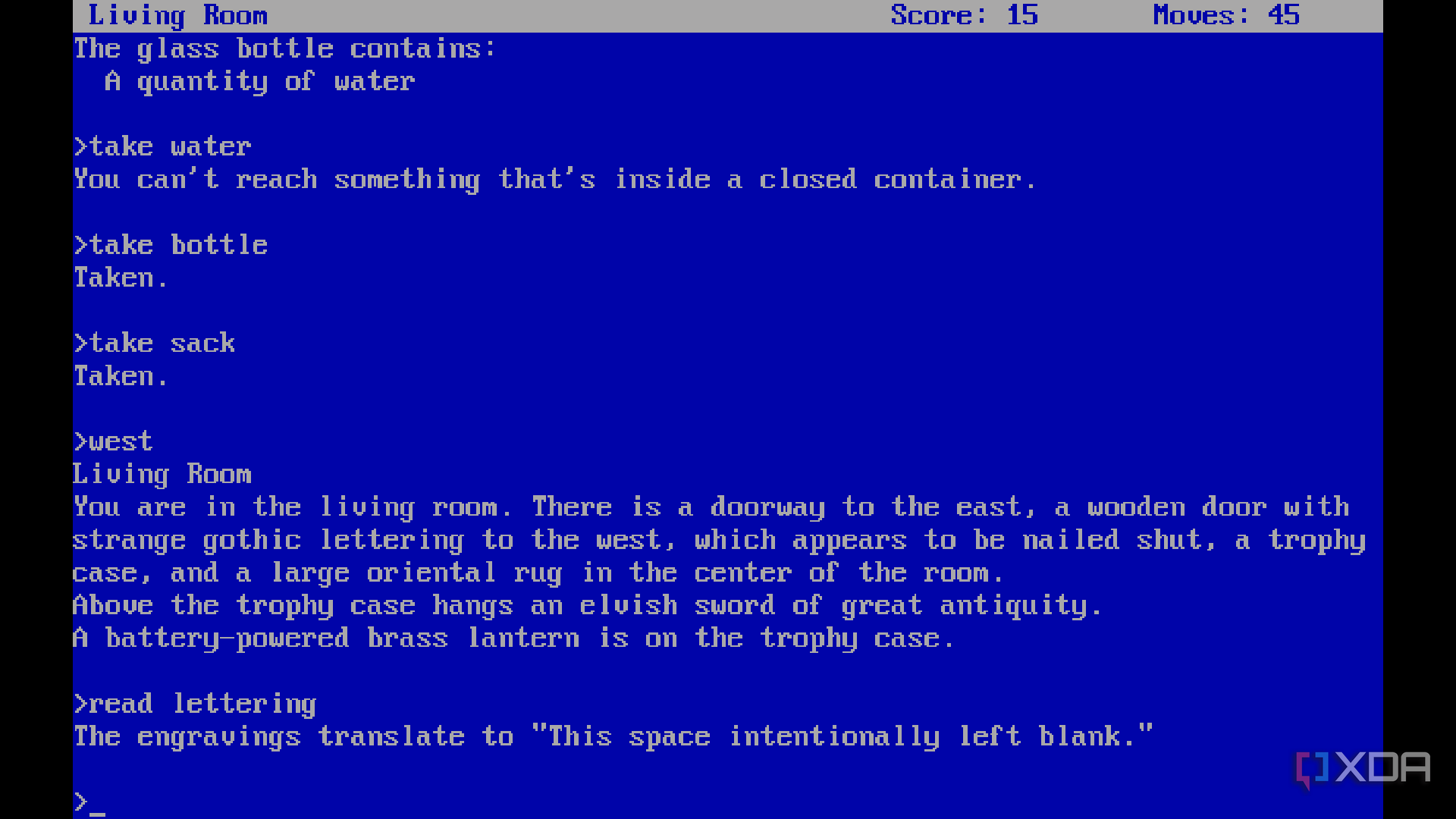
The writing was sharp, and there were some genuinely funny jokes that kept me entertained throughout my playthrough. Additionally, the game seemed to have been meticulously designed, as almost every action I tried received a response. It's clear why this game left such a lasting impression on the gaming community—it's still a delight to play even after nearly 50 years.
A Maze of Confusion
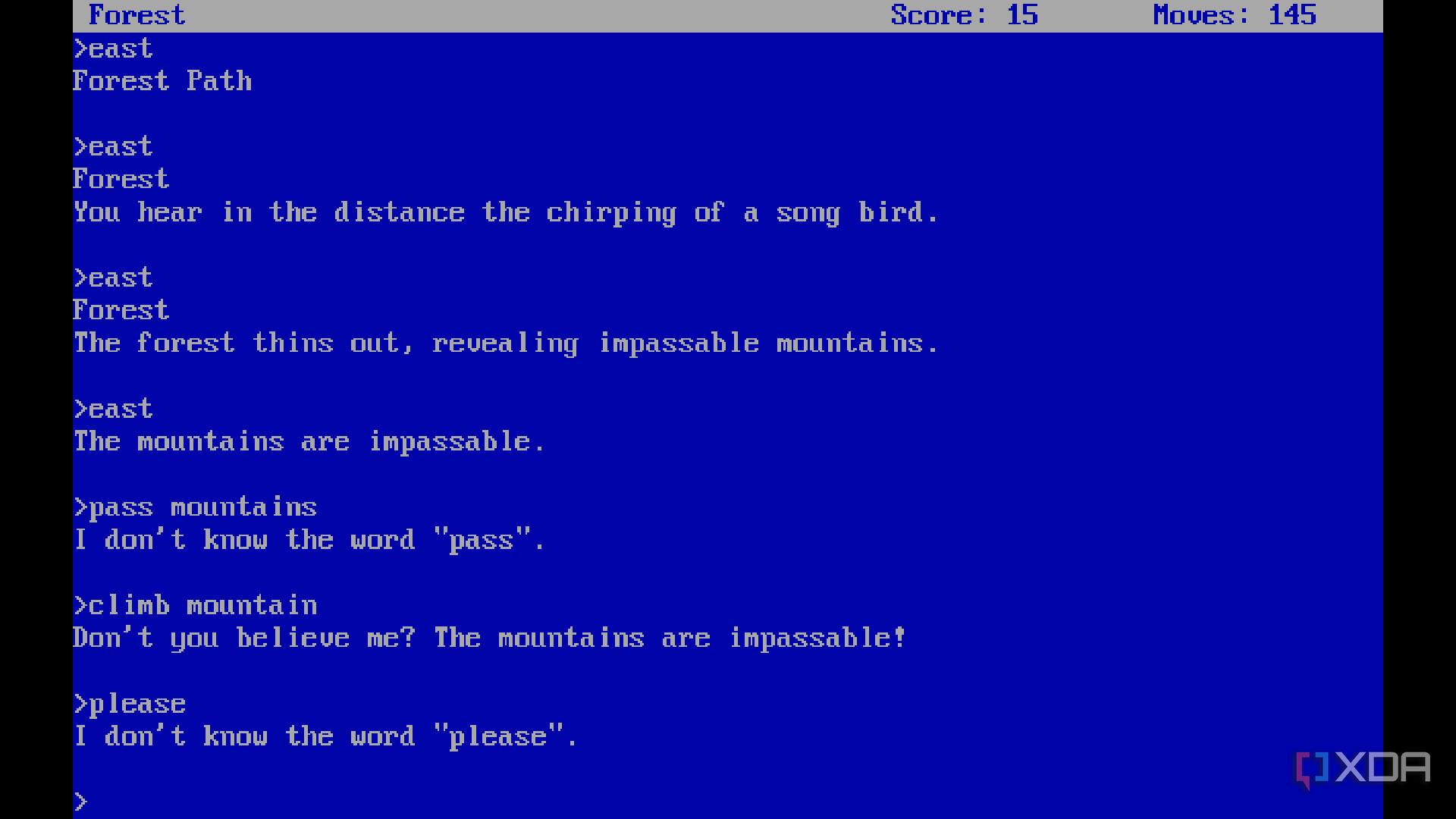
One aspect of Zork that caught me off guard was its complexity. Without any graphics or a map, players must rely on their imagination to navigate the world. However, the game's design often leads to confusion. For instance, entering an area via a diagonal direction (like northwest) might result in exiting through a different direction (like south), making it easy to get lost.
I found myself hopelessly lost during my initial playthrough. If I were to return, I would definitely bring a pen and paper to map out the world, just like players did back in the day. Minimaps weren't around then, so creativity was key.
A Timeless Classic
Overall, I had a fantastic time playing Zork. It was better coded than I expected, more enjoyable, and significantly more confusing. I plan to return to it soon, armed with better strategies and a clearer understanding of its labyrinthine world.
If you're interested in experiencing a piece of gaming history, I highly recommend giving Zork a try. Just be careful not to linger too long in the dark—there's always a chance you might be eaten by a grue.

Posting Komentar untuk "I Played a 1977 Text Adventure Game and Was Surprised"
Posting Komentar