
Is your dog hiding food? Expert explains the reason - and when to worry
Understanding Your Dog’s Caching Behavior
If your dog is constantly tucking treats under your sofa or burying toys in the garden, you might think they’re acting like a paranoid doomsday prepper. However, this behavior is actually rooted in their evolutionary instincts, according to Dr. Mia Cobb, a research fellow at the Animal Welfare Science Centre at the University of Melbourne.
Dr. Cobb explains that what your dog is doing is called “caching” – the act of storing food in hidden places for later use. This behavior is widespread across the animal kingdom, from squirrels to crows and wolves. There are two main approaches to caching: larder hoarding and scatter hoarding.
Larder hoarding involves storing food in one or two places to get through a long winter, such as how squirrels stash nuts. Scatter hoarding, on the other hand, involves making smaller caches of surplus food in many different locations. This reduces the chances of losing everything to a competitor and is most commonly seen in wild animals like foxes and wolves.
“This behavior in modern dogs is an instinctual remnant,” Dr. Cobb wrote on The Conversation. “It reflects the competitive feeding patterns of their ancestors who lived by hunting, for whom securing food was unpredictable, but crucial for survival.”
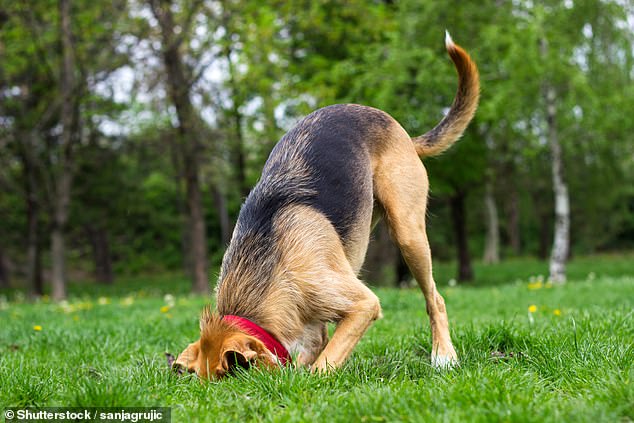
Dr. Cobb emphasizes that this behavior shouldn’t be considered evidence that your pet anticipates being hungry in the future. However, dogs who have experienced food scarcity or stress in the past – such as those that used to be strays – may cache more as a coping mechanism. It's also more commonly seen in breeds selected for their hunting-type behaviors, including terriers and hounds.
“If you’re finding that caching is a problem behavior in your home, it’s worth considering the underlying reason,” Dr. Cobb said. “Our dogs’ behavior is how they communicate with us, and behavior we often perceive as problematic – such as barking, digging and jumping up – if often just normal dog behavior that doesn’t suit us in that moment.”
One way to provide a suitable outlet for this behavior could be to use slow-feeding interactive puzzle toys or snuffle mats, she suggests. This can reduce boredom and anxiety by keeping dogs happily engaged in problem-solving, and help to satiate the behavior "itch" that drives them to hide food.
When Caching Becomes a Concern
There are, however, some instances where caching behavior could be cause for concern, Dr. Cobb said.

“If you are experiencing problems with dogs growling or defending their food – behavior known as resource guarding – from other dogs, or people in the home, you might need to explore strategies to keep everyone safe,” she added. “This could include making sure there are more toys or chews available than there are dogs in the environment to reduce any perceived competition. It could also mean giving multiple dogs their own area to eat while separated by a physical barrier, for example using a door or toddler gate to keep them apart.”
If you’re concerned about your dog’s caching behaviors, then it’s worth consulting your local vet, asking them to connect you to an animal behavior professional.
“Next time you see your dog carefully stashing that special item, you can relax, knowing they aren’t worried about an impending apocalypse or protesting against your choice of treat flavor,” Dr. Cobb concluded. “They are engaging in normal, natural behavior that speaks to their wild past.”
New Insights into Canine Genetics
A recent study showed that dogs and their owners are more alike than previously thought. Scientists from the University of Cambridge found that golden retrievers and humans share genes which make them more likely to be anxious.
"The findings are really striking – they provide strong evidence that humans and golden retrievers have shared genetic roots for their behavior," Dr. Eleanor Raffan said. "The genes we identified frequently influence emotional states and behavior in both species."
One finding was that dogs displaying "non-social fear" – such as being scared or anxious of things like buses or vacuums – have a gene that in humans drives sensitivity and "seeing the doctor for anxiety." Meanwhile, a gene linked to "trainability" in golden retrievers is associated with intelligence and emotional sensitivity in humans.
If you're wondering whether your dog's behavior might be a sign of distress, there are new findings that uncover the surprising genetic roots behind their fears and quirks. Could your beloved pet's behavior resemble ADHD or autism? Experts are revealing insights about neurodivergent dogs. Are repetitive rituals and social standoffishness hiding a secret struggle in your dog's mind? Learn the warning signs of canine cognitive challenges. Do big-brained dogs seem more fearful and anxious than their "smarter" small-brained counterparts? Discover the astonishing study results. Is your dog secretly stressed out by your conflicts, showing anxiety even when not directly involved?

Posting Komentar untuk "Is your dog hiding food? Expert explains the reason - and when to worry"
Posting Komentar