
Opinion: Russia Steps Back from Human Spaceflight — For Now
A Critical Moment for Russia's Space Program
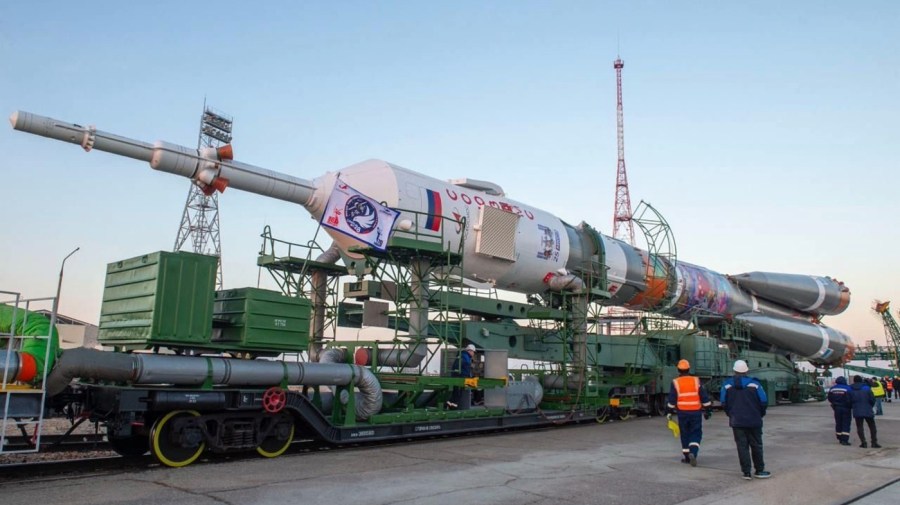
A Soyuz rocket recently lifted off from the Site 31 pad at the Baikonur Cosmodrome in Kazakhstan, carrying Roscosmos cosmonauts Sergei Kud-Sverchkov and Sergei Mikayev, along with NASA astronaut Christopher Williams to the International Space Station. While the journey went smoothly, the launch left behind a trail of destruction that could mark the end of Russia’s long history of human spaceflight.
According to reports, a critical mistake was made during the preparation for the launch. A 20-ton service platform, used by workers to access the engines of the Soyuz rocket, was not properly secured. As the rocket ignited, its powerful thrust ejected the platform into the flame trench, causing significant damage to the launch pad. This incident has rendered the Site 31 pad inoperable for the foreseeable future.
Site 31 is the only launch facility operated by Roscosmos that can support both the crewed Soyuz rocket and the Progress cargo carrier. With this pad now out of commission, Russia is unable to access the International Space Station, raising serious concerns about its role in space exploration.
Implications for the ISS and Russia’s Future
Officially, Russian authorities remain optimistic about their ability to restore the Site 31 pad quickly. However, outside observers are less confident. The Russian space program has long struggled with issues of corruption and mismanagement, and these challenges have only been exacerbated by the ongoing conflict in Ukraine.
The war has diverted valuable resources away from space exploration, as funds that could be used for rebuilding the launch site are instead being spent on military operations. Additionally, economic sanctions imposed by the West have further crippled Russia’s ability to invest in its space program. This combination of factors suggests that Russia may be stepping back from its role as a major player in human spaceflight.
Unlike SpaceX, which has demonstrated remarkable resilience in the face of setbacks, Russia appears to be facing a more prolonged period of stagnation. The consequences of this accident will soon become evident, particularly for the continued operation of the International Space Station.
Effects on the International Space Station
The Progress cargo carrier plays a crucial role in maintaining the ISS. It is used to reboost the station’s orbit and to desaturate its gyroscopes. While SpaceX’s Dragon and Northrop Grumman’s Cygnus have been used as temporary solutions, the loss of Progress means that Russia will no longer be able to refuel the thrusters on the ISS.
These thrusters are essential for maneuvering the station to avoid space debris. Developing an alternative method for refueling the thrusters presents a significant challenge. Could the Progress be launched on another rocket, such as a Falcon 9? Could a Cargo Dragon be modified to serve as a tanker? These are questions that need urgent answers, and it is hoped that SpaceX engineers are already working on potential solutions.
Russia’s Place in the World
The incident also raises broader questions about Russia’s role on the global stage. President Vladimir Putin has often drawn comparisons between himself and Czar Peter the Great, who transformed Russia into a world power. However, unlike Peter the Great, who maintained strong relationships with European countries, Putin has alienated much of the West through his aggressive actions in Ukraine.
His focus on the war has come at a cost, diverting attention and resources from other important areas, including space exploration. The alleged copying of SpaceX documents by Russian cosmonaut Oleg Artemyev has only added to the perception of Russia as a nation struggling to keep up with its international counterparts.
The Rise of SpaceX and the Need for Alternatives
In the wake of this crisis, the importance of SpaceX has grown significantly. The Crew Dragon is now the only vehicle capable of transporting astronauts to and from the ISS. While SpaceX has performed admirably, relying on a single provider for such critical services carries risks.
Other companies, such as Blue Origin and India’s Gaganyaan program, may offer alternatives in the future. Blue Origin has made headlines with its New Glenn rocket and its upcoming Blue Moon lunar lander. Meanwhile, India is making progress with its space program, with plans to send astronauts to low Earth orbit by 2027.
Conclusion
As Russia grapples with the fallout from the Site 31 incident, the global space community is watching closely. The decline of Russia’s space program and the rise of new players like SpaceX and India signal a shifting landscape in space exploration. While the future remains uncertain, one thing is clear: the days of Russia dominating human spaceflight may be coming to an end.

Posting Komentar untuk "Opinion: Russia Steps Back from Human Spaceflight — For Now"
Posting Komentar