
Photonic Chips Split Laser Light Into Multiple Colors On Demand
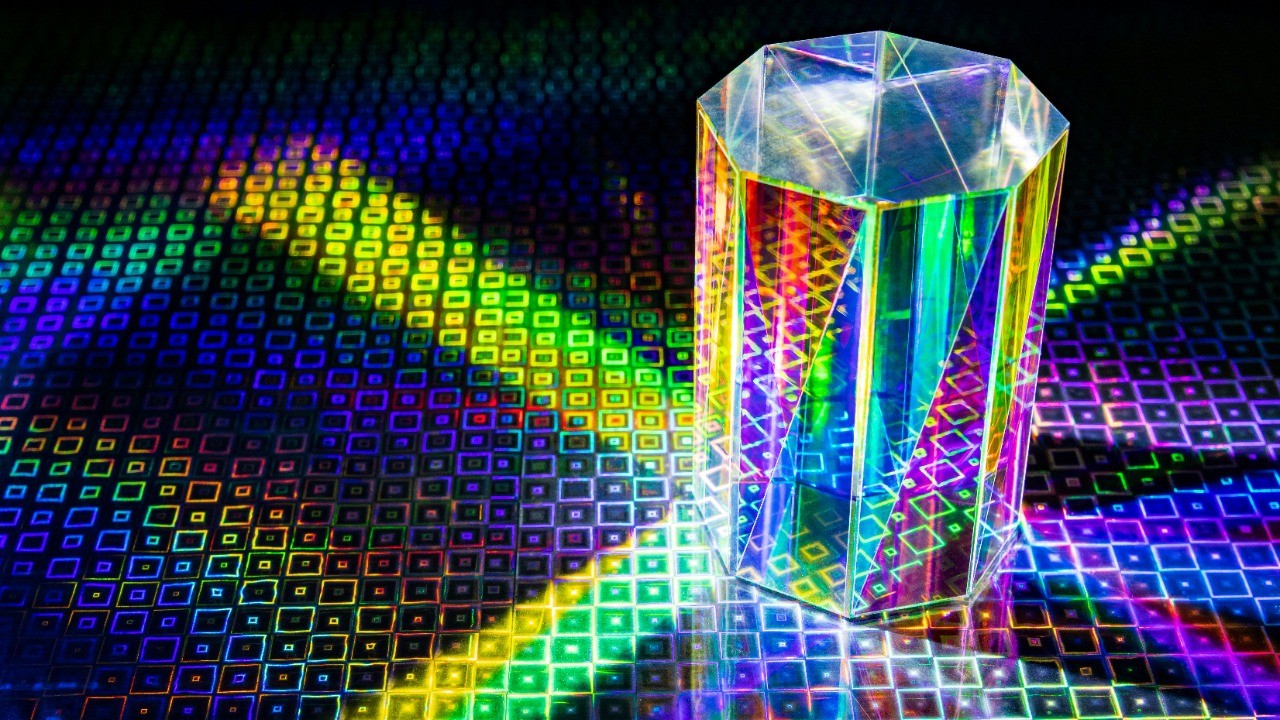
From Single-Color Beams to On-Chip Rainbows
For decades, lasers were prized for their ability to emit light at a single, sharply defined wavelength. This precision made them ideal for applications requiring high stability and control. However, the latest advancements in photonic chips are changing that narrative. Instead of treating color as a side effect, these devices are now using it as a programmable resource. By splitting a single laser into a controllable spectrum of colors, engineers are opening up new possibilities in data communication, artificial intelligence, and sensing technologies.
At the heart of this innovation is a simple yet powerful idea: start with one stable laser line and let a carefully designed chip handle the rest. This approach transforms color conversion from a fragile lab trick into a passive, reliable function. Researchers have already demonstrated devices that can turn a single beam into multiple channels of information-rich light, all within an integrated photonic circuit.
Why These Devices Are More Than Miniature Prisms
It might be tempting to think of these chips as just shrinking a glass prism into silicon, but that comparison doesn't do justice to their capabilities. A prism separates light that already contains many colors, spreading a broadband beam into its components. In contrast, the new photonic devices start from the opposite direction—taking a single-frequency laser and using nonlinear optical processes to create new colors that weren’t present at the input. This means the circuits are actively generating and shaping colors, rather than just separating them.
The key to this process lies in how intense light modifies the material it travels through, which in turn alters the light itself. This feedback loop allows the chip to convert a narrow-band laser into a set of well-defined new frequencies, which can then be filtered, delayed, or recombined as needed. This level of control makes these devices highly versatile for various applications.
How Passive Color Conversion Makes the Chips Reliable
One of the biggest challenges in nonlinear optics has been maintaining stability. Traditional setups often rely on carefully aligned crystals, temperature control, and active feedback to keep color conversion processes from drifting. The new photonic chips take a different approach by embedding the nonlinear medium and guiding structures into a single piece of photonic circuitry. This design reduces the number of moving parts and makes the behavior repeatable enough to be useful outside a lab.
The passive approach described in recent research relies on the fact that the chip material responds to the intensity of the light. Once the geometry and composition of the waveguides are fixed, the device naturally steers energy into the desired frequencies without needing external modulation or complex control electronics. This built-in reliability is crucial for commercial applications such as transceivers, sensors, and accelerators that must run for years in data centers or vehicles.
Accidental Discovery: The “Rainbow Laser” on a Tiny Chip
Not every breakthrough in this field came from a carefully plotted roadmap. In one notable case, a team working on LiDAR stumbled onto a configuration that turned a chip-scale laser into a multi-color source, effectively creating a rainbow laser by accident. They were trying to improve depth sensing by shaping pulses on a tiny chip when they discovered that the device could emit a spread of colors that stayed locked together in time.
This serendipitous discovery underscores how rich the design space has become when nonlinear optics is folded into integrated photonics. The coherent generation of multiple colors opens up new possibilities for both sensing and communications, turning what started as a sensing experiment into a platform for high-capacity optical links.
“Rainbow-on-a-Chip” and the Race to Cool AI’s Energy Appetite
The most immediate commercial pressure on this technology comes from artificial intelligence, which is straining the power budgets of data centers as models grow larger and more complex. Conventional electronic interconnects and accelerators are hitting thermal and bandwidth limits, and operators are looking for ways to move more data with less energy.
A photonic chip that can turn one industrial-grade laser into many color channels offers a way to pack more communication lanes into the same physical link, which is exactly what AI clusters need to keep scaling. Each color can act as a separate data lane, so a single fiber or waveguide can carry many parallel streams without increasing the clock speed or voltage of the electronics that feed it.
What Makes the New Photonic Circuits Different from Earlier Integrated Optics
Integrated photonics is not new, and silicon photonic transceivers already ship in volume for data center links. However, most of those devices treat color as a fixed parameter, relying on external components to generate any new frequencies. The latest rainbow-generating chips instead bake the color conversion into the circuit itself, so that the same structure that routes light also creates and manages its spectrum.
By embracing nonlinear effects and designing around them, the new circuits can produce tailored spectral combs that match the needs of dense wavelength-division multiplexing or multi-band sensing, all within a footprint compatible with existing chip packaging.
LiDAR, Sensing, and the Promise of Multi-Color Depth Perception
Beyond data centers, the same ability to generate many colors on a chip has clear implications for LiDAR and other sensing systems that need to read fine details in space and material composition. Traditional LiDAR units in vehicles or drones typically operate at a single wavelength, which limits how much information they can extract about surfaces and atmospheric conditions.
A chip that can emit and detect multiple colors in a coordinated way could add spectral fingerprints to depth maps, helping distinguish, for example, a wet road from black ice or a pedestrian from a reflective sign. That kind of compact, multi-color LiDAR could find its way into autonomous vehicles, industrial robots, and even consumer devices that need precise 3D sensing.
Telecom and Data Networking: More Bits per Photon
In fiber-optic networks, the basic trick of sending different colors down the same glass to multiply capacity is already well established. What the new photonic chips add is the ability to generate and manage those colors locally, on the same substrate as modulators and detectors, using a single seed laser. That integration could simplify long-haul and metro systems by reducing the number of discrete lasers and amplifiers.
Combined with the industrial-grade laser and precisely engineered optical circuit in the Rainbow-on-a-chip design, this means network operators could deploy compact modules that squeeze more bits per photon out of existing fibers, delaying the need for new cable builds and cutting the power per transmitted bit.
Engineering Challenges on the Road to Commercialization
For all the promise, turning a lab-scale rainbow chip into a mass-produced component is not trivial. Nonlinear optical processes are sensitive to fabrication tolerances, temperature, and material quality, and small variations can shift the generated colors or reduce their efficiency. Packaging is another hurdle, since the chip has to be coupled to fibers or free-space optics with low loss while also managing heat from the industrial-grade laser that feeds it.
Despite these challenges, researchers are addressing them by choosing materials and geometries compatible with existing semiconductor manufacturing and designing circuits that are relatively tolerant of small deviations. Scaling to the volumes demanded by AI accelerators or telecom gear will require tight process control and robust testing to ensure that every device produces the right spectral pattern.
Why Controllable Color on a Chip Changes How I Think About Computing
As I look across these developments, from the accidental Rainbow Laser on a Tiny Chip to the deliberately engineered Rainbow-on-a-chip for AI, the common thread is that color is becoming a first-class resource in computing and communications. Instead of just turning light on and off faster, engineers are learning to use the spectrum itself as a parallel dimension for encoding and processing information.
This shift feels as significant as the move from single-core to multi-core processors, because it opens a new axis along which performance can scale without simply cranking up clock speeds and power. If this vision holds, the next wave of computing hardware may be defined as much by how it splits and shapes spectra as by how many transistors it packs onto silicon.

Posting Komentar untuk "Photonic Chips Split Laser Light Into Multiple Colors On Demand"
Posting Komentar