
Researchers Unveil Breakthrough EV Battery Tech: 'It Could Evolve'
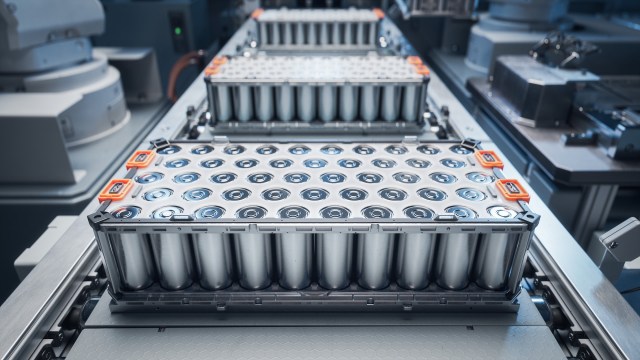
A breakthrough in battery technology is taking shape with the development of a protective film that's incredibly thin—just a fraction of the width of a human hair. This innovation has the potential to significantly improve the safety, longevity, and efficiency of lithium-metal batteries, which are gaining attention as a promising solution for electric vehicles (EVs).
Lithium-metal batteries are being explored by experts globally due to their ability to enhance driving range. One of the most recent advancements comes from Korea University, where researchers have developed a "simple silver ion process" aimed at accelerating the commercialization of this type of battery. The ultra-thin film consists of alternating layers of silver ions and trithiocyanuric acid.
These batteries use lithium as an anode instead of traditional graphite, offering a higher storage capacity and lower voltage loss. However, they face challenges such as the formation of dendrites—metallic branch-like structures that can cause failure during operation. Dendrites are a major concern for battery performance and safety.
In a typical battery, ions move between two electrodes through a substance called electrolyte. Researchers are continuously working on developing more cost-effective and high-performing materials for these critical components. Other research groups in South Korea are also exploring solutions to prevent dendrite growth in different types of batteries.
At Korea University, the team's research shows that the lithium electrode interface can be controlled using silver ions. According to Professor Cho Jin-han, the lead researcher, this process doesn't require a complicated synthesis method. The silver-stacked film is supported by a nickel-fiber plate and measures less than 40 nanometers in width. For reference, a human hair is about 60,000 nanometers thick.
The film can be produced at room temperature under ambient pressure. The silver helps guide lithium placement, while the other layers provide protection and act as a barrier against dendrites. During testing, battery cells equipped with the film lasted 2,000 hours of cycling and maintained 96% of their capacity after 1,300 charge-discharge cycles.
For many EV owners, the longevity of their vehicle's battery is a significant concern. Some worry about it, while others feel it's not a big issue. Others haven't given it much thought at all. Understanding how long EV batteries last is crucial for making informed decisions about vehicle ownership.
If this technology can boost EV performance, it could encourage more drivers to switch to cleaner transportation options. Electric vehicles offer numerous benefits, including reduced fuel costs and lower maintenance expenses. On average, EV owners can save up to $1,500 annually by avoiding expensive fuel and maintenance.
When paired with home solar panels, EVs become even more efficient. Solar energy can power your vehicle, reducing reliance on the grid. EnergySage is a reliable resource for comparing quotes, finding installers, and securing tax rebates that can save up to $10,000. These incentives are set to expire on December 31, so acting quickly is essential.
Each EV that replaces a gas-powered car can prevent thousands of pounds of harmful air pollution each year, according to the U.S. Department of Energy. This means fewer emissions that negatively impact community health. A study conducted by Texas A&M linked microscopic particulate matter from exhaust to birth defects, highlighting the importance of cleaner transportation.
In South Korea, researchers are focusing on addressing pollution issues using advanced technologies. They believe the new film has potential applications across various battery types. As Professor Cho mentioned, "In the future, it could evolve into a technology platform that can be extended to lithium and various metal batteries such as sodium and zinc."

Get TCD's free newsletters for easy tips to save more, waste less, and make smarter choices — and earn up to $5,000 toward clean upgrades in TCD's exclusive Rewards Club.

Posting Komentar untuk "Researchers Unveil Breakthrough EV Battery Tech: 'It Could Evolve'"
Posting Komentar