
Scientists Study Mayonnaise Behavior in Space — Here's Why It Matters
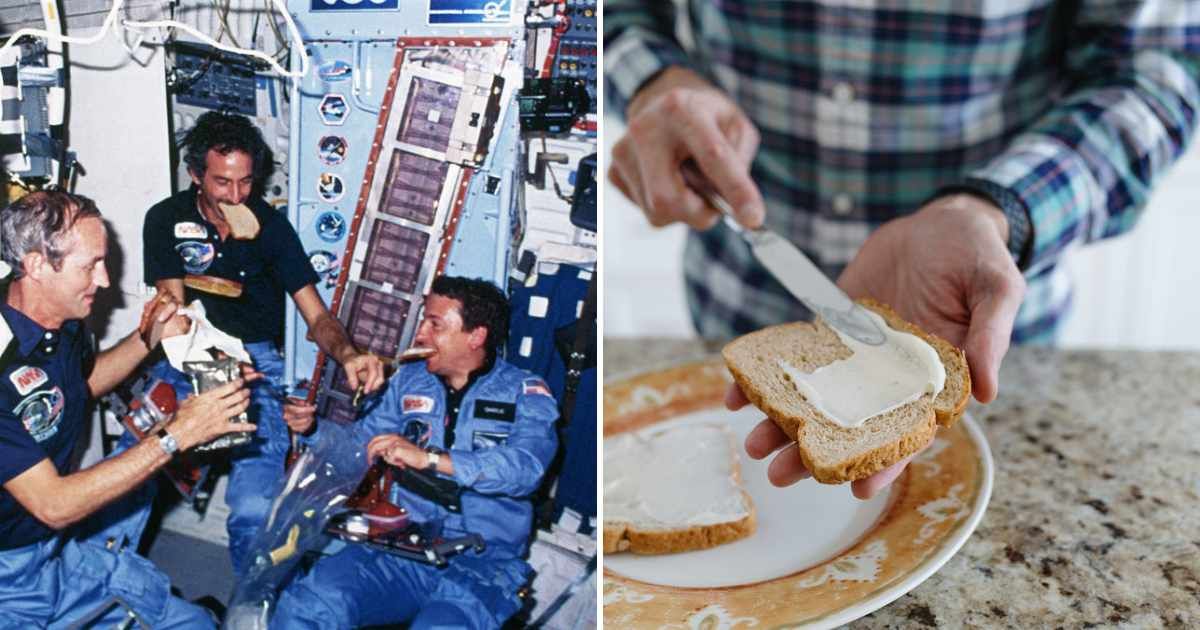
Soft materials, such as mascara, cheese, and apples, are highly sensitive to their environment. Even a minor change in conditions can significantly affect their chemistry, biology, and lifespan. On Earth, there are numerous resources available to study these interactions. However, scientists have developed a specialized facility to examine how soft matter behaves in the microgravity of outer space. This research was recently published in the Npj Microgravity journal, focusing on the behavior of mayonnaise through the Colloidal Solids (COLIS) experimental setup.

COLIS is an advanced light scattering system located on the International Space Station (ISS). It is housed within the Microgravity Science Glovebox (MSG), allowing astronauts to conduct experiments on various substances, including proteins, gels, and glasses. The facility was used to study soft matter objects like food, observing how they react to microgravity and undergo changes.
National Geographic highlights that a database containing over 250 types of food is prepared for astronauts, which is then freeze-dried for space travel. Once these foods arrive at the ISS, they experience a significant shift in their environment. Gravity, which is usually a fundamental force, is no longer present. As a result, these items behave unpredictably. Over time, astronauts have shared images of crumbs floating in space and liquids suspended in mid-air. During NASA's Gemini Program, freeze-dried foods had a shelf life of only two weeks.

In a video from NASA Johnson, astronaut Shane Kimbrough was seen scooping jelly from a box, while a tortilla coated with peanut butter floated around. Canadian Space Agency astronaut David Saint-Jacque demonstrated opening a container of honey. When he unscrewed the lid, a dollop of honey stretched into a twisting band that moved through the air, forming undulating shapes between the box and its lid. While the shelf life of honey remains unaffected by microgravity, other items—such as breakfast burritos, burgers, biscuits, creams, and medicines—have varying shelf lives and responses to the lack of gravity. Mayonnaise is no exception.
The COLIS project was created through a collaboration between researchers from Politecnico di Milano and the Université de Montpellier. It was developed by Redwire in Belgium for the European Space Agency (ESA). Roberto Piazza, a professor of Condensed Matter Physics, stated in a press release that studying these materials in microgravity allows scientists to "isolate the effect of gravity, a silent but decisive force in how they change over time." He added, "It’s amazing to see how much gravity, so familiar in our daily lives, acts behind the scenes to shape the materials we use every day."
More on Green Matters
Scientists Discover Massive Spinning Structure in Space — and It's More Than 5 Million Light-Years Long
Scientists Claim Asteroid Bennu Contains All Essential Elements of Life
Has NASA Found Another Earth-Like Planet?

Posting Komentar untuk "Scientists Study Mayonnaise Behavior in Space — Here's Why It Matters"
Posting Komentar