
Spot and Count Birds: Join the Great Backyard Bird Count
History of the Great Backyard Bird Count
The Great Backyard Bird Count (GBBC) began with a simple yet powerful idea. Researchers at the National Audubon Society and the Cornell Lab of Ornithology had an observation and a question: Could birding enthusiasts help collect real-time data on wild birds? The answer, as it turned out, was a resounding yes.
This initiative led to the launch of the GBBC in 1998, marking it as the first online citizen-science project focused on bird populations. Participants across the globe contribute by counting both common and rare species, such as northern cardinals or mourning doves. This collaborative effort has since grown into a worldwide movement that connects people through their shared love of birds.
“It even fueled the creation of eBird, which is one of the world’s largest citizen-science projects related to birds,” says Becca Rodomsky-Bish, project leader for the GBBC. “And eBird is a very powerful conservation tool.”
The next GBBC will take place from February 13 to 16, 2026. For more details, visit the official GBBC website.
Great Backyard Bird Count Basics
The concept of the GBBC is straightforward. Birders around the world come together to observe, count, study, and celebrate birds. The event takes place every February, typically during Presidents’ Day weekend in the United States.
To participate, birders are asked to watch and count birds for at least 15 minutes during the event. They record what they see or hear and then submit their findings using tools like the Merlin Bird ID app, eBird Mobile app, or the eBird website. This accessibility makes the GBBC ideal for beginners and experienced birders alike.
“It’s a good fit for entry-level and less experienced bird-watchers because of the fact that you only have to bird for 15 minutes, and you can do it anywhere you choose,” says Kathy Dale, Audubon’s community science team leader.
Research Has a Global Impact
The data collected during the GBBC has far-reaching implications. It provides undergraduate students, professional researchers, and the general public with access to decades of bird-related reporting.
“There are a lot of questions people can ask and find answers to when using this data,” Becca explains. “Questions like ‘What birds are we seeing? Are birds that are normally found farther south being found farther north? Is that linked to climate change? What are we seeing in terms of feeding behaviors? Where are birds migrating, or not migrating, to?’”
This real-time research helps scientists track changes in bird populations and understand broader ecological trends.
Get Your Friends and Family Involved
While some people prefer to bird alone, the GBBC offers opportunities for families, schools, home-schoolers, Scout groups, and nature center visitors to join forces.
“I love citizen science and being able to do something in my own backyard that contributes to something bigger,” says Megan Long, a naturalist at Oxbow Park & Zollman Zoo in Minnesota.
Megan has participated in the GBBC for four years, often with co-workers, her parents, and even her young relatives. One memorable moment came when her 5-year-old nephew taught her patience by kicking off his shoes, putting his feet on the windowsill, and saying, “Well, sometimes you just have to wait!”
“What you observe might be something small and simple on your end, but when you have so many people contributing, it creates a bigger picture of not only what’s happening in your state, but globally,” Megan says.
“The global nature of GBBC is really important because birds don’t pay attention to geopolitical boundaries,” Kathy adds. “Being able to see people across the globe excited about what they are seeing in their area is really fascinating.”
Participation Continues to Grow
The GBBC has seen a steady increase in participation over the years. During the height of the COVID-19 pandemic, birding became a popular activity as people sought connection with nature.
“The momentum really built,” says Kerrie Wilcox, Canadian coordinator for the Great Backyard Bird Count on behalf of Birds Canada. “Birding is so good for people’s mental health. It gives you a connection to nature that proved helpful over that year.”
Even after the pandemic, participation has remained strong. In 2025, more than 800,000 people took part in the count, creating 655,549 Merlin Bird IDs and 387,652 eBird checklists.
Fun Great Backyard Bird Count Facts
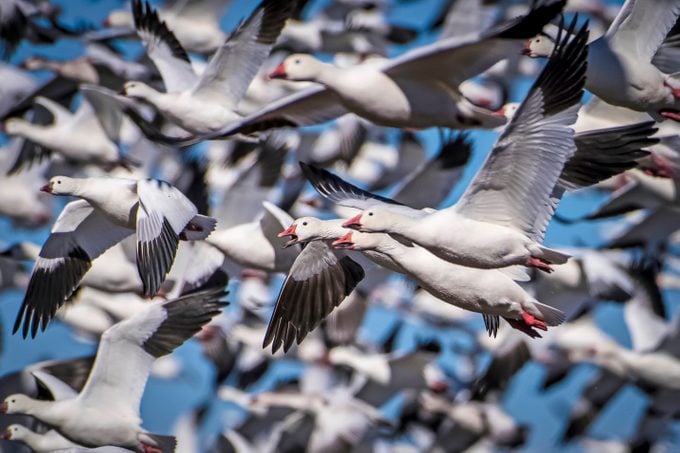
- One of the largest flocks observed in 2021 was a mix of more than 3,000 Ross’s geese and snow geese spotted south of Sacramento.
- In 2021, participants at Florida’s Dry Tortugas National Park witnessed 1,000 sooty terns, a seabird that wanders tropical oceans and nests on remote islands.
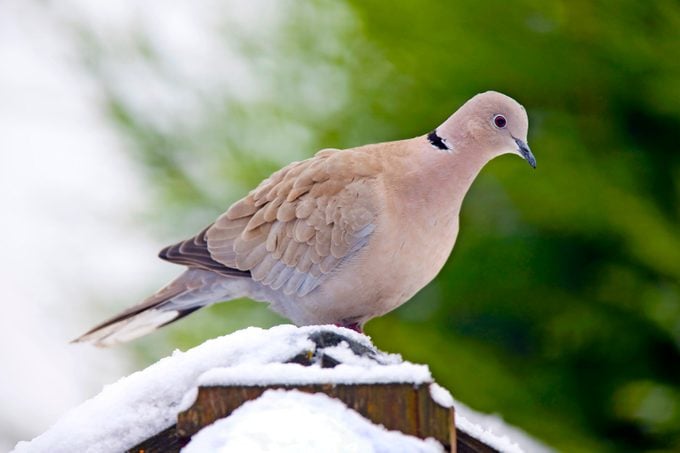
- Accidentally introduced to Florida in the 1980s, the eurasian collared dove has expanded its range to more than 39 states and into Canada, according to GBBC data.
- GBBC data supports evidence of the Anna’s hummingbird expanding its wintering range from desert scrub and the suburban yards of Pacific states into British Columbia.
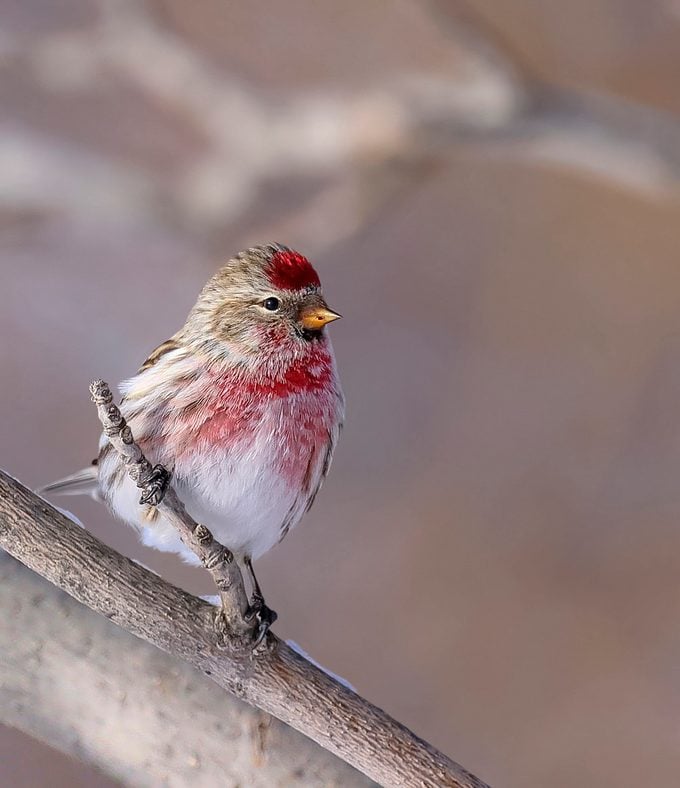
- Quebec birders spotted more than 700 redpolls in one flock in 2021, due to poor seed and cone production in Boreal forests farther north.
- Observers from more than 200 countries and subregions participated in 2025, recording more than 8,000 bird species.
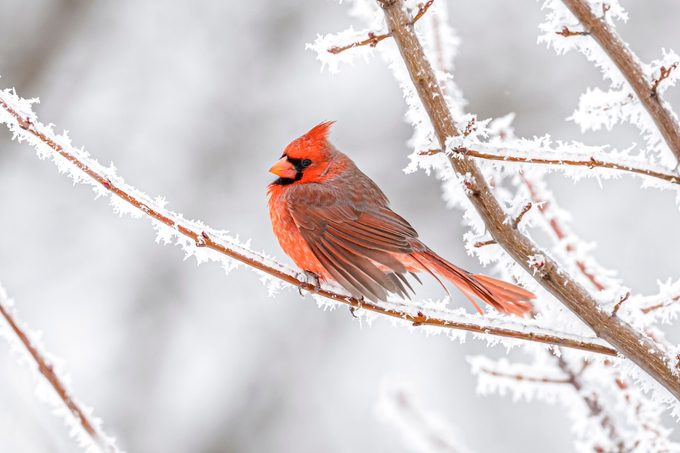
- People identified more northern cardinals, dark-eyed juncos, and house finches than any other birds in the U.S. in 2025’s count.
- Birders in Colombia found 1,377 species, more than any other country in 2025.

Posting Komentar untuk "Spot and Count Birds: Join the Great Backyard Bird Count"
Posting Komentar