
The Herrnhut Star: From School Project to Christmas Icon
The Herrnhut Star: A Symbol of Tradition and Craftsmanship
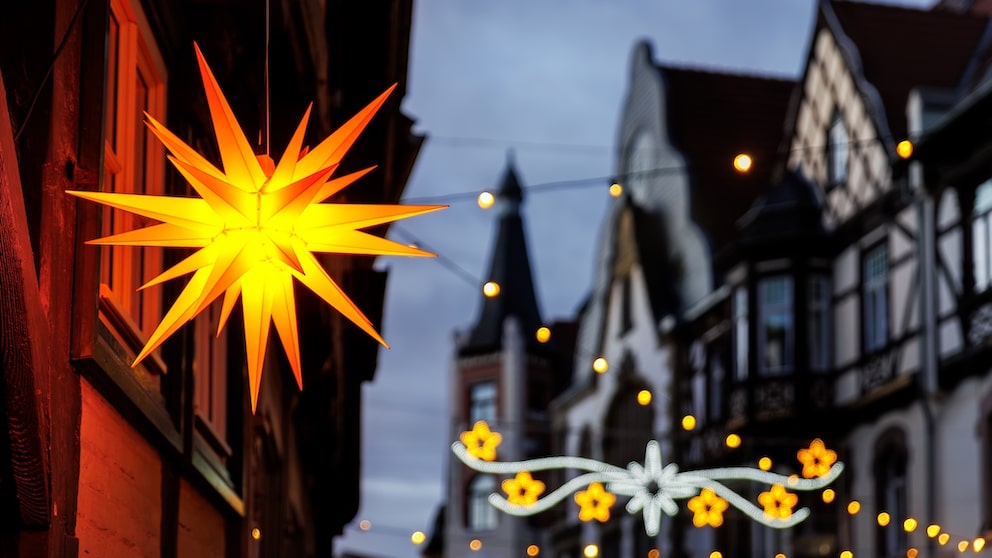
The Herrnhut Christmas Star, often simply referred to as the Herrnhut Star, is one of the most recognized and oldest Advent and Christmas symbols in the German-speaking world. Its origins, design, and cultural significance make it a unique and enduring symbol of the holiday season.
The History of the Herrnhut Star
The roots of the Herrnhut Star trace back to the early 19th century. It originated in the boarding school of the Moravian Church, a Christian community that settled in Herrnhut, Saxony. Initially, a teacher used the star in school lessons to teach students about geometric shapes and enhance their understanding. Students were tasked with building stars from various geometric forms, which then became decorations for their rooms. The first stars were made in red and white, with red symbolizing the blood of Jesus Christ and white representing purity. From this practical teaching method, a tradition began, with students crafting stars every first Sunday of Advent.
Over time, this simple educational tool evolved into a religious and cultural symbol. It embodied the hope and light of the Advent season. By the end of the 19th century, systematic production started, and the Herrnhut Star began its journey as a beloved holiday icon.
Craftsmanship with Tradition
For over 160 years, Herrnhut Stars have been traditionally handcrafted from paper. The range includes five different sizes in seven different colors. Making the smallest star (13 centimeters) takes about one and a half hours. Larger stars (40 to 80 centimeters in diameter) are also painstakingly handcrafted. The "spike turner" shapes colored paper into individual cones that represent the star’s points. These must first dry. A single spike turner can produce about 2,500 points a day. These are then shaped by the "frame gluers," who apply glue to punched cardboard frames, giving the cones their triangular or square shape. Two frame gluers process about 3,500 points per day. Approximately 300,000 stars are produced annually.
Since 1982, the stars have also been made from plastic. They are weatherproof and suitable for outdoor use. These are also available in miniature sizes (eight centimeters).
The Herrnhut Star stands in contrast to fast, interchangeable seasonal goods. It is made from high-quality materials and is often used for many years (or even decades). This awareness of value and durability seems almost revolutionary today, especially in a consumer world driven by ever-new decoration trends.
Taking the star out of the box each year, carefully assembling and lighting it, has something ceremonial about it. It is a conscious ritual that slows down the Advent season and simultaneously creates a connection to previous generations.
What Makes Its Shape Special

What makes the Herrnhut Star so distinctive is its radiant, clear geometry. The classic version has 25 points: 17 square and eight triangular tips. This symmetry gives it an almost mathematical perfection and at the same time an astonishing lightness.
But the star is not just decorative. In the tradition of the Moravian Church, it represents the Star of Bethlehem, as a reminder of the Christmas story, but also as a symbol of guidance, unity, and community. Its shape has remained virtually unchanged for over 160 years. A successful example of design that works timelessly.
Why the Herrnhut Star Is So Popular
In a time when Christmas decorations often consist of short-lived trends, cheap materials, and rapidly changing color schemes, the Herrnhut Star stands out. It represents durability, quality, and craftsmanship. Many people associate it with memories of childhood, tradition, and family rituals: the joint assembly, the hanging, the anticipation ritual when the star finally lights up.
Also interesting: These are the Christmas decoration trends for 2025
Its popularity is also due to its versatility. It is simple enough to fit into modern interiors, yet its appearance is traditional. Thus, it fits both minimalist apartments and traditionally decorated homes.
The Annual Special Edition: A Coveted Collector’s Item
A special appeal of the Herrnhut Christmas Star also lies in its annual special edition. For several years now, the manufacturer has released a limited color variant each year, available only in that one season. This combines tradition with a subtle form of modern collecting culture.
These special editions are deliberately designed to harmoniously fit into the classic color world of the Herrnhut Stars, yet still set accents—such as through unusual colors that did not exist before. Many fans eagerly await the unveiling of the new color each year, and the special stars are often sold out early.
That the manufacturer remains true to its line despite this modern touch is particularly evident in the fact that the limited color is never reissued. Thus, each special star becomes a small piece of star history and a symbol that true tradition can cautiously evolve without losing authenticity.
A Light That Endures
The Herrnhut Christmas Star is more than just a festive decoration. It is a piece of German cultural history, a symbol of faith, a tribute to fine craftsmanship, and a sign of living tradition. In its radiant clarity, it unites everything that makes the Advent season special. Perhaps that is precisely why it brightens our windows year after year.

Posting Komentar untuk "The Herrnhut Star: From School Project to Christmas Icon"
Posting Komentar