
2.5 Years to Join Google's AI Team: 11 Books That Helped Me Pivot
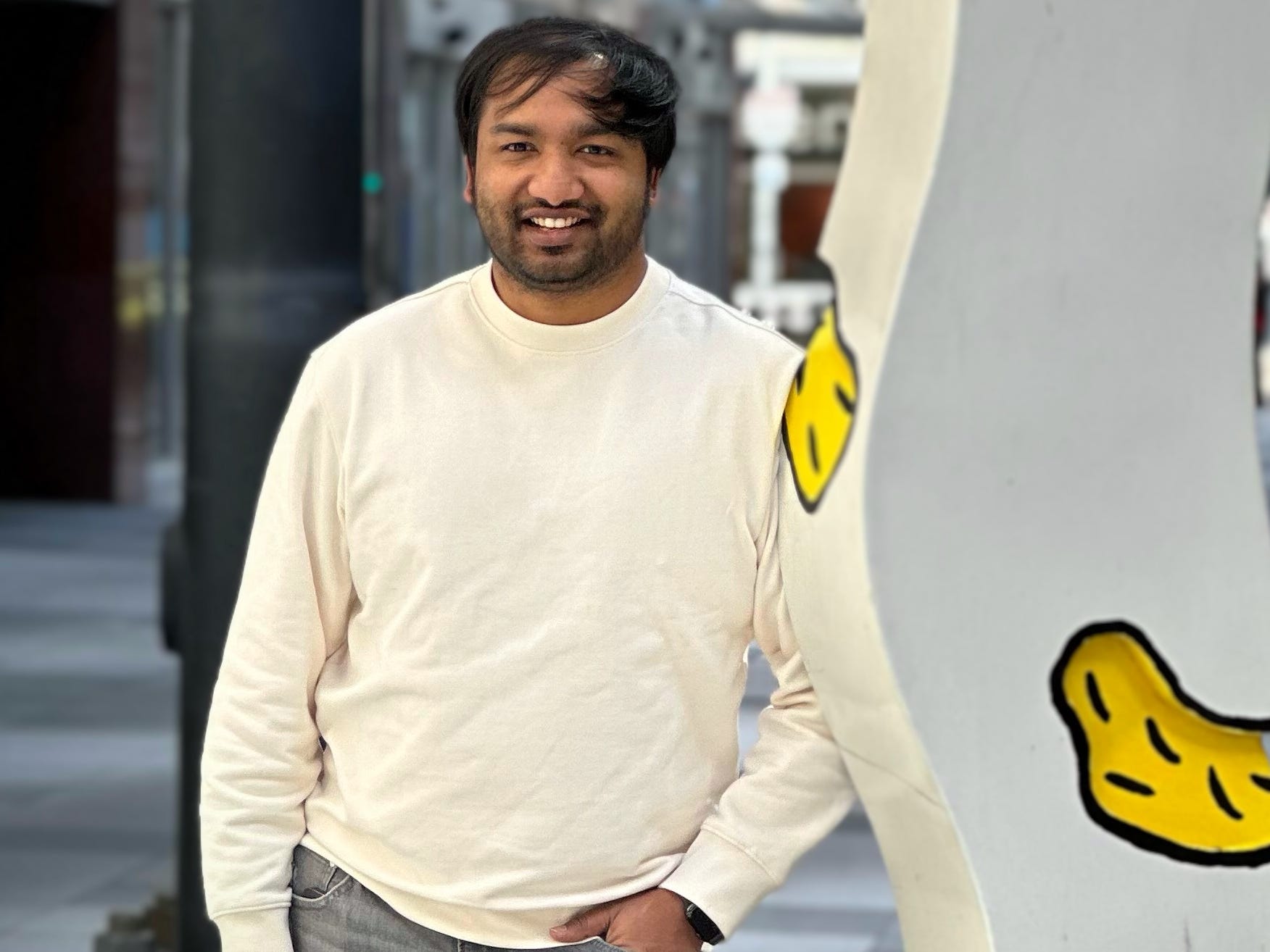
A Journey into AI: How One Professional Transitioned to an AI Role at Google
Rahul Kasanagottu, a 32-year-old customer engineer at Google, specialized in AI and machine learning, spent two and a half years upskilling to transition into an AI role. His journey began during paternity leave, where he started reading books on AI and machine learning to kick off his career pivot.
During pivotal moments in technology, many people focus on making money. However, Rahul believed more individuals should consider entering AI to influence its usage by others. This mindset guided his decision to shift careers.
When his daughter was born in April 2023, the AI boom coincided with this significant life event. Google offers generous parental leave, which allowed him to spend time with his daughter while starting to explore AI through books.
Paternity leave provided a crucial opportunity for Rahul to begin his journey, but it took him about two and a half years, 11 books, and countless hours of watching videos to secure a job on an AI team. He interviewed for around four to five different roles, and six months ago, he transitioned from a senior technical account manager to a Google Cloud customer engineer specialized in AI and machine learning. In this role, he builds demos and shows customers how to use Google's AI products.
Rahul continues to upskill continuously. The field of AI is ever-changing, and the needs of customers can vary daily. This constant evolution requires ongoing learning and adaptation.
Key Resources That Helped Rahul UpSkill
Here are the 11 books and courses that played a significant role in Rahul’s transition:
Textbooks:
- "AI Engineering" by Chip Huyen
- "Designing Machine Learning Systems" by Chip Huyen
- "Designing Data-Intensive Applications" by Martin Kleppmann
- "Hands-On Large Language Models" by Jay Alammar and Maarten Grootendorst
- "Generative AI on AWS" by Chris Fregly, Shelbee Eigenbrode and Anje Barth
- "Deep Learning" by Ian Goodfellow, Yoshua Bengio, Aaron Courville
Other Books:
- "Competing in the Age of AI" by Marco Iansiti and Karim R. Lakhani
- "Prediction Machines" by Ajay Agrawal, Joshua Gans, and Avi Goldfarb
- "Power and Prediction" by Ajay Agrawal, Joshua Gans, Avi Goldfarb
- "Genesis" by Henry Kissinger, Craig Mundie, and Eric Schmidt
- "Deep Medicine" by Eric Topol
Courses and YouTube Channels:
- Deep Learning Specialization taught by Andrew Ng
- 3Blue1Brown videos on YouTube about visualizing mathematics and ML fundamentals
The two books Rahul read end-to-end were "Designing Machine Learning Systems" and "Generative AI on AWS." The latter has an accompanying course in deep learning that was pivotal in his early learning.
The books by Chip Huyen were his favorites. They explain concepts in an approachable way and helped him understand how organizations use and implement AI. Initially, he struggled to differentiate between the research side and the applied side of AI, but these books clarified his interest in applied AI.
"Power and Prediction" was another favorite. It discusses how technology must scale economically to make a difference. For example, if the electric light bulb still cost thousands of dollars, it wouldn’t have electrified every house today. The book talks about AI in similar terms.
"Genesis" also stood out. It explores the future of AI and the challenges it will pose.
Andrew Ng’s course was incredibly helpful. He is an amazing teacher and the founder of Google Brain.
The Importance of Hands-On Projects
The culture at Google supported Rahul’s growth. Without the support of his manager and teammates, he wouldn’t have had the time for personal development. Balancing his job, personal learning, and caring for a new daughter was challenging, and his wife made significant sacrifices to enable his progress.
Solo projects became essential as the books didn’t typically come with assignments. The courses, however, included hands-on exercises that highlighted the missing piece in his resume. Building demos and doing hands-on projects became necessary to convince hiring managers of his capabilities.
For others looking to transition into AI, Rahul emphasizes persistence and hard work. It takes time to connect the dots on complex problems, and sometimes concepts need to be revisited multiple times to fully grasp them.
Many people, including himself, rush to land an AI job after six months. However, a lot of machine learning concepts require time to internalize. Patience and perseverance are vital.
If you enjoyed this story, be sure to follow Business Insider on MSN.

Posting Komentar untuk "2.5 Years to Join Google's AI Team: 11 Books That Helped Me Pivot"
Posting Komentar