
3I/ATLAS Unveils Life's Building Blocks, NASA Discovers
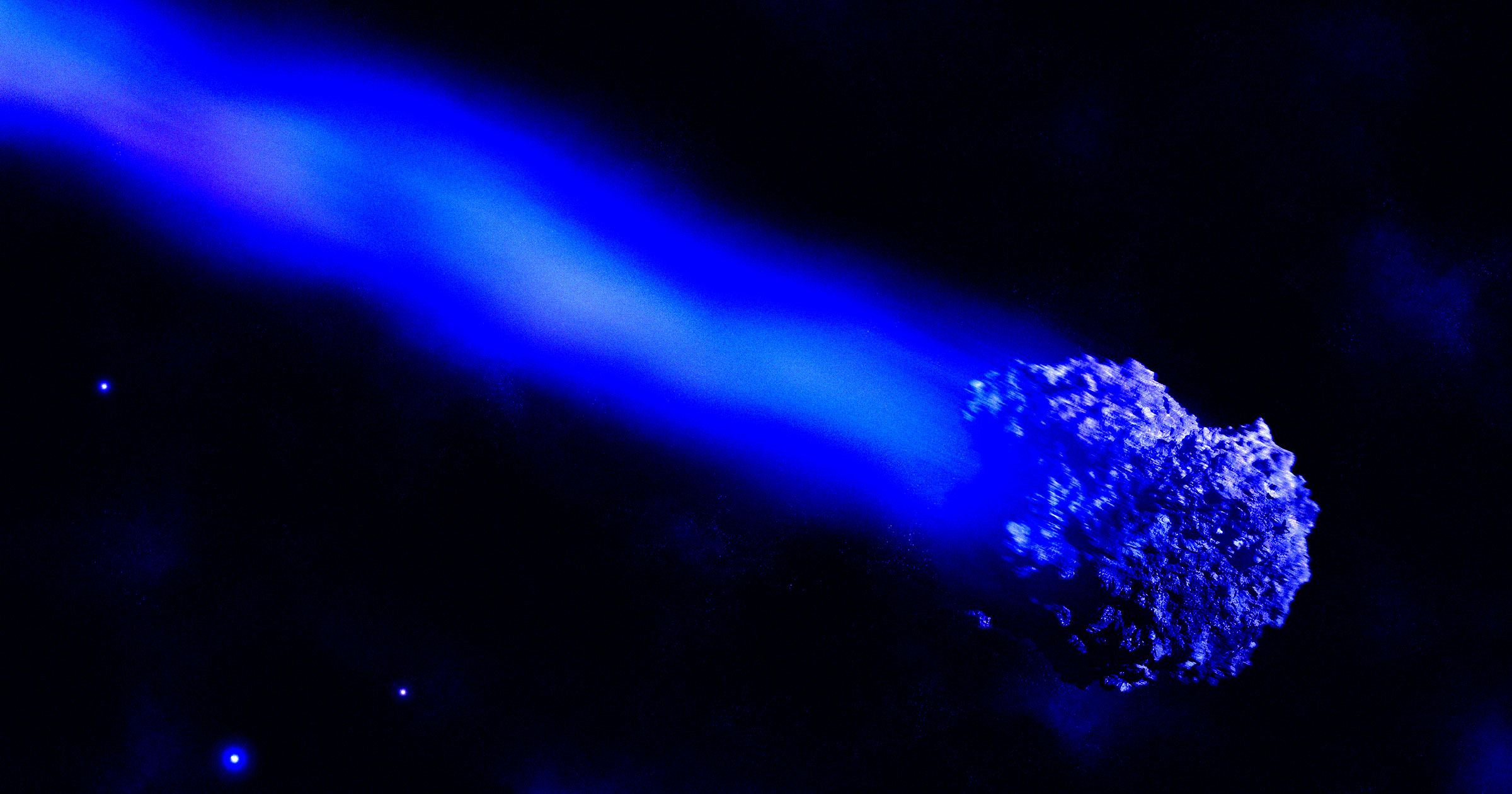
The Discovery of Methanol in an Interstellar Object
Methanol, a simple yet essential molecule, has long been recognized as a fundamental component in the chemical processes that lead to life. It plays a key role in the synthesis of proteins and amino acids, which are the building blocks of DNA and RNA. These molecules are central to all known forms of life on Earth. As such, the detection of methanol in other parts of the solar system, and even in planet-forming disks around distant stars, has sparked significant interest among scientists.
Recently, researchers have made another remarkable discovery: methanol has been detected in 3I/ATLAS, the third interstellar object ever identified in our solar system. This finding adds to the growing body of evidence that suggests the presence of life's basic ingredients beyond our own planetary neighborhood.
A Surprising Composition
According to a paper that has not yet been peer-reviewed, NASA’s Goddard Space Flight Center astrochemist Martin Cordiner and his team used the Atacama Large Millimeter/submillimeter Array (ALMA) in Chile to analyze 3I/ATLAS. Their findings revealed not only traces of methanol but also substantial amounts of hydrogen cyanide, another molecule considered crucial for the formation of life.
What surprised the researchers was the high concentration of these gases in 3I/ATLAS, which is believed to be a type of comet. In our own solar system, such molecules are typically present in trace amounts and are not the dominant components of comets. However, in this interstellar visitor, they were found to be abundant.
“Molecules like hydrogen cyanide and methanol are at trace abundances and not the dominant constituents of our own comets,” Cordiner noted. “Here we see that, actually, in this alien comet they’re very abundant.”
Implications for the Origins of Life
The presence of methanol and hydrogen cyanide in such high concentrations raises intriguing questions about the potential for life beyond Earth. These molecules are essential in the formation of more complex organic compounds, which could eventually lead to the development of life.
Cordiner emphasized that it seems chemically unlikely for a comet to develop high levels of chemical complexity without producing methanol. This observation supports the idea that similar chemical processes might be occurring in other parts of the universe.
Methanol in the Coma of 3I/ATLAS
By analyzing data from ALMA, the scientists determined that both methanol and hydrogen cyanide originated from the rocky core of 3I/ATLAS. However, methanol was also found in significant quantities in the comet’s coma — the cloud of gas and dust surrounding its nucleus.
Interestingly, approximately eight percent of the total vapor emitted by 3I/ATLAS consisted of methanol, which is roughly four times higher than what is typically observed in comets within our solar system. The production rates of both molecules are among the highest ever recorded in any comet, according to the researchers.
Future Observations and Theories
The scientific community is eager to conduct further observations of 3I/ATLAS as it approaches perihelion and then moves away from the Sun. These studies may provide additional insights into the composition of this interstellar visitor.
Some researchers, including Harvard astronomer Avi Loeb, have suggested that objects like 3I/ATLAS could have played a role in delivering the building blocks of life to Earth billions of years ago. Loeb, who has previously proposed that 3I/ATLAS might be an alien spacecraft, described the comet as a "friendly interstellar gardener" rather than a threat.
Conclusion
The discovery of methanol in 3I/ATLAS highlights the potential for life-supporting molecules to exist beyond our solar system. As scientists continue to study this interstellar object, they may uncover more clues about the origins of life and the possibility of its existence elsewhere in the universe.

Posting Komentar untuk "3I/ATLAS Unveils Life's Building Blocks, NASA Discovers"
Posting Komentar