
4 Essential Network Monitoring Tools for Raspberry Pi
Exploring Network Monitoring Tools for Raspberry Pi
Raspberry Pi devices, while not the most powerful in terms of GPU capabilities or server performance, can still handle a variety of tasks efficiently. When equipped with a modern board and a lightweight operating system, these single-board computers can run dozens of containerized services without any performance issues. This makes them ideal for home labs and network monitoring setups.
With the increasing support for Arm architecture among popular network monitoring tools, Raspberry Pi systems are well-suited to keep track of uptime statistics, network metrics, and resource consumption across your home lab environment.
ntopng: A Powerful Self-Hosted Network Probe
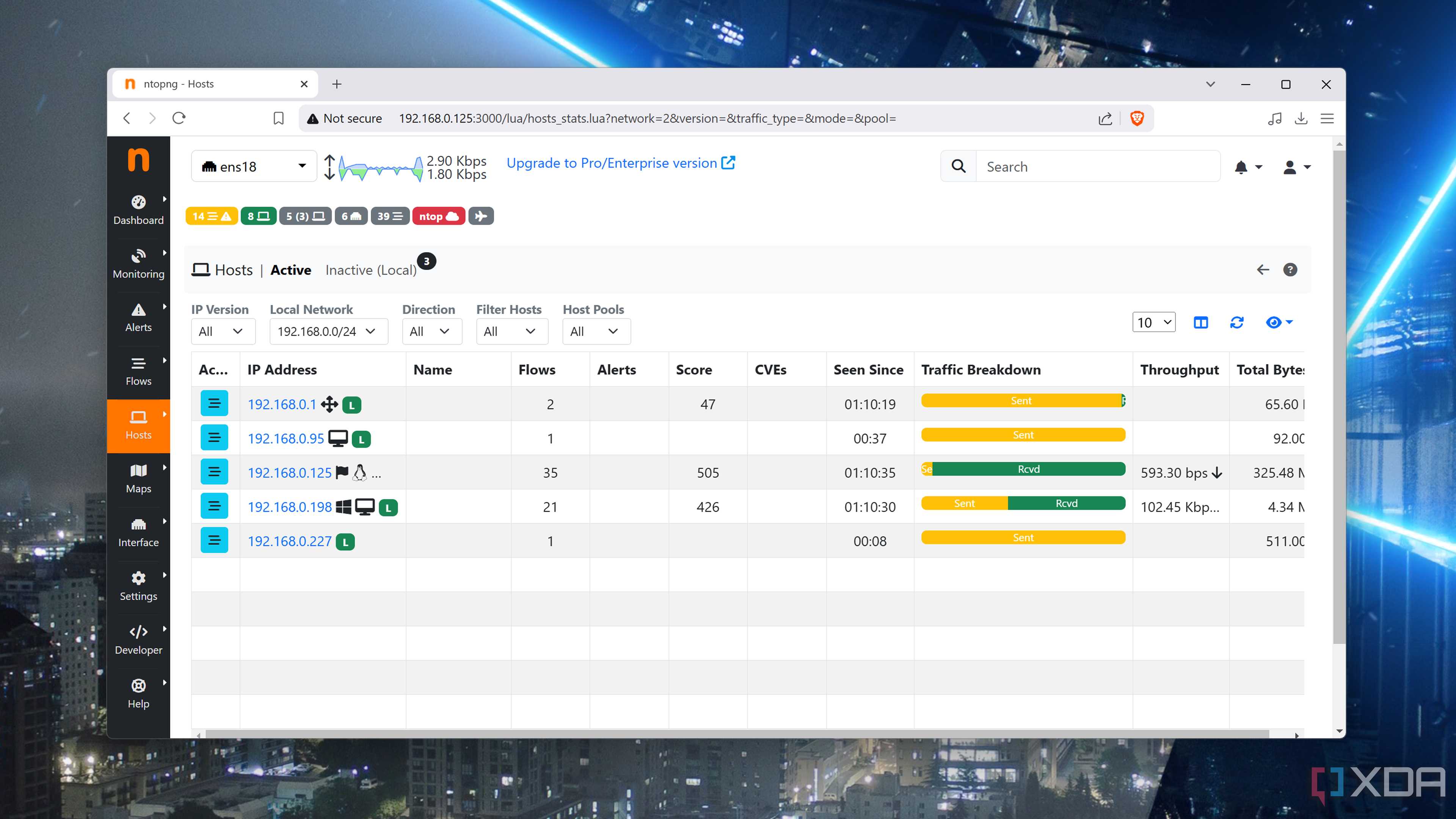
ntopng stands out as one of the most complex but versatile network probing utilities available. It allows you to monitor every aspect of your local area network (LAN). The tool provides a neat interface that displays all scanned devices and lets you view packets transferred between local systems in real-time. You can also set up flow alerts to be notified when a device engages in suspicious activities such as accessing blacklisted websites, downloading binary files, or using outdated network protocols.
Additionally, ntopng supports HTTPS, ICMP, and throughput tests on your local machines, generating detailed graphs of network statistics. For those concerned about security, it can run vulnerability scans to check for insecure ports. You can even integrate it with firewall logs from OPNsense, pfSense, and other self-hosted router distributions.
Uptime Kuma: Tracking Uptime Metrics
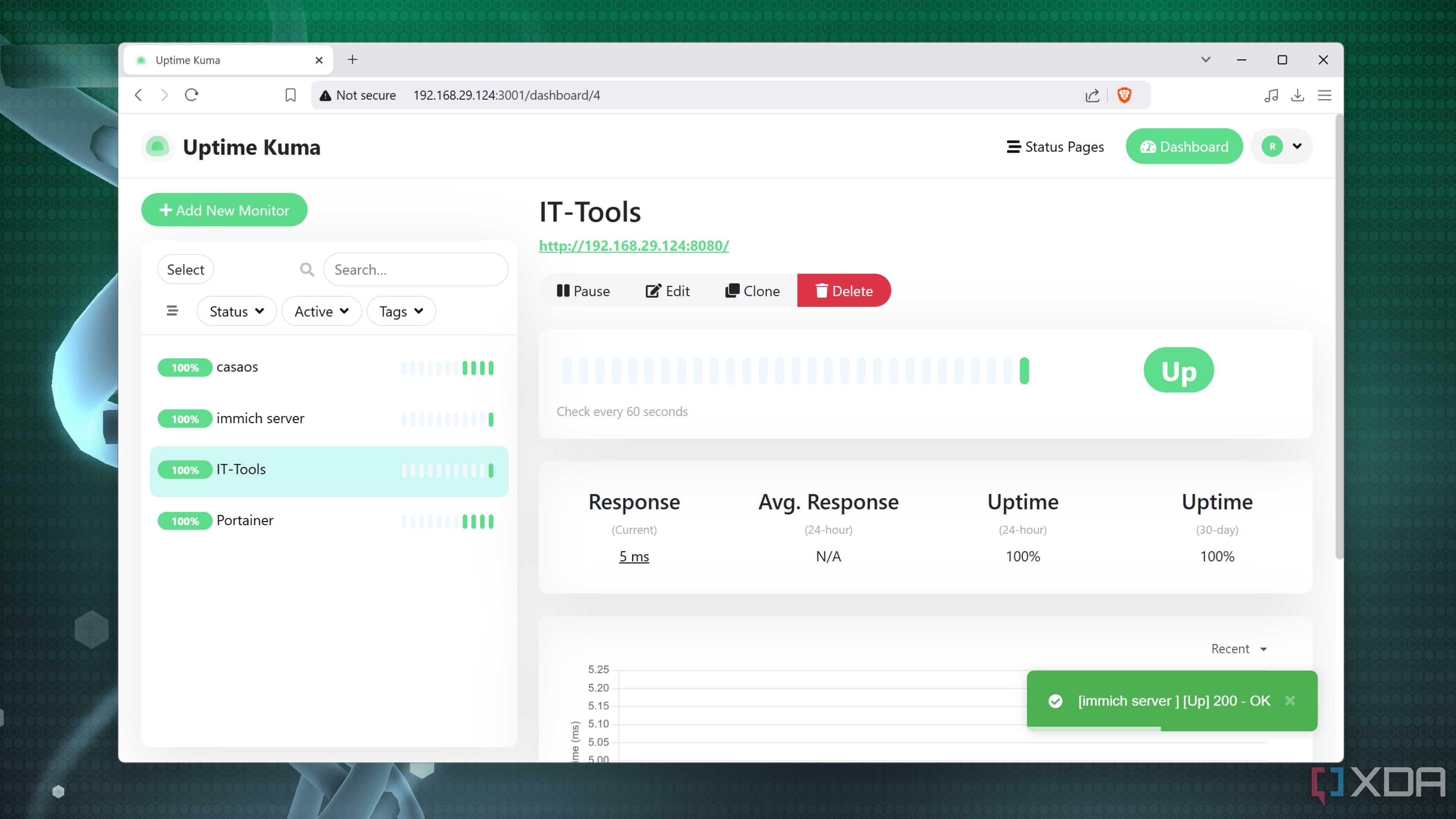
When running a home lab, tracking the uptime of your self-hosted apps and server nodes is essential. Uptime Kuma is a lightweight tool that checks the operational status of containerized services and virtualized platforms by sending heartbeat signals at regular intervals. It can detect latency, response time, and certificate expiry details for your service stack and send real-time alerts via notification hubs like Gotify, Discord, Slack, or Telegram.
I recommend using Uptime Kuma alongside Beszel and Pulse. While Uptime Kuma focuses on service health, Beszel monitors resource utilization metrics of underlying server nodes, including the host Raspberry Pi. Pulse combines the best of both worlds but only supports Proxmox tools. All three tools are lightweight and can be deployed even on lower-end Raspberry Pi boards.
NetAlertX: A Beginner-Friendly Tool
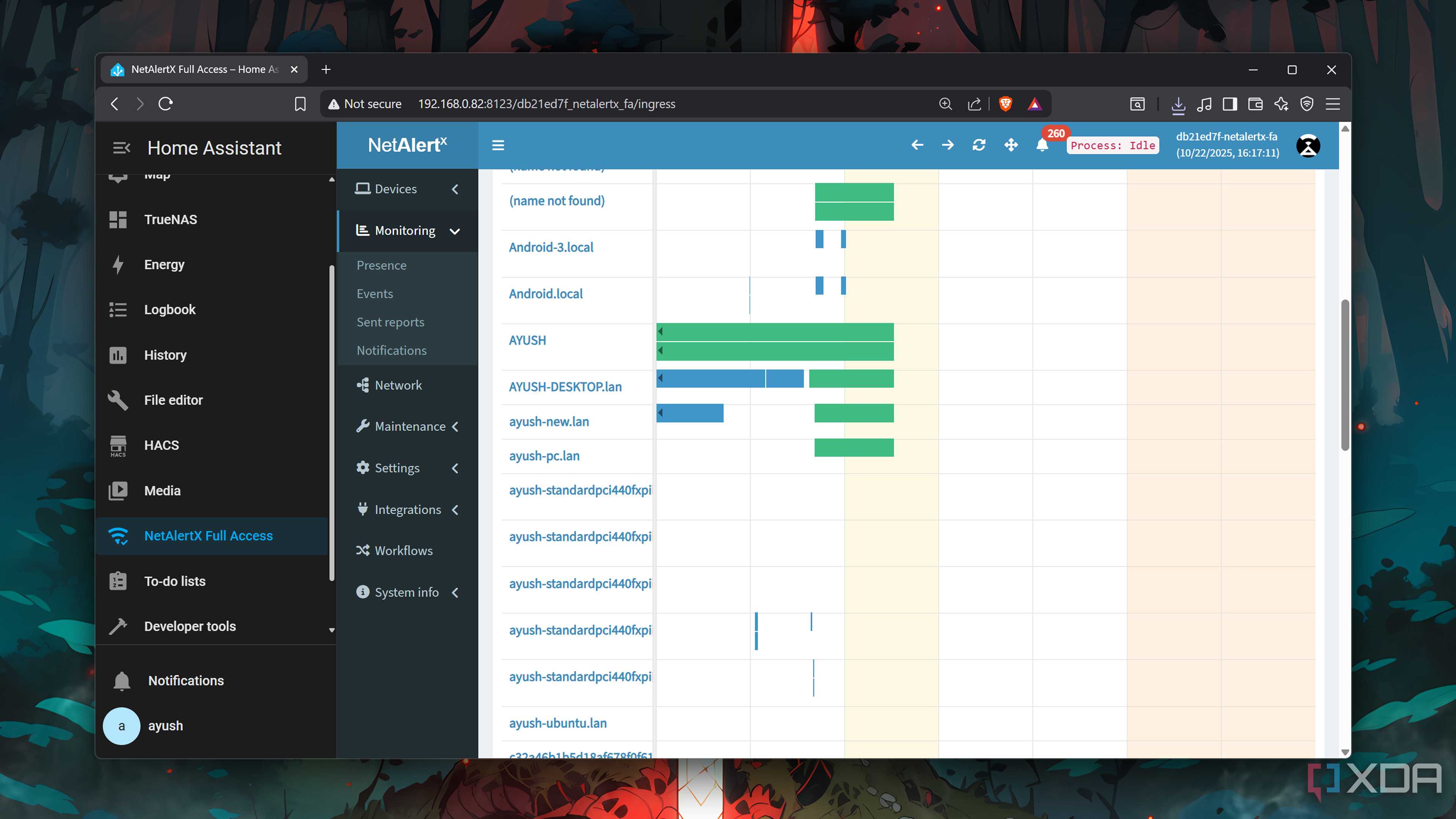
NetAlertX is an excellent choice for beginners and casual home labbers. It scans IP addresses, connection duration, MAC addresses, parent devices, last known states, and other network metrics, displaying them in an easy-to-access UI. It can retain these statistics and allow you to group similar devices. The ability to check for presence and generate event logs is particularly useful when managing temporary devices like disposable virtual machines.
The real advantage of NetAlertX is its integration with Home Assistant. It exports LAN metrics to Home Assistant, making them appear as entities that can be used to create custom HASS dashboards. This opens up possibilities for creating trigger-action automation chains.
SmokePing and LibreSpeed: Testing Internet Speeds
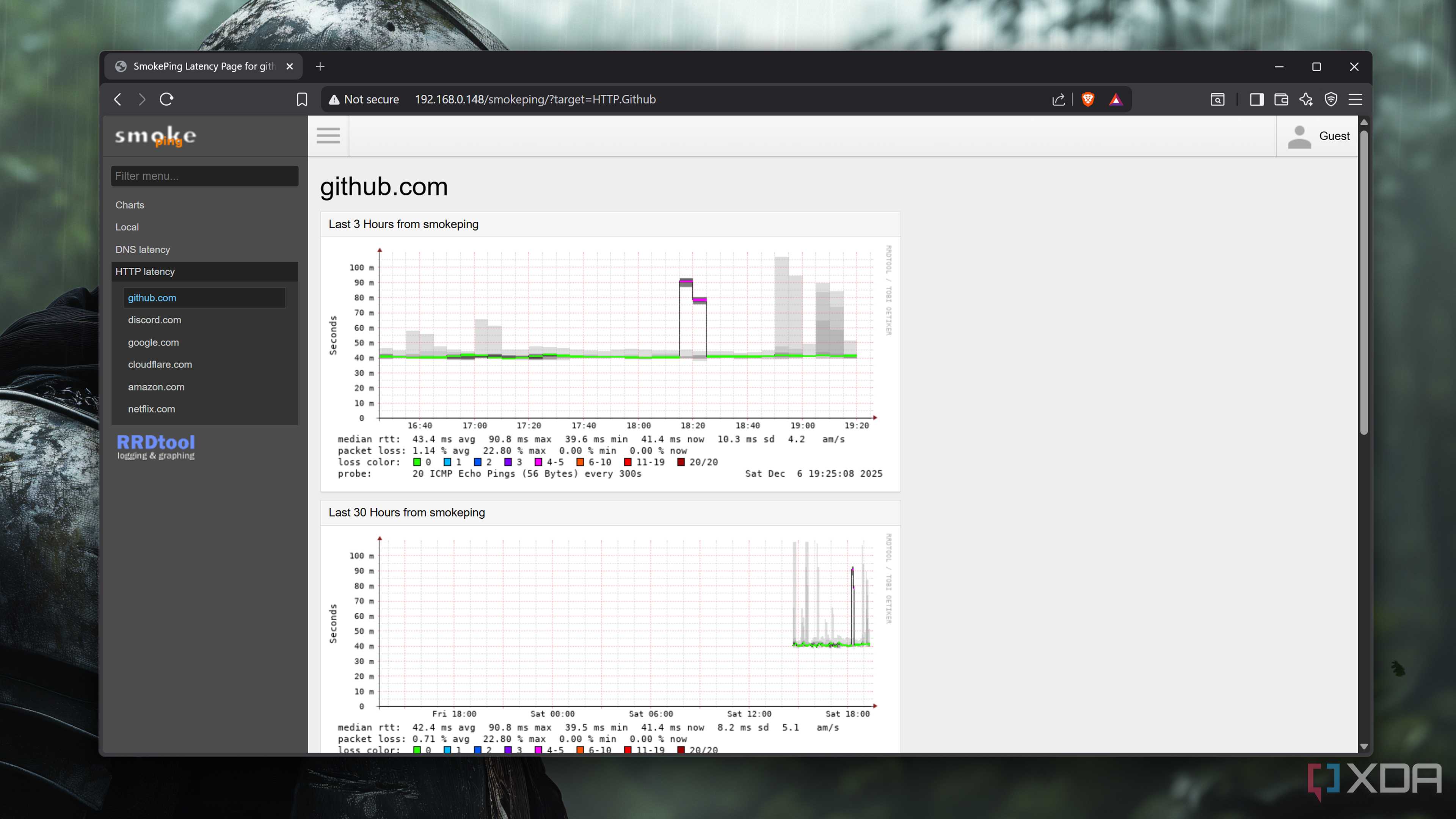
While ntopng and NetAlertX can scan LAN device latency, SmokePing is the best option for generating detailed round-trip time, jitter, and packet loss statistics. It supports multiple probes and can target different servers, allowing you to create complex latency variation graphs.
LibreSpeed is another lightweight tool that measures Internet speeds alongside ping and jitter. It’s a convenient container for your Raspberry Pi server if you're tired of ads on online speed test tools.
Additional Applications for Your Raspberry Pi Monitoring Node
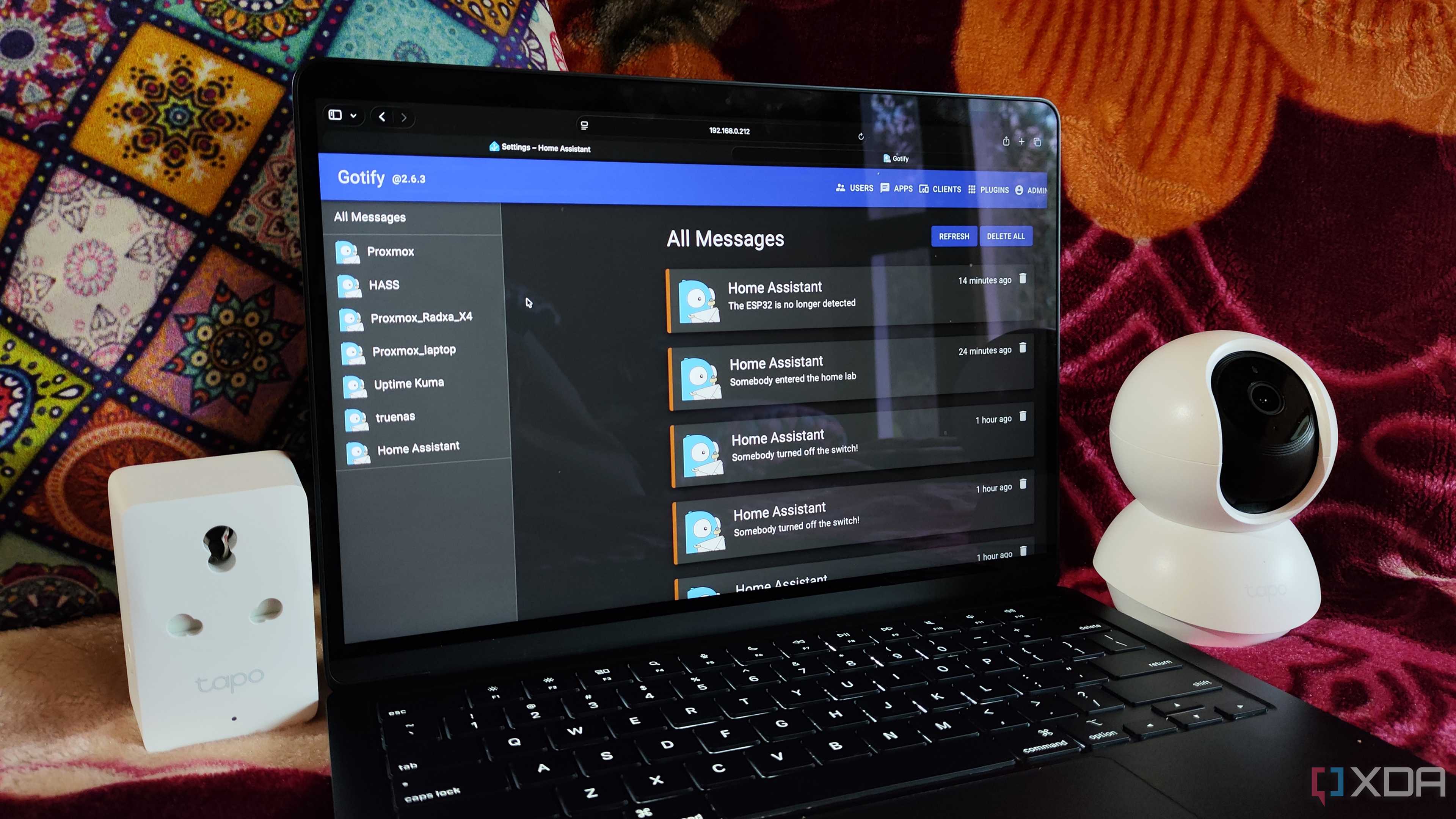
Beyond the tools mentioned, Grafana is a powerful dashboard that can gather metrics from your servers and display them in detailed graphs and charts. If you're using the combination of Pulse, Beszel, and Uptime Kuma, I recommend deploying a Gotify server to stay updated on alerts from the monitoring trinity.
You also have DNS resolvers like Pi-hole, AdGuard, and Unbound, which are popular among home labbers for blocking ads. They allow you to specify local domain names for your services and can be used in conjunction with reverse proxies like Nginx, Caddy, or Traefik to access your self-hosted app stack with custom URLs.

Posting Komentar untuk "4 Essential Network Monitoring Tools for Raspberry Pi"
Posting Komentar