
A Cosmic String: The Largest Spinning Object Ever Detected
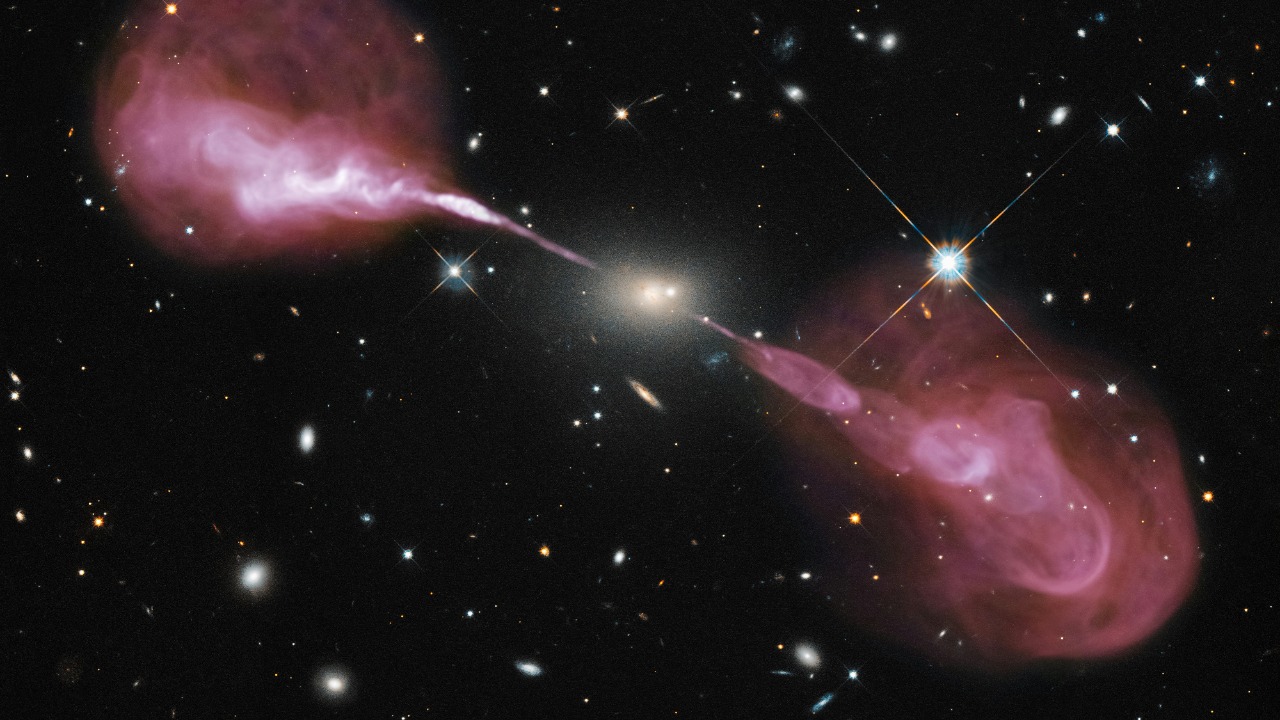
A New Discovery in the Cosmic Web
A newly identified string of galaxies, stretched across tens of millions of light years and slowly turning in space, is forcing astronomers to rethink how structure and motion emerge on the grandest scales. What looks at first like a delicate cosmic thread may in fact be one of the largest spinning objects ever detected, hinting that rotation is woven into the universe far beyond the level of individual stars and galaxies. For anyone trying to understand how the cosmos built itself, this giant galactic filament is less a curiosity than a new kind of laboratory.
A Surprise Hidden in the Cosmic Web
The discovery began not with a search for record breakers but with a close look at a familiar piece of the cosmic web, the vast network of filaments that link galaxy clusters across space. Astronomers examining a particular thread of galaxies noticed that instead of sitting randomly along the line, several of them appeared to share a common orientation and motion, as if they were beads sliding along a twisted wire. Study co-lead author Lyla Jung, an astronomer at the University of Oxford, described how the team first saw a striking alignment in the data, then realized that the galaxies were not just lined up but participating in a coordinated spin along a single structure that stretches for tens of millions of light years.
The filament that emerged from this analysis contains 14 distinct galaxies arranged in a narrow, elongated chain, a configuration that initially looked like an ordinary part of the large scale web. Only after the team mapped the velocities of these galaxies did the pattern of rotation become clear, revealing a coherent motion that marks the structure as a single, dynamically connected system rather than a chance alignment. That realization turned what began as a routine survey into the identification of a potential record setting rotating filament.
A 50 Million Light Year Thread That Actually Spins
What makes this structure so remarkable is not only its size but the clear evidence that it is rotating as a whole, something astronomers have long suspected might happen on large scales but rarely seen so cleanly. The filament extends roughly 50 million light years from end to end, a distance that dwarfs even the largest individual galaxies and rivals the dimensions of small superclusters. Within that span, the galaxies and the gas between them appear to share a common angular momentum, turning around the filament’s long axis in a motion that is slow by human standards but enormous in cosmic terms.
This thread is part of the broader cosmic web, which is made mostly of dark matter and laced with ordinary matter that condenses into galaxies and stars. In this case, the filament’s length and coherence make it one of the largest spinning structures ever identified, with the rotation traced through subtle shifts in the light from its galaxies and the diffuse material that links them.
How Astronomers Spotted the Spin
Detecting rotation on such a scale is not as simple as watching galaxies move across the sky, since their motion is far too slow to track directly over human lifetimes. Instead, astronomers infer the spin from Doppler shifts in the light coming from different parts of the filament, looking for a systematic pattern in which one side is slightly redshifted and the other slightly blueshifted relative to the average. In this case, the team measured the velocities of the 14 galaxies along the filament and found that their motions lined up with a model in which the entire structure is turning around its long axis, with galaxies on opposite sides moving in opposite directions along the line of sight.
The analysis also relied on mapping the distribution of gas and dark matter that threads between the galaxies, since the filament is not just a chain of isolated islands but a continuous structure. By combining radio observations with optical and infrared data, the researchers could trace both the galaxies and the underlying medium, then test whether the velocity pattern held across the full length of the filament.
A “Tornado” of Galaxies and Cold Hydrogen
To visualize the motion, some researchers have compared the filament to a tornado of galaxies, with each galaxy tracing a path around the central axis as the entire structure turns. This analogy captures the sense that the galaxies are not simply falling along the filament under gravity but are also caught up in a rotational flow that wraps around the thread. The pattern suggests that angular momentum is being transported along the filament, potentially feeding the spin of the galaxies themselves as they accrete gas and dark matter from the surrounding medium.
Crucially, the filament is not just made of galaxies but also contains diffuse, cold neutral hydrogen gas that appears to share in the rotation. The presence of this cold hydrogen, along with the rich hydrogen content of the galaxies embedded in the filament, indicates that the structure is an active channel for feeding star formation and galaxy growth rather than a relic.
MeerKAT’s Role in Mapping a Gigantic Filament
Unraveling the structure and motion of this filament required sensitive radio observations, and South Africa’s MeerKAT radio telescope played a central role. MeerKAT’s array of dishes is designed to detect faint radio emissions from hydrogen gas across large swaths of sky, making it ideal for tracing the diffuse material that fills the spaces between galaxies. By mapping the 21 centimeter line of neutral hydrogen, astronomers could follow the filament’s spine, measure how gas is distributed along it, and detect the subtle velocity shifts that reveal rotation.
The recently published study that identified this gigantic spinning filament of 14 galaxies used MeerKAT’s data to show that the structure extends for millions of light years and that its galaxies are embedded in a continuous river of gas. This combination of galaxy positions, gas distribution, and velocity information allowed the team to argue that the filament is not just long but dynamically connected, with a shared angular momentum that may qualify it as the largest rotating structure yet found.
Why Such a Vast Spin Is So Surprising
On smaller scales, rotation is a familiar feature of the cosmos, from spinning planets and stars to disk galaxies that turn like cosmic pinwheels. Our own Milky Way is a classic example, with its spiral arms rotating around the galactic center and carrying the Sun along for the ride. It will take our sun and solar system 220 million years to complete one orbit of the galaxy, a timescale that illustrates how even “fast” galactic rotation unfolds over hundreds of millions of years.
What is far less expected is to see a similar kind of organized spin on scales tens of millions of light years across, where the cosmic web was often treated as a mostly static scaffold. The discovery that a filament of this size is rotating suggests that angular momentum can be generated and preserved across much larger structures than many models assumed, potentially requiring refinements to theories of how galaxies form and acquire their spin.
What the Filament Reveals About Dark Matter and Galaxy Growth
Because the cosmic web is dominated by dark matter, any large scale rotation is ultimately a statement about how dark matter itself is moving and clumping under gravity. The filament’s spin implies that dark matter within the thread has acquired angular momentum, likely through tidal interactions and the complex flows that shaped the web after the Big Bang. As ordinary matter falls into this rotating dark matter backbone, it is dragged into motion, forming galaxies that inherit some of the filament’s spin and gas flows that spiral along the structure rather than simply streaming straight inward.
This picture has direct implications for how galaxies grow and form stars, since the inflow of gas along filaments is a key ingredient in sustaining star formation over billions of years. If the gas is rotating as it falls in, it can more easily settle into disks and feed the kind of ordered rotation seen in spiral galaxies, rather than plunging straight into chaotic mergers.
Rewriting the Limits of Cosmic Structure
For now, astronomers are cautious about declaring this filament definitively the largest spinning object in the Universe, since future surveys may reveal even more extensive rotating structures. Yet the current evidence already pushes the known limits of how big a coherent, rotating system can be, expanding the scale on which angular momentum is known to operate.
As new instruments come online and existing arrays like MeerKAT continue to map the sky, researchers expect to find more examples of spinning filaments and perhaps even larger rotating complexes that link multiple galaxy clusters. Each new detection will help clarify whether the observed filament is an outlier or a representative of a broader population of rotating structures that have so far escaped notice. Either way, the discovery has already shifted the conversation, turning what was once a speculative idea about the cosmic web’s dynamics into a concrete, observed phenomenon that must now be woven into our understanding of how the Universe built its largest patterns.

Posting Komentar untuk "A Cosmic String: The Largest Spinning Object Ever Detected"
Posting Komentar