
A Quantum Components Industry Rises
The Challenge of Quantum Electronics
Quantum computers operate under extreme conditions that make the design and integration of supporting electronics a significant challenge. The freezing temperatures required to maintain quantum states, combined with the fragility of qubits, impose strict limitations on the components that can be used. Traditionally, quantum computing companies have tackled these issues internally, but as the field evolves, a growing industry of specialized component suppliers is emerging to provide ready-made solutions.
Both superconducting and silicon spin qubit technologies rely on extremely low temperatures to prevent thermal noise from interfering with calculations. This necessitates the use of dilution refrigerators capable of cooling to around 20 millikelvin (-273.13 °C). These fridges are limited in space and cooling power, especially at such low temperatures. Conventional control electronics generate too much heat to be placed inside, so they are typically located externally, connected via bulky cables that also introduce heat into the system. This setup is inefficient, restricting the number of qubits that can fit in each fridge.
The Rise of Specialized Components
To address these challenges, startups are developing electronics, amplifiers, and cabling designed specifically for cryogenic environments. Janne Lehtinen, chief science officer at Finnish startup SemiQon, highlights how this could lead to tighter integration between qubits and electronics, significantly boosting computing power within each fridge.
The emergence of this ecosystem mirrors the early years of classical computing, where initial efforts were concentrated in-house, but as the field advanced, specialization became key. “You didn’t have to be the best at everything but you took the best from the market,” says Lehtinen. “And I think this is now starting to happen in quantum as well.”
Sub-Zero CMOS
SemiQon has developed a new CMOS transistor optimized for cryogenic temperatures, allowing control electronics to operate in the coldest parts of a dilution fridge. By optimizing design and materials, they’ve reduced the switching threshold, enabling operation at extremely low voltages. This means the transistors dissipate almost no heat, making them suitable for use at 20 mK without exceeding the fridge’s cooling budget.
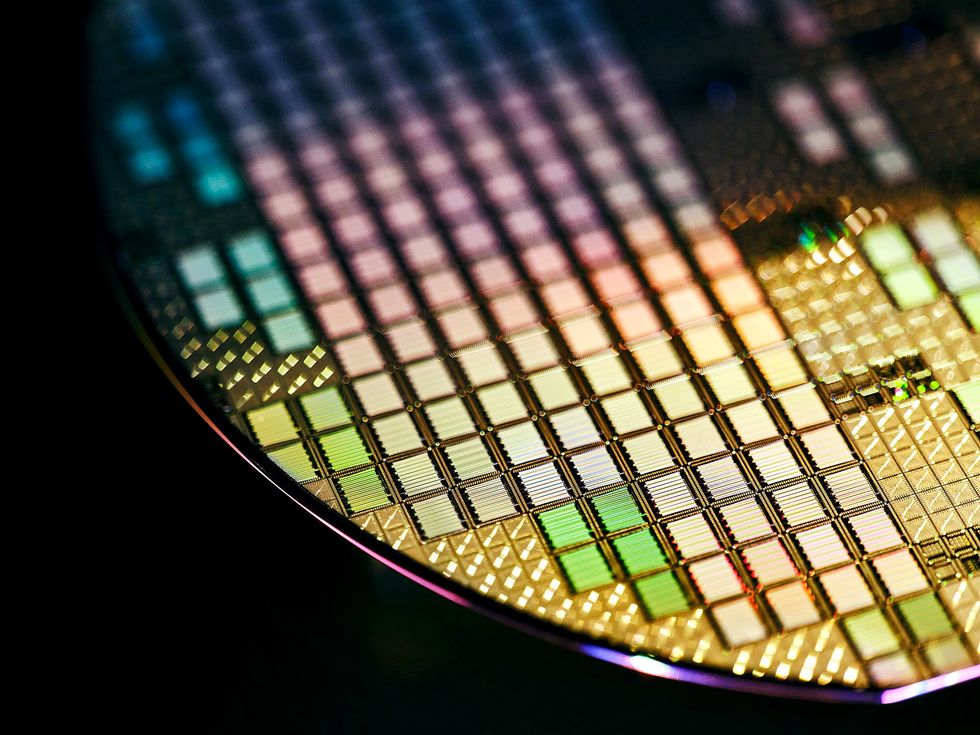
Transistors optimized to produce the least heat at cryogenic temperatures will enable control electronics to get closer to the quantum processors.
SemiQon
Lehtinen believes this innovation could allow control electronics to operate alongside qubits, reducing their physical footprint and enabling more qubits per device. Currently, the company can build circuits with a few thousand transistors, enough for useful components like multiplexers and switches. Within two years, they aim to produce a cryogenic microcontroller capable of controlling a quantum processor with around 100 qubits.
Amplifiers That Reduce Noise
Signal amplifiers are another critical component in quantum computing architectures, often generating significant heat. Jérôme Bourassa, CEO of Canadian startup Qubic Technologies, explains that current amplifiers consume up to 50% of a fridge’s cooling budget. Superconducting amplifiers based on Josephson junctions are used at the coldest stages, but they don’t provide enough signal boost. More powerful semiconductor amplifiers are needed, but they produce tens of milliwatts of heat and must be placed at the 4K stage.
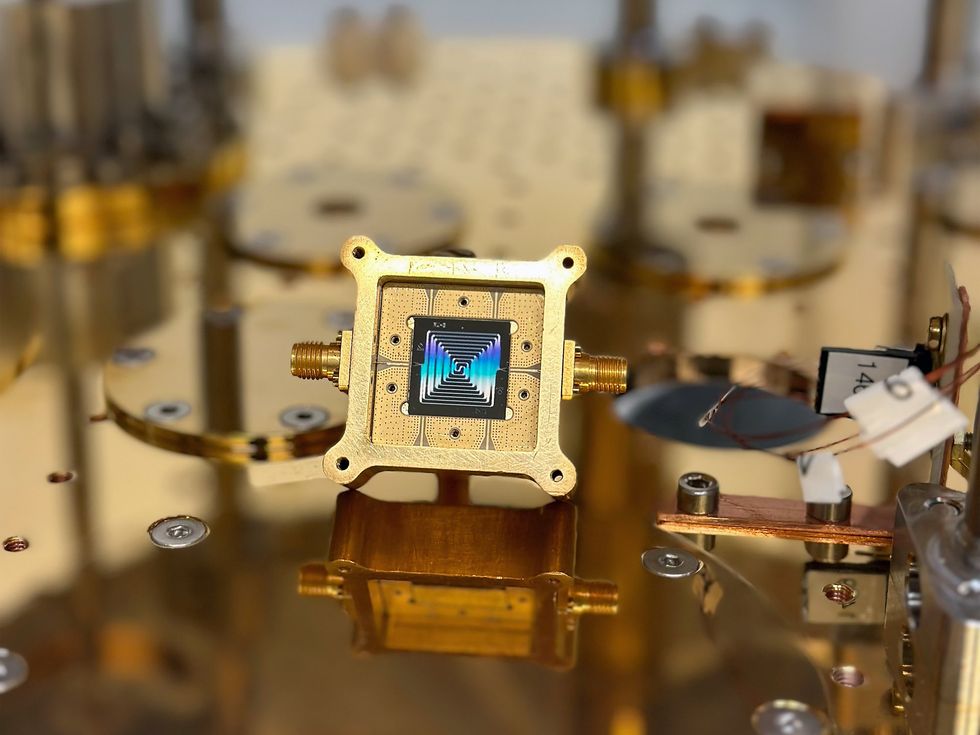
Signal amplifiers made of superconducting materials may reduce the heat dissipated by amplifiers by a factor of 10,000.
Qubic Technologies
Qubic has developed a novel superconducting amplifier using waveguides made from a proprietary niobium alloy. It provides the same signal boost as conventional amplifiers but reduces heat dissipation by a factor of 10,000. These amplifiers can operate at millikelvin temperatures, though current designs produce too much noise to be used close to qubits. Instead, they are intended as a drop-in replacement for semiconductor amplifiers, reducing the cooling burden. The devices are set to launch in 2026, with early partnerships already in place.
Flexible Cabling Solutions
Cabling is another major limitation in quantum systems. Daan Kuitenbrouwer, chief product officer at Delft Circuits, notes that traditional coaxial cables are bulky and conduct heat into the system. They also require multiple interconnects, which can become points of failure due to thermal contraction.
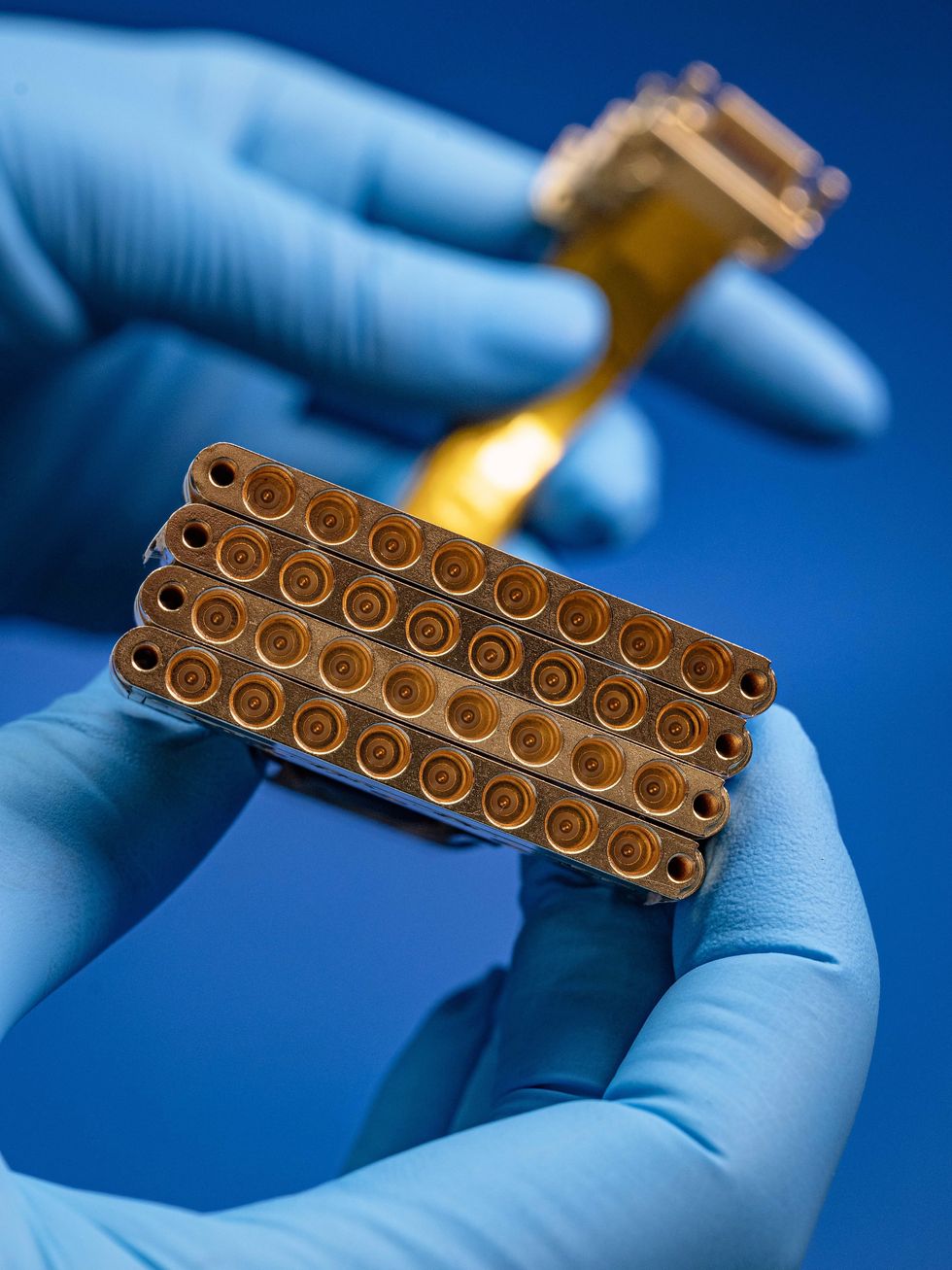
Thin, flexible wires made out of superconducting material will take up less space and produce less heat in a cryogenic container, allowing for more quantum bits to fit in a single refrigerator.
Delft Circuits
Delft has developed a superconducting flex cable that is compact, reduces connections, and minimizes heat transfer. The cable features eight adjacent wires, with silver used above 4K and a niobium-titanium superconductor below. The thin wires conduct very little heat, and components like signal filters are integrated directly into the cable. This reduces the number of connectors to just two, improving reliability and efficiency.
A Future Quantum Motherboard
Looking ahead, Delft plans to use similar technology to create a “quantum motherboard” — a 2D sheet infused with connecting wires that can integrate various components at cryogenic temperatures. Kuitenbrouwer envisions future quantum computers following a chiplet architecture, with multiple smaller quantum processing units and cryogenic control electronics all integrated on the same chip.
“You get this whole zoo of different functional components that all have to be connected to each other,” he says. “So what you basically need is very high density, very low loss interconnect, and that is what superconducting flex can offer.”
The Path Forward
Tying together these innovations is the shared goal of saving both space and cooling budgets. For Qubic’s Bourassa, this is essential for the quantum industry to scale and meet its ambitious goals. “Having the capacity to remove the heat, having the capacity to make your systems more compact is definitely the pathway towards something that is viable in the future, both in terms of power but also economically.”

Posting Komentar untuk "A Quantum Components Industry Rises"
Posting Komentar