
AFL-CIO Warns Lawmakers: Crypto Bill Could Boost Financial Risks
AFL-CIO Warns of Risks in Financial Innovation Legislation
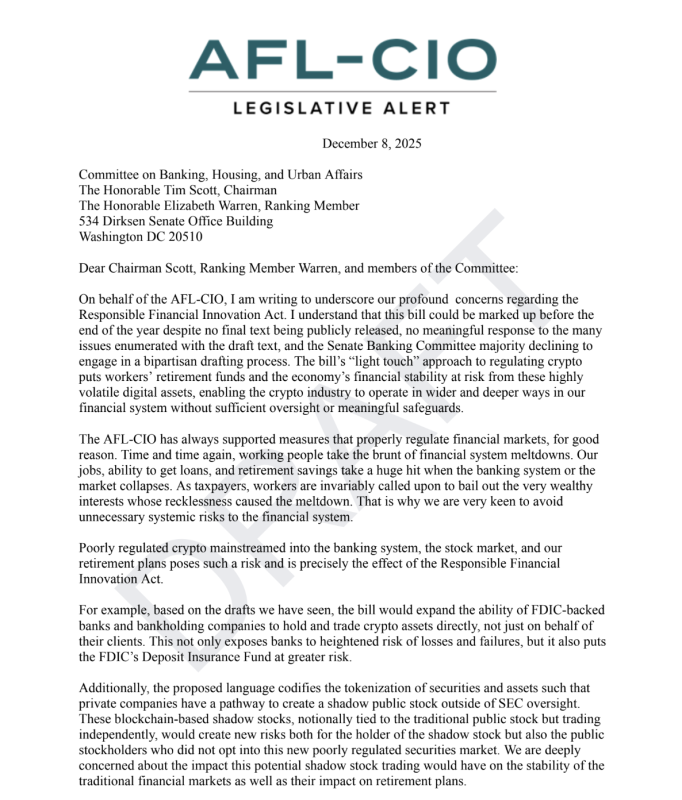
The AFL-CIO, a major labor federation in the United States, has raised significant concerns about the Responsible Financial Innovation Act. In a recent letter addressed to members of the Senate Banking Committee, the organization urges them to pause the legislative process. The AFL-CIO argues that the bill could pose serious risks to workers’ retirement savings and the broader financial system.
Key Concerns Raised by the AFL-CIO
In its letter, the AFL-CIO outlines several critical issues with the proposed legislation. One of the primary concerns is that the bill may be marked up before the end of the year, even though the final text has not been publicly released. The organization criticizes the lack of meaningful engagement on the issues raised in earlier drafts of the bill. Additionally, it points out that the committee’s majority has not pursued a bipartisan drafting process.
The AFL-CIO is particularly concerned about the regulatory approach outlined in the bill. It argues that the legislation would allow the cryptocurrency industry to expand within the financial system without sufficient oversight. This expansion, according to the organization, could endanger workers' retirement funds and threaten overall financial stability due to the volatile nature of digital assets.
Impact on Retirement Savings and Financial Stability
Historically, working people have faced the consequences of financial crises, including job losses, reduced access to credit, and declines in retirement savings during market downturns. The AFL-CIO highlights that taxpayers are often required to bail out financial institutions when regulatory safeguards fail. The organization warns that the current bill could exacerbate these issues.
One specific concern is the bill's provision allowing FDIC-insured banks and bank holding companies to hold and trade crypto assets directly. According to the letter, this change could increase the risk of losses and failures within the banking sector. It also raises the potential exposure of the FDIC’s Deposit Insurance Fund.
Tokenization and Market Risks
Another issue highlighted in the letter is the treatment of tokenization—the process of issuing blockchain-based representations of securities or assets. The AFL-CIO states that the proposed language could give private companies a pathway to create tokenized versions of stock that would trade outside of Securities and Exchange Commission (SEC) oversight.
These “shadow” blockchain-based stocks could introduce risks for holders of the tokenized assets and for traditional shareholders who have not opted into such markets. The letter warns that this could affect the stability of public financial markets and have implications for retirement plans that depend on regulated securities.
Weakening Enforcement Capabilities
The AFL-CIO also argues that the bill would weaken both federal and state enforcement capabilities. The letter states that the legislation could create opportunities for issuers to avoid SEC regulation through tokenization, reduce public disclosure requirements, and preempt state-level antifraud, securities, and consumer-protection laws.
These changes, the federation notes, could undermine longstanding safeguards intended to protect retirement plans from fraud, conflicts of interest, and other harmful practices.
Conclusion: A Call for Caution
Overall, the AFL-CIO contends that the Responsible Financial Innovation Act appears to provide regulatory structure for cryptocurrency while actually making the assets more mainstream in investment portfolios, including retirement accounts, without offering adequate protections. The letter concludes that the bill "does not protect consumers, workers, or the financial system," and instead exposes them to greater risk.
View the 2 images of this gallery on the original article

Posting Komentar untuk "AFL-CIO Warns Lawmakers: Crypto Bill Could Boost Financial Risks"
Posting Komentar