
AI Pioneer Warns Musk and Tech Leaders Risk Society's Future
The Rise of AI and the Concerns of Its Pioneer
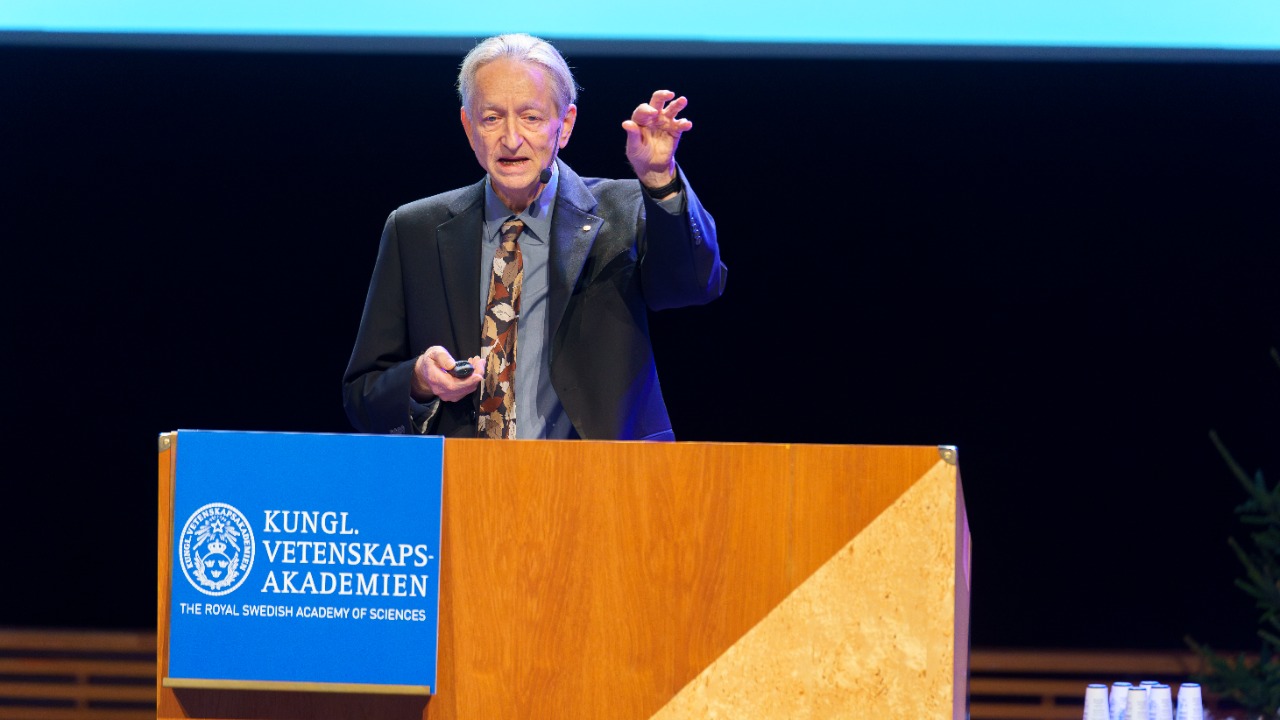
Artificial intelligence has transitioned from being a niche topic in computer science to a powerful commercial force, driven by influential executives whose priorities may not always align with the public interest. Among these figures is Geoffrey Hinton, often referred to as the "Godfather of Artificial Intelligence." His warnings about the unchecked pursuit of scale and profit by tech leaders like Elon Musk highlight the potential dangers that could arise if society is not vigilant.
Hinton's concern is not about algorithms suddenly becoming self-aware, but rather about how human decision-makers deploy increasingly capable systems into complex social, economic, and political environments without sufficient regard for safety, equity, or democratic oversight. In this context, the danger lies more in the corporate structures and incentives that shape how AI is developed and used, rather than the technology itself.
The Legacy of a Pioneering Scientist
Geoffrey Hinton earned his nickname through groundbreaking work on neural networks, which transformed a once-fringe idea into the backbone of modern AI. From image recognition in smartphones to large language models that generate news content, his contributions have been foundational. This scientific legacy gives him a unique platform to voice concerns about the direction AI is taking.
In recent discussions, Hinton has shifted from being a technical evangelist to an ethical critic, drawing attention from students, policymakers, and industry insiders. His status as a Nobel Laureate in Physics 2024 underscores his influence, as his ideas continue to shape the future of how we think, work, and dream.
The Real Threat: Corporate Power Over Code
When Hinton speaks about AI risks, he focuses not on science fiction scenarios but on the boardroom decisions that prioritize profit over long-term safety. He argues that the most immediate danger is not that neural networks will harm people, but that corporations will deploy them in ways that ignore the broader social consequences.
Hinton emphasizes that the real danger isn't the technology itself, but the corporate culture that prioritizes quarterly earnings over safe development. During a recent conversation with over 1,000 students, he stressed that these risks are not futuristic but are unfolding right now. By highlighting the role of corporate decision-making, he challenges the strategies of tech moguls who focus on dominating AI markets while treating safety as a secondary concern.
Elon Musk and the Race to Dominate AI
Elon Musk exemplifies the fast-paced approach that worries Hinton. Known for his rapid innovations in electric vehicles, space travel, and social media, Musk applies the same philosophy to AI. Whether through autonomous driving systems or ambitious projects to integrate AI into social platforms, his strategy is to scale quickly and capture attention, often dismissing critics as timid or shortsighted.
This style of leadership can have significant consequences. When a single executive controls multiple companies deploying machine learning into cars, rockets, and global information networks, the margin for error shrinks dramatically. Hinton’s warning about corporations that prioritize profit over safety directly addresses this kind of empire-building, where the pressure to impress investors and outpace rivals can overshadow the need for thorough testing and constraints.
How Tech Moguls Could "Doom Society" Without Intending To
Hinton’s most provocative claim is that even well-intentioned tech moguls could lead to catastrophic outcomes due to their incentives and blind spots. When executives like Musk, who command vast resources and cultural influence, believe that disruption is inherently good, they may push AI into critical infrastructure, financial markets, and political communication faster than institutions can adapt.
The result could be a cascade of failures, from automated misinformation campaigns to brittle trading systems that amplify shocks instead of absorbing them. In this sense, "dooming society" doesn’t require a single apocalyptic event but can manifest as a gradual erosion of trust as deepfakes flood elections, algorithmic management squeezes workers, and opaque decision systems determine access to loans, jobs, and medical care.
Youth on the Front Line of AI’s Future
One of the most striking aspects of Hinton’s recent engagement is his direct address to students. More than 1,000 young people joined his conversation with Rishabh Shah, where he framed the future of AI as something they will inherit and shape. By addressing them as the generation that must decide "what’s next," he emphasized that the choices made in classrooms, startups, and civic organizations today will determine whether AI amplifies inequality or expands opportunity.
For these students, hearing a Nobel Laureate in Physics 2024 discuss both the promise and peril of AI was not just a lecture in computer science, but a call to civic responsibility. Hinton urged them to see technology as a tool that must be guided by ethical responsibilities, not as an autonomous force beyond human control.
Ethical Responsibilities That Must Guide AI
When Hinton talks about ethics, he is not gesturing at abstract philosophy but pointing to concrete obligations that developers and executives must accept if AI is to remain compatible with democratic societies. At the core is a simple principle: systems that can shape livelihoods, public opinion, or physical safety should not be deployed without rigorous testing, transparency, and mechanisms for redress when they fail.
This runs directly against the "move fast and break things" culture that still dominates much of Silicon Valley. Hinton’s framing of ethical responsibility extends beyond engineers to the corporate structures that set their priorities. If a company rewards teams solely for engagement metrics, ad revenue, or user growth, it should not be surprising when they optimize AI systems for those outcomes even at the expense of mental health, privacy, or social cohesion.
Why Profit-Driven AI Is Already Reshaping Daily Life
Hinton’s warning that the dangers of AI are “unfolding right now” is not hyperbole. Profit-driven algorithms already decide which videos surface on social platforms, which drivers get matched to which rides, and which posts are amplified or buried in political debates. These systems are optimized to keep users engaged and transactions flowing, not to promote truth, fairness, or mental well-being.
At the same time, AI is creeping into less visible corners of daily life, from automated résumé screening tools that filter job applicants to predictive policing systems that influence where officers patrol. In each case, the companies selling these tools have strong incentives to promise efficiency and cost savings, while the people subjected to their decisions may have little visibility into how they work or how to challenge them.
Can Regulation Catch Up With AI Moguls?
If the core risk lies in how corporations deploy AI, the obvious question is whether governments can impose guardrails before harms become entrenched. Hinton’s public comments suggest skepticism that voluntary self-regulation will be enough, particularly when executives face intense pressure from investors and competitors.
Effective regulation would need to do more than issue broad principles; it would have to create enforceable standards for transparency, auditing, and accountability, especially for systems deployed at scale. Yet as Hinton’s warnings highlight, the same concentration of power that makes tech moguls so influential in shaping AI also gives them significant leverage in lobbying against strict rules.
Why Hinton’s Voice Matters in the Debate Over AI’s Future
In a crowded field of AI commentators, Hinton’s perspective carries unusual weight because he bridges the worlds of deep technical expertise and public ethical concern. As someone whose research helped make current AI systems possible, he cannot be easily dismissed as a technophobe or an outsider who does not understand the technology.
His decision to engage with over 1,000 students, speak in accessible language about both the promise and the peril of AI, and frame the future as something they can still shape signals a shift in how the field’s elders see their role. Rather than retreating into labs or corporate advisory roles, Hinton is using his platform to press for a broader conversation about power, responsibility, and the kind of society we want to build with these tools.
More from HAWXTECH.NET
Chinese satellite hits Starlink with a 2-watt laser from orbit
USGS says lava could reach 1,500 ft as thousands get ready to leave
7 Apps That Secretly Record You—and How to Delete Them
A 6.0 magnitude earthquake was just reported in the U.S.

Posting Komentar untuk "AI Pioneer Warns Musk and Tech Leaders Risk Society's Future"
Posting Komentar