
AI Reinforces Unrealistic Body Standards and Lack of Diversity in Sports
Understanding the Perception of an "Athletic Body" Through AI
What does it mean to have an "athletic body"? How does artificial intelligence perceive this concept? A recent study conducted by researchers at the University of Toronto explored these questions by analyzing the appearance-related traits of AI-generated images of male and female athletes and non-athletes. The findings reveal that AI is reinforcing exaggerated and unrealistic body standards.
Even before the rise of AI, athletes have faced pressure to conform to certain physical ideals—being thin, muscular, and attractive. Coaches, opponents, spectators, and the media all play a role in shaping how athletes view their bodies. However, these pressures are often disconnected from actual performance and instead relate to the objectification of the body. This can lead to negative body image, poor mental health, and reduced athletic performance.
The Role of AI in Shaping Body Ideals
With the increasing use of AI on social media, understanding how AI depicts athlete and non-athlete bodies has become crucial. What AI portrays as "normal" can influence public perception and may soon be normalized.
In our research, we generated 300 images using different AI platforms to explore how male and female athlete and non-athlete bodies are depicted. We examined factors such as demographics, body fat levels, muscularity, clothing fit and type, facial attractiveness, and body exposure. We also noted indicators of visible disabilities, like mobility devices.
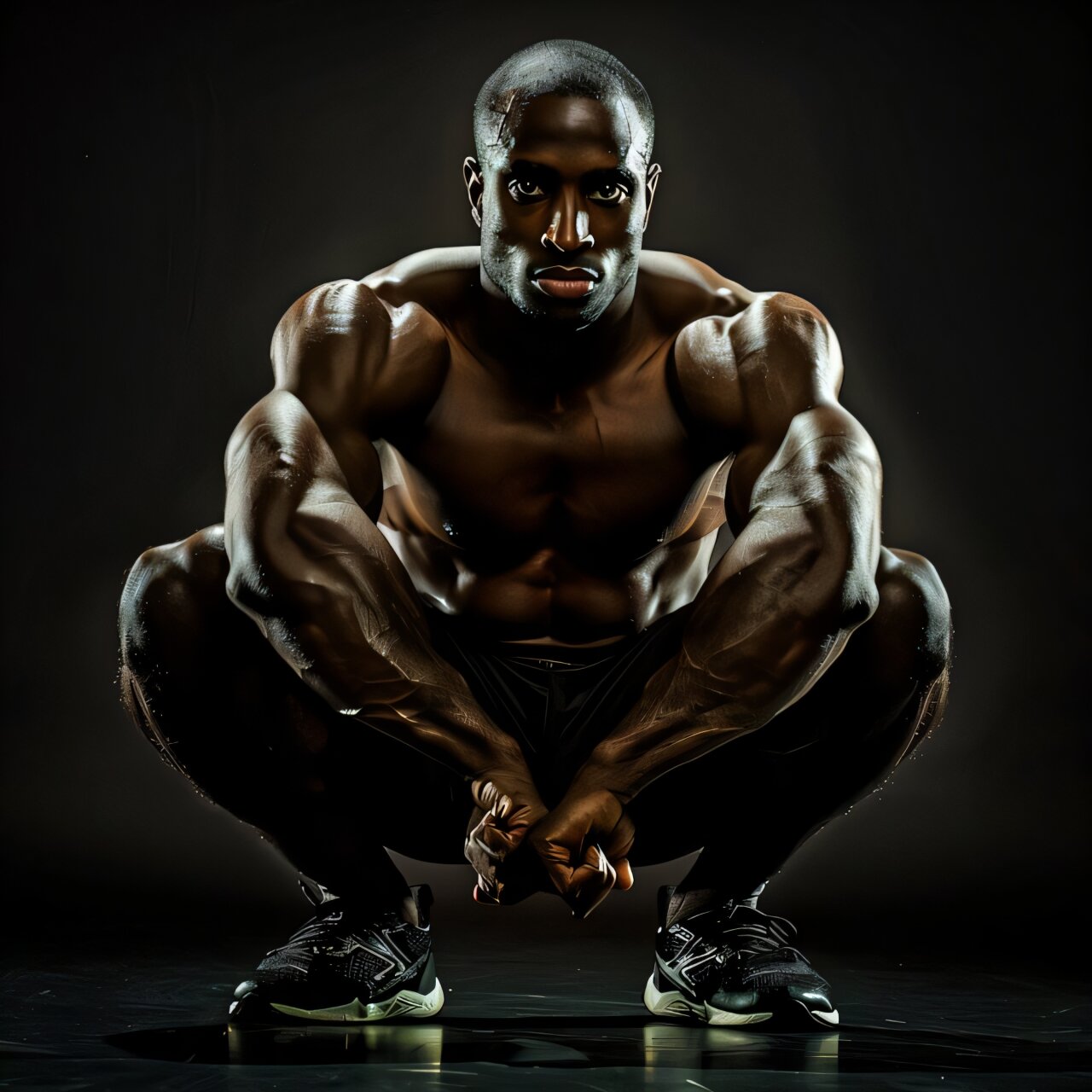
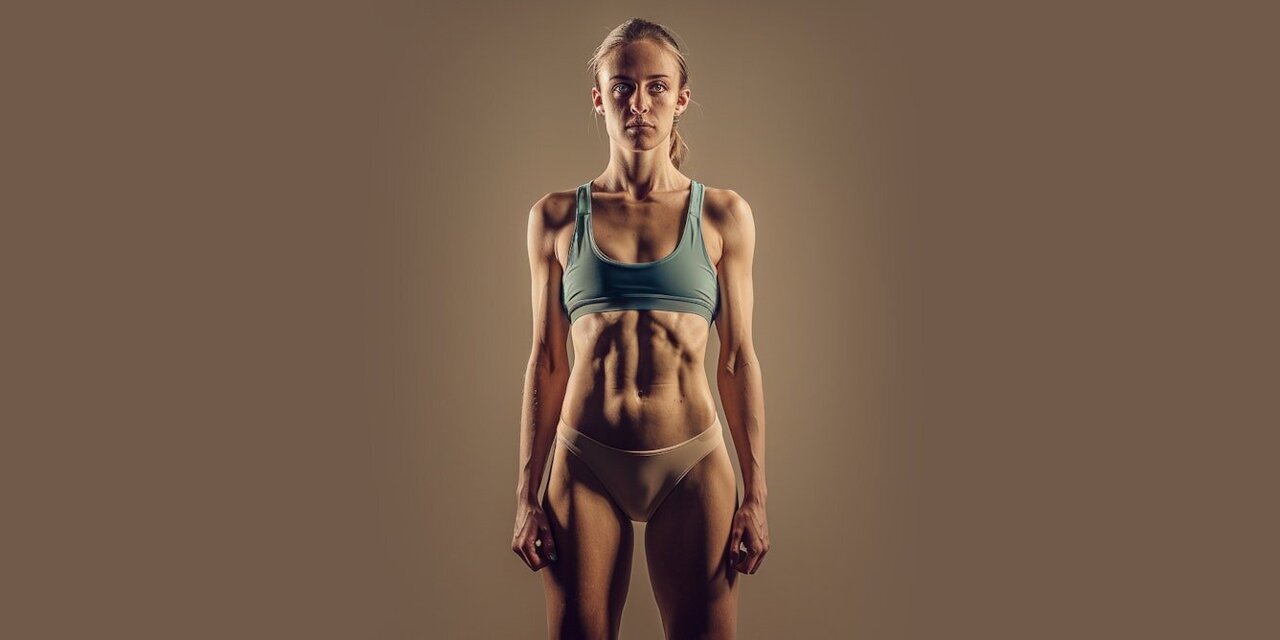
The results showed that AI-generated male images were frequently young (93.3%), lean (68.4%), and muscular (54.2%). Female images were predominantly young (100%), thin (87.5%), and featured revealing clothing (87.5%). Athlete images were typically lean (98.4%), muscular (93.4%), and dressed in tight and revealing exercise gear. In contrast, non-athlete images displayed more diversity in body sizes and clothing styles.
Even when the prompt was simply "an athlete," 90% of the generated images were male. None of the images included visible disabilities, larger bodies, wrinkles, or baldness. These findings highlight how generative AI perpetuates narrow stereotypes of athletes, depicting them as fitting into a specific set of traits—lacking impairments, being attractive, thin, muscular, and exposed.
The Real Costs of Distorted Body Ideals
Why is this a problem? With over 4.6 billion people using social media and 71% of social media images generated by AI, the impact is significant. Repeated exposure to AI-generated images can foster self-objectification and the internalization of unrealistic body ideals. This may lead individuals to diet, over-exercise, or avoid physical activity altogether due to feelings of inadequacy.
Negative body image not only affects academic performance for young people but also impacts sport-related performance. While staying active can improve body image, negative perceptions do the opposite, leading to dropout and avoidance. Given that approximately 27% of Canadians over the age of 15 have at least one disability, the absence of visible disabilities in AI-generated images is particularly concerning. Additionally, AI has been reported to erase disabilities in real-world images.
Individuals with body fat, wrinkles, or baldness were also largely absent from the generated images.
Addressing Bias in the Next Generation of AI
These patterns show that AI is not creating realistic or creative representations. Instead, it draws from a vast online database where harmful appearance ideals dominate. AI is essentially recycling societal prejudices and discrimination, offering them back to users. It learns body ideals from a biased society that has long fueled body image pressures, resulting in a lack of diversity and unreachable standards.
AI-generated images present exaggerated, idealized bodies that limit human diversity and contribute to lower body image satisfaction, which is linked to greater loneliness. As creators of visual content that trains AI systems, society has a responsibility to ensure these technologies do not perpetuate ableism, racism, fatphobia, and ageism. Users of generative AI must be intentional in how they write and interpret image prompts.
We need to limit the sort of body standards we internalize through AI. As AI-generated images continue to populate our media landscape, we must be conscious of our exposure to them. Ultimately, if we want AI to reflect reality rather than distort it, we must insist on seeing and valuing every kind of body.

Posting Komentar untuk "AI Reinforces Unrealistic Body Standards and Lack of Diversity in Sports"
Posting Komentar