
Cosmic Gas Flows, Not Collisions, Shape Milky Way's Dual Chemistry
New Insights into the Formation of Galaxies
A recent study has provided new clues about how galaxies like our Milky Way form and evolve, as well as why their stars display unexpected chemical patterns. The research, published in Monthly Notices of the Royal Astronomical Society, focuses on a unique feature of the Milky Way: the presence of two distinct groups of stars with different chemical compositions, known as "chemical bimodality."
When scientists examine stars near the Sun, they identify two main types based on their chemical makeup, particularly the amounts of iron (Fe) and magnesium (Mg) they contain. These two groups form separate "sequences" in a chemical diagram, even though they overlap in metallicity, which refers to the richness of heavy elements like iron. This phenomenon has long puzzled astronomers.
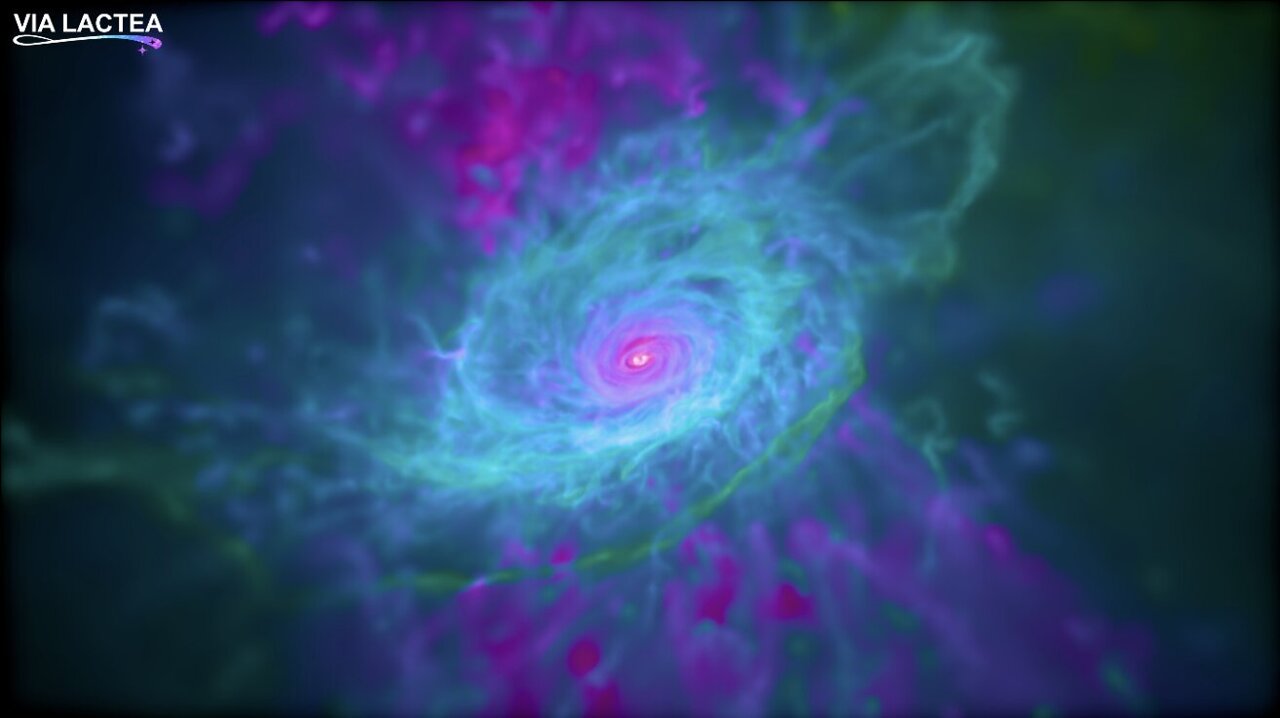
The study, led by researchers at the Institute of Cosmos Sciences of the University of Barcelona (ICCUB) and the Center national de la recherche scientifique (CNRS), uses advanced computer simulations called the Auriga simulations to recreate the formation of galaxies like the Milky Way in a virtual universe. By analyzing 30 simulated galaxies, the team sought to uncover how these chemical sequences come into being.
Understanding the chemical history of the Milky Way helps scientists piece together how our galaxy, and others like it, came to be. This includes our sister galaxy, Andromeda, where no bimodality has yet been detected. It also provides insights into the conditions in the early universe and the role of cosmic gas flows and galaxy mergers.
"This study shows that the Milky Way's chemical structure is not a universal blueprint," said lead author Matthew Orkney, a researcher at ICCUB and the Institut d'Estudis Espacials de Catalunya (IEEC). "Galaxies can follow different paths to reach similar outcomes, and that diversity is key to understanding galaxy evolution."
Diverse Mechanisms Behind Chemical Sequences
The study reveals that galaxies like the Milky Way can develop two distinct chemical sequences through various mechanisms. In some cases, this bimodality arises from bursts of star formation followed by periods of little activity, while in others it results from changes in the inflow of gas from the galaxy's surroundings.
Contrary to previous assumptions, the collision with a smaller galaxy known as Gaia-Sausage-Enceladus (GSE) is not a necessary condition for this chemical pattern to emerge. Instead, the simulations show that metal-poor gas from the circumgalactic medium (CGM) plays a crucial role in forming the second sequence of stars.
Moreover, the shape of these chemical sequences is closely linked to the galaxy's star formation history.
Future Observations and Discoveries
As new telescopes like the James Webb Space Telescope (JWST) and upcoming missions such as PLATO and Chronos provide more detailed data on stars and galaxies, researchers will be able to test these findings and refine our picture of the cosmos.
"This study predicts that other galaxies should exhibit a diversity of chemical sequences. This will soon be probed in the era of 30m telescopes where such studies in external galaxies will become routine," said Dr. Chervin Laporte, of ICCUB-IEC, CNRS-Observatoire de Paris and Kavli IPMU.
"Ultimately, these will also help us further refine the physical evolutionary path of our own Milky Way."
Key Findings and Implications
- The study highlights the importance of diverse mechanisms in forming chemical sequences in galaxies.
- The role of metal-poor gas from the circumgalactic medium is significant in creating the second sequence of stars.
- The collision with the GSE is not essential for the observed chemical patterns.
- The findings suggest that other galaxies may exhibit similar chemical diversity, which can be tested with future observations.
This research contributes to a deeper understanding of galaxy evolution and the complex processes that shape the cosmos. As technology advances, scientists will continue to uncover more about the origins and development of galaxies, including our own Milky Way.

Posting Komentar untuk "Cosmic Gas Flows, Not Collisions, Shape Milky Way's Dual Chemistry"
Posting Komentar