
Digital Twins Eliminate Phantom Energy Waste
Understanding Phantom Load and the Role of Digital Twin Technology
Phantom load, also known as standby power or vampire power, refers to the electricity consumed by electronic devices when they are turned off but still plugged into an electrical outlet. This hidden energy use can account for a significant portion of a building’s total electricity consumption. New research suggests that adopting digital twin technology to manage this idle power usage could lead to substantial cost savings and environmental benefits.
Engineers from the University of Glasgow’s James Watt School of Engineering have developed a prototype system that uses digital twin technology to monitor and manage phantom load. Their approach aims to provide organizations with a more intelligent and adaptive way to control energy use in office environments.
What Are Digital Twins?
Digital twins are dynamic, data-driven virtual models designed to represent complex systems. These models continuously capture real-world data through smart sensors, allowing for real-time insights and predictive capabilities. By using digital twin technology, the research team has created a system that can identify patterns in energy usage and make informed decisions about when to cut off phantom power.
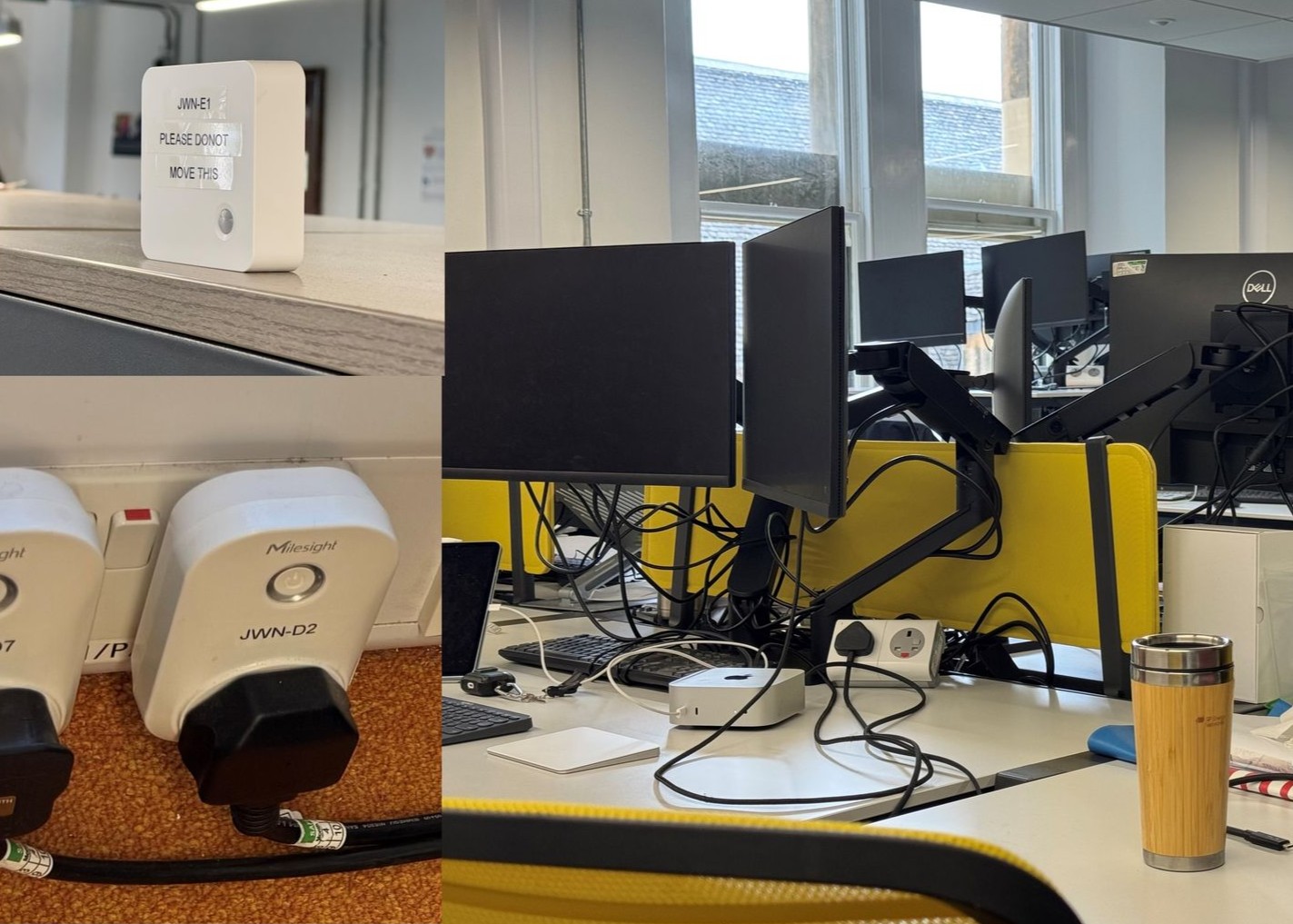
The system relies on a network of smart energy sensors that transmit data via the LoRaWAN protocol, a widely used standard in Internet of Things (IoT) systems. This data is then processed by sophisticated fuzzy-logic algorithms that can distinguish between active device use and idle periods.
How the System Works
When the system detects prolonged idle periods, it sends a prompt to users' screens, asking if they are conducting remote work or running background processes. This feature aims to raise user awareness of their device's idle periods, potentially encouraging more mindful use of technology. If users do not respond or confirm that the device is not needed, the system can automatically switch off the equipment, eliminating its phantom load entirely.
Additionally, the system can analyze the data it collects to predict future electricity consumption patterns. This predictive capability allows for more efficient energy management and helps organizations plan for potential energy needs.
Benefits and Potential Impact
The research team validated the effectiveness of their tool by applying it to a lab at the University of Glasgow, which houses workstations connected to over 30 power-drawing devices. The results showed that using the tool reduced the total power consumption of these workstations by approximately 40% each week. The team estimates that if implemented university-wide, the tool could reduce phantom load by 82%, saving the institution around £9,000 annually in electricity costs.
Dr. Ahmad Taha, who leads the research, emphasized the importance of small, collective actions in addressing climate issues. He believes that the edge-enabled digital twin system can help organizations reduce power waste in two key ways: by identifying real-time energy management efficiencies and by reducing the need to replace older devices with newer, more energy-efficient models.
Future Applications and Collaborations
The team is exploring how this tool could be integrated into the University’s broader efforts to achieve net-zero emissions by 2030. They are also interested in investigating its potential applications in other universities, businesses, and even homes.
The research paper, titled "Edge-Enabled Digital Twin System with Fuzzy Logic for Energy Optimisation in the Built Environment," was presented at the 2025 IEEE Global Communications Conference (GLOBECOM) in Taipei on December 8. The paper was co-authored by Yuwen Wang, Zhihong Xu, Shilong Yan, Professor Muhammad Ali Imran, and Professor David Flynn.
Conclusion
As organizations seek to reduce their carbon footprint and lower operational costs, the adoption of digital twin technology offers a promising solution. By effectively managing phantom load, institutions can not only save money but also contribute to a more sustainable future. With further development and implementation, this innovative approach could become a valuable tool in the global effort to combat climate change.

Posting Komentar untuk "Digital Twins Eliminate Phantom Energy Waste"
Posting Komentar