
How Time Shapes Bird Lives
Understanding Bird Behavior in a Changing World
New research from Tirth Vaishnav, a Ph.D. graduate from Te Herenga Waka, is shedding light on how birds' behavior and ecology adapt to seasonal changes and human-induced environmental shifts. His work explores the intricate relationship between avian life and the dynamic environments they inhabit.
Birds have evolved internal clocks that help them synchronize their migration, breeding, feeding, and daily routines with the rhythms of their surroundings. However, as human activities continue to reshape the natural world, questions arise about the impact on these finely tuned behaviors.
Tirth will receive his Ph.D. in Ecology and Biodiversity from Te Herenga Waka in December. His thesis examines how bird behavior and ecology change over time, considering both natural environmental fluctuations and human influences.
Human activities, including climate change, the introduction of new species, increased air travel, and urban expansion, are disrupting the natural patterns of bird behavior. Tirth's research takes a multi-faceted approach, focusing on four key areas: bird strikes, pollination, kākā feeding, and nighttime activities.
Bird Strikes and Aviation Safety
One aspect of Tirth's research involves bird strikes, which pose a serious threat to aviation safety. He analyzed data from 122 airports globally to identify patterns that could help mitigate this issue.
"In the Northern Hemisphere, bird strikes were more seasonally concentrated, aligning with fledgling season and migration," Tirth explains. "This research could assist airports in developing strategies to manage wildlife hazards."
Pollination and Seasonal Strategies
In another part of his study, Tirth focused on Zealandia ecosanctuary, examining how birds interact with flowers and fruits over nine years. The findings revealed distinct seasonal strategies for visiting different plant species.
"Flower and fruit visitation peaked at opposite times of the year, in spring and autumn, respectively," Tirth notes. "Understanding these patterns helps us appreciate the role of birds in pollination and seed dispersal."
Kākā Feeding Patterns
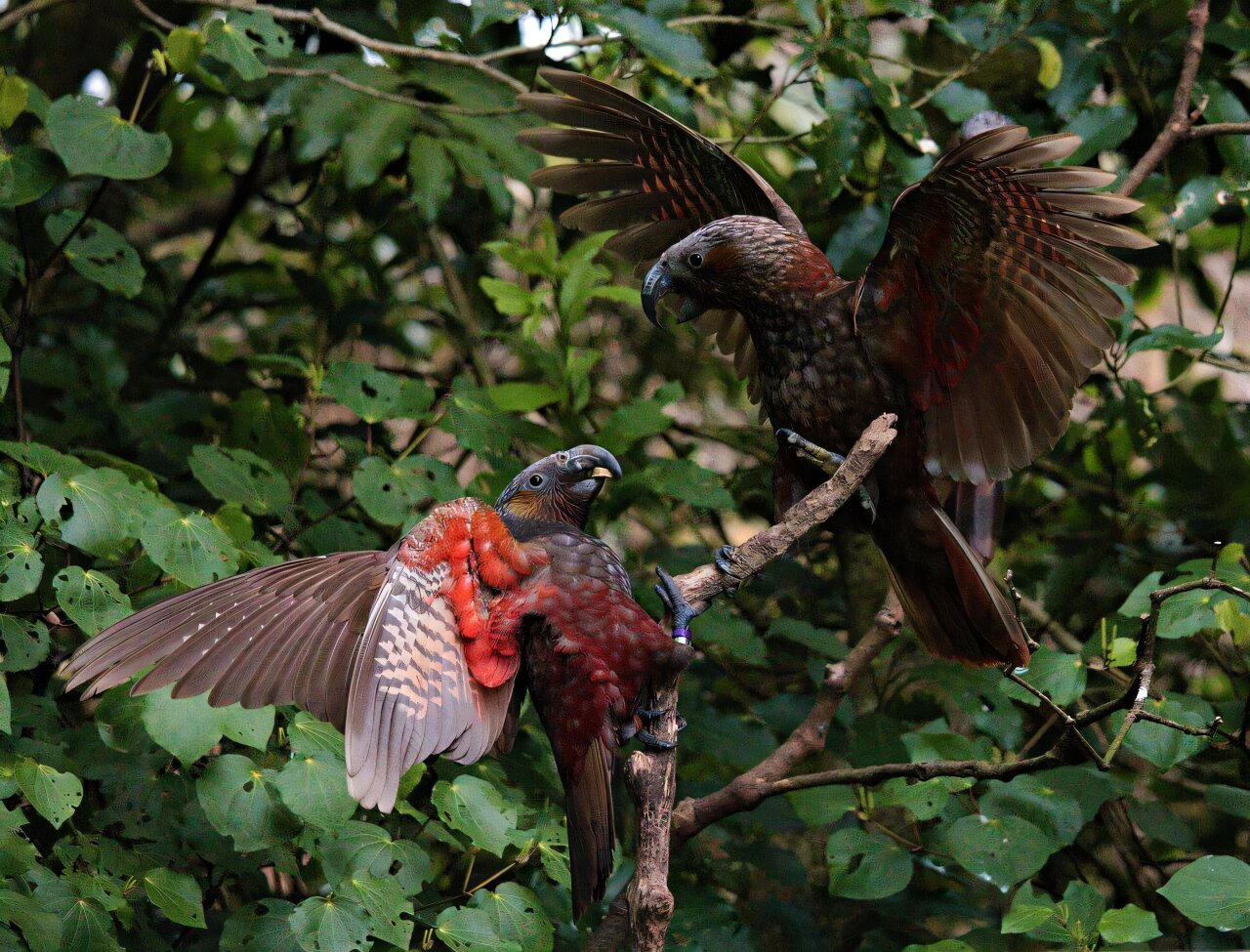
Kākā, a native New Zealand parrot, became a particular focus of Tirth's research due to their adaptation to non-native plants. He studied their foraging habits, finding that they are opportunistic feeders with significant dietary flexibility.
"The availability of pine seeds allows kākā to adjust their diet throughout the year," Tirth says. "This raises important conservation considerations, especially as kākā move into urban areas."
Nocturnal Behavior of Kākā
The final phase of Tirth's research explored the nocturnal behavior of kākā. Known for their loud screeches, kākā are among the few parrots active during both day and night. Tirth's findings provide the first detailed scientific account of partial nocturnality in a parrot species.
"While urbanization may influence their behavior, even in a relatively undisturbed environment like Zealandia, I observed that kākā foraged more during the day and moved around more at night," Tirth explains.
A Journey into Avian Research
Tirth's path to studying birds was unexpected. Originally focused on wildlife corridors for tigers, leopards, and bears, he shifted his focus after being influenced by Professor Kevin Burns.
"Coming to Wellington opened up the opportunity to research birds and their ecology, something I never anticipated five years ago," Tirth reflects.
The Broader Implications
On a larger scale, understanding the impact of time and seasons is crucial. As climate change and urbanization alter natural events, it becomes increasingly important to comprehend how these changes affect bird behavior and their interactions with the environment.
Tirth's research highlights the need for ongoing studies to address the challenges posed by a rapidly changing world. By unraveling the complexities of avian life, scientists can better inform conservation efforts and ensure the survival of these vital species.

Posting Komentar untuk "How Time Shapes Bird Lives"
Posting Komentar