
How to Tackle Space Junk? Recycle It!
The Growing Problem of Space Junk
Sometimes, what goes up doesn’t come back down — instead, it becomes a problem. Space junk is accumulating at an alarming rate, with millions of pieces orbiting the Earth. These include broken satellites, lost screws, and tiny fragments of splintered paint. The International Space Station has to dodge this debris regularly. Additionally, when space junk crashes into other space junk, it creates even more debris. While there have been many proposals for technologies to capture and destroy this waste, there hasn’t been a comprehensive system-level plan to address the issue.
This week, researchers from England’s University of Surrey published a paper outlining a better approach to managing our celestial litter. Their proposal focuses on making space more sustainable by using less material, repairing what’s already in orbit, and recycling the junk we can’t repair — all done in a systemic, industry-wide manner.
Although this concept may seem basic to those familiar with Earth-based sustainability practices like reduce, re-use, and recycle, it is still relatively new for the space industry. Michael Dodge, a professor of space studies at the University of North Dakota, who was not involved in the study, said, “I’ve never seen it presented this way.” He emphasized that this area needs further discussion.
According to NASA documentation, there are currently over 25,000 pieces of space junk larger than 4 inches in diameter orbiting the Earth. When including smaller bits, the number jumps to over 100 million. Altogether, this space trash weighs more than 10,000 tons, as reported in a 2022 study.
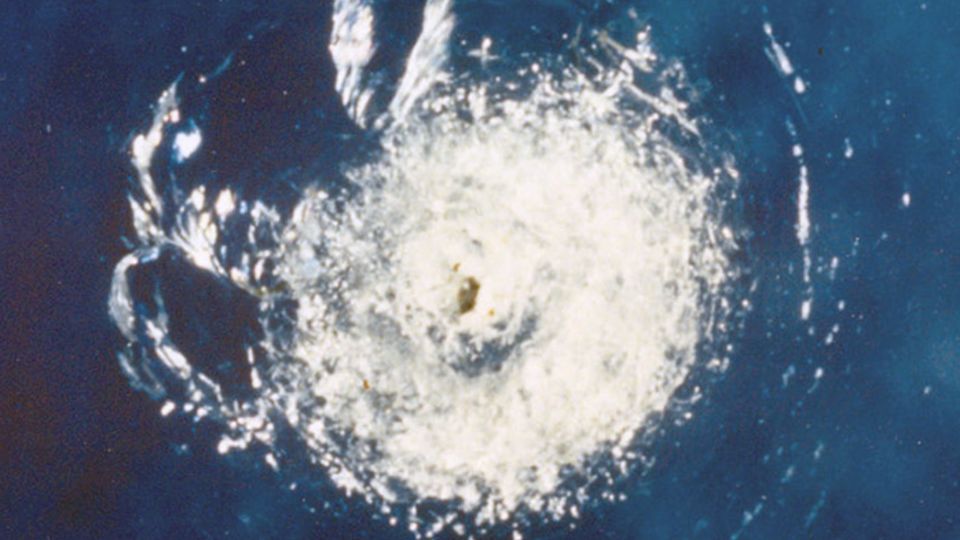
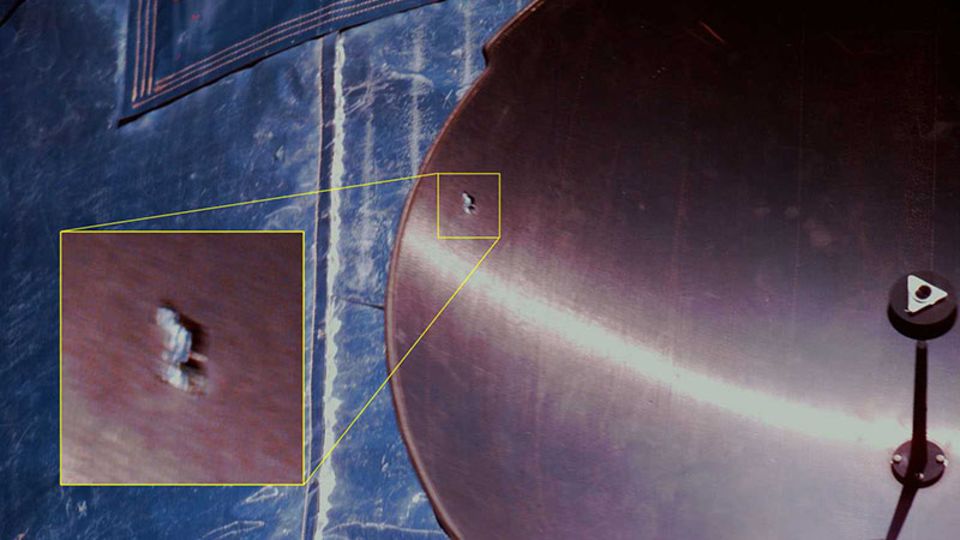
The impact of this debris is significant. For example, during Sally Ride’s first flight in 1983, debris left bullet-like cracks in the windshield of the space shuttle Challenger. The Hubble Space Telescope has also been hit by space junk, including a collision that punctured its antenna dish. Two major satellite collisions in 2007 and 2009 created enough debris to now account for more than one-third of all catalogued space junk, according to NASA.
The biggest fear associated with these incidents is the Kessler Syndrome — the risk that once enough objects are in low-Earth orbit, a single collision could trigger a chain reaction of crashes, rendering that part of space unusable. If no solution is found, space junk could reduce global GDP by 1.95%, according to a 2023 paper in the journal Space Policy.
There are ongoing efforts to mitigate the problem. Experts mentioned that SpaceX has developed reusable rockets, and a company called Astroscale is working on a robotic arm capable of catching dead satellites. However, Jin Xuan, associate dean of research and innovation at the University of Surrey and one of the paper’s authors, emphasized that individual technology solutions are not sufficient on their own.
“People must have systems thinking,” Xuan said. “When you focus on individual technologies, you’ll miss the opportunities.” For instance, perfecting a robotic arm to remove dead satellites is less important if satellites are designed differently from the start — to be refuelable or to burn up in the atmosphere at the end of their lives.
A more sustainable system would coordinate existing technologies, such as AI collision avoidance systems on satellites, with new ideas like repurposing space stations as platforms for repairing or recycling space junk. It would also ensure that companies and countries think about how to end the life of an object as it’s being designed.
Xuan has seen similar principles work in other industries. His research usually focuses on sustainability strategies for chemical manufacturing. He noted that the space industry has traditionally focused on safety and economic value, but sustainability hasn’t been a priority. “There’s an opportunity to learn from other sectors,” he said.
However, making space sustainable comes with unique challenges. According to Dodge, the laws and politics of space create significant complications. The Outer Space Treaty, which governs major players in space, includes a provision stating that once an object is launched into space, it remains the property of the entity that launched it. This means every used rocket booster and dead satellite stays under the ownership of the original launcher.
This rule exists because countries have historical concerns about other nations interfering with their satellites and space stations. “One of the potential troubles with any technology designed to recycle or refurbish technologies in space is that those very same technologies could be used as a weapon,” Dodge said. A robot arm could disable a working military satellite just as easily as it picks up a dead one.
As a result, it is currently illegal for a country to clean up debris created by another country. When Astroscale tests its technology, it must account for this rule. For example, if they want to capture a UK-owned object, they also have to launch from the UK.
Recycling space junk could be nearly impossible if permission from every country that owns the objects is required before cleaning them up. However, another part of the treaty requires countries to avoid contaminating space, which could be interpreted as needing to clean up their own space junk.
“And that could be a very important part of making space recycling happen,” Dodge said.
“People are interested in these sustainability ideas. They want to try it,” Xuan said. “But it’s all about the money and whether there’s an incentive.”

Posting Komentar untuk "How to Tackle Space Junk? Recycle It!"
Posting Komentar