
IndiGo's Crisis Shadows India's Aviation Dreams
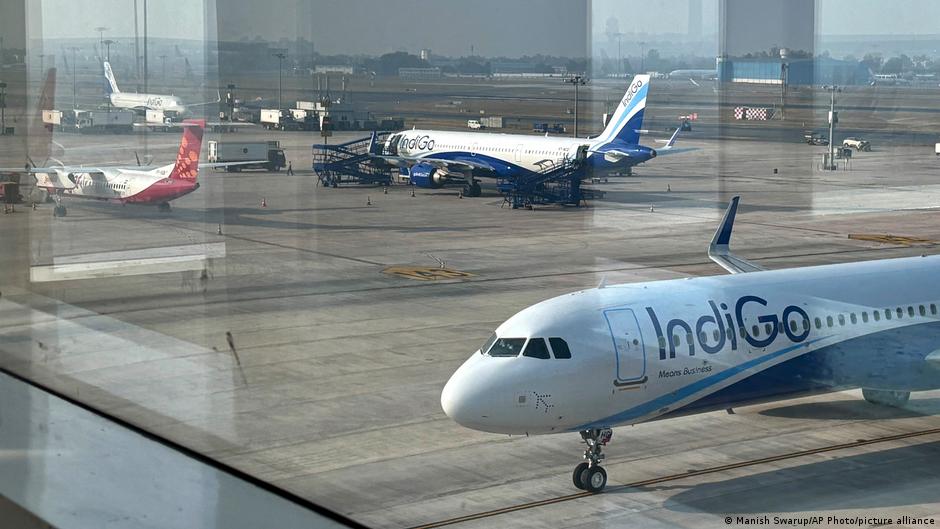
India's largest airline, IndiGo, is currently facing its most severe crisis in the 20 years of its operation. Since December 2, the airline has canceled at least 2,000 flights, creating a massive disruption for passengers across the country.
IndiGo, which holds a market share of around 65%, experienced a significant spike in cancellations on Friday alone, with over 1,000 flights being called off. This led to thousands of passengers being stranded at major airports throughout India. The situation has become so dire that other airlines have taken advantage of the chaos by hiking their prices on popular routes. In response, the government has imposed price caps to ensure that essential travelers—such as senior citizens, students, and patients—are not burdened financially.
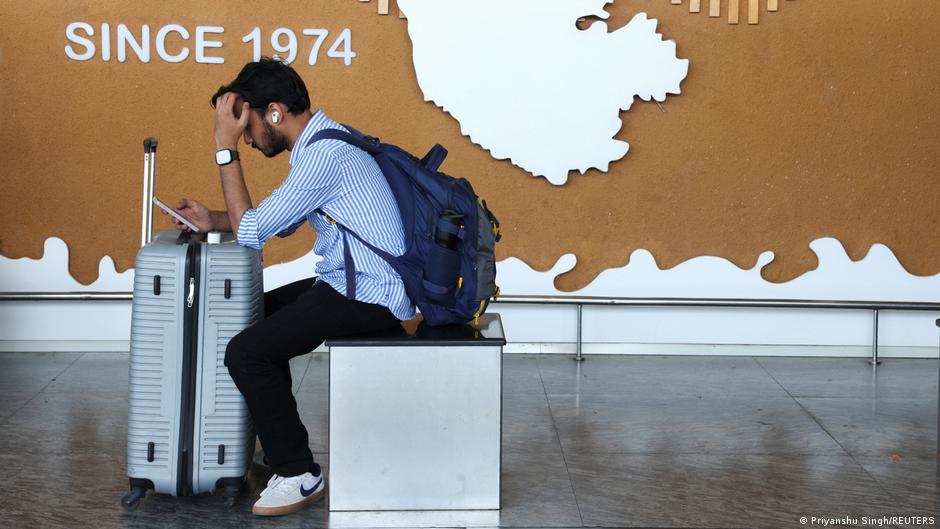
The crisis has also sparked public outrage, with videos surfacing online showing angry crowds attacking ground staff, breaking counters, and hurling abuse and objects at exhausted airline workers. Social media platforms are flooded with images of luggage piling up at airports, highlighting the extent of the disorder.
This turmoil coincides with India's peak wedding season, a time when families often plan elaborate, multi-day celebrations. For many, the disruptions have turned what should be joyous occasions into sources of frustration and heartbreak.
"I was supposed to attend my sister's wedding, but after waiting for hours and experiencing repeated cancellations, it feels like everything is falling apart," said Pratik Guha, a businessman, who eventually left the airport after 13 hours. Another passenger, Manjeet Arora from Delhi, described the experience as "a nightmare."
What Caused the Crisis?
The root cause of the flight cancellations lies in a shortage of pilots. IndiGo admitted that this shortage was due to its failure to adequately prepare for stricter aviation regulations. These new rules, aimed at reducing pilot fatigue, increased mandatory weekly rest periods from 36 to 48 hours and limited permitted night landings from six to two.
Despite nearly two years of notice since the rules were announced in January 2024, IndiGo's lean-staffing model and heavy reliance on night flights left it with no buffer when the stricter crew-rest requirements took effect. Other airlines, such as Air India and Akasa Air, adapted to the same rules without major issues.
Jitendra Bhargava, former executive director of Air India, described the crisis as "an ugly chapter in Indian aviation history." He criticized IndiGo for its handling of the situation, stating that the airline should have adjusted its schedule and communicated the pilot shortages publicly rather than allowing the chaos to unfold. Bhargava added that IndiGo should face financial penalties for its mismanagement.
Six Days of Severe Disruption
"The crisis stems from IndiGo's own mismanagement rather than regulatory shortcomings alone," Bhargava told HAWXTECH.NET. "The blame is on the airline's operational planning and communication failures."
IndiGo's on-time performance, which was strong at 84% in October, plummeted to as low as 35% during the peak of the crisis. This highlights the scale of the operational breakdown. IndiGo CEO Pieter Elbers issued a formal apology, acknowledging that December 5 was "the most severely impacted day" in terms of cancellations.
"I, on behalf of IndiGo, would like to extend our sincerest apologies for the major inconvenience this has caused to many of our customers," said Elbers.
However, the airline faces intensified scrutiny from both the government and the public due to the prolonged disruption and service failures.
Regulator Slams IndiGo Over Chaos
The Indian government ordered IndiGo to "trace and deliver all baggage separated from passengers due to disruptions within 48 hours." India's aviation watchdog, the Directorate General of Civil Aviation (DGCA), issued a warning notice to Elbers, demanding explanations within 24 hours on why enforcement action should not be initiated.
"As the CEO, you have failed in your duty to ensure timely arrangements for conduct of reliable operations," the notice stated.
Captain Sandeep Bansal, a former Air Force commercial pilot, noted that the air travel chaos was caused by changes of only a few hours in the new regulations, known as the Flight Duty Time Limitation (FDTL).
"Since IndiGo uses pilots to the maximum capacity, they could not absorb the reduction of a few hours of pilots' duty time and increased rest time," Bansal told HAWXTECH.NET. "And now IndiGo has asked for a two-month extension for the old FDTL scheme to get its act straight—something which they could not do over the last six months."
"This has also exposed India's inadequate preparedness for scaling, urging diversified fleets, pilot training investments, and competition to sustain investor confidence and global ambitions."
Is India Ready for Aviation Leadership?
India, with its population of over 1.4 billion, is home to the world's fastest-growing air passenger market and is poised to become the third-largest aviation market after China and the United States. Domestic air passenger traffic is expected to double in the next six years, reaching 300 million by the end of 2030, according to the country's civil aviation ministry.
India is projected to be the third-largest overall by 2026, according to the International Air Transport Association (IATA), an industry body.
However, this crisis sends a troubling signal about the country's readiness for aviation leadership. It reveals a growth-at-all-costs mentality that prioritizes expansion over operational resilience.
"The country is adding demand faster than it is building the human capital, operational systems, and regulatory culture to support it," said Umesh Kamath, managing director of Dravidan Aviation Services. "This appears to be poor planning by IndiGo to maximize holiday profits, combined with questionable regulatory oversight."
"For a market aspiring to rival China and the US, having your largest carrier collapse under basic safety compliance is a red flag."
Kapil Kaul, CEO and Director of CAPA India, a leading aviation research and advisory firm based in New Delhi, told HAWXTECH.NET that "given the scale of India's aviation growth... some impact across the industry because of this growth is inevitable," adding that he expected the aviation industry "to be well prepared to maintain order."

Posting Komentar untuk "IndiGo's Crisis Shadows India's Aviation Dreams"
Posting Komentar