
Innovative fiber-weaving technique enhances battery electrode durability and efficiency
Breakthrough in Dry-Process Manufacturing for Secondary Battery Electrodes
A groundbreaking development has emerged in the field of secondary battery technology, with a joint research team successfully creating a new dry-process manufacturing technology for electrodes. This innovation overcomes the limitations of traditional electrode fabrication methods and is published in the journal Energy & Environmental Science.
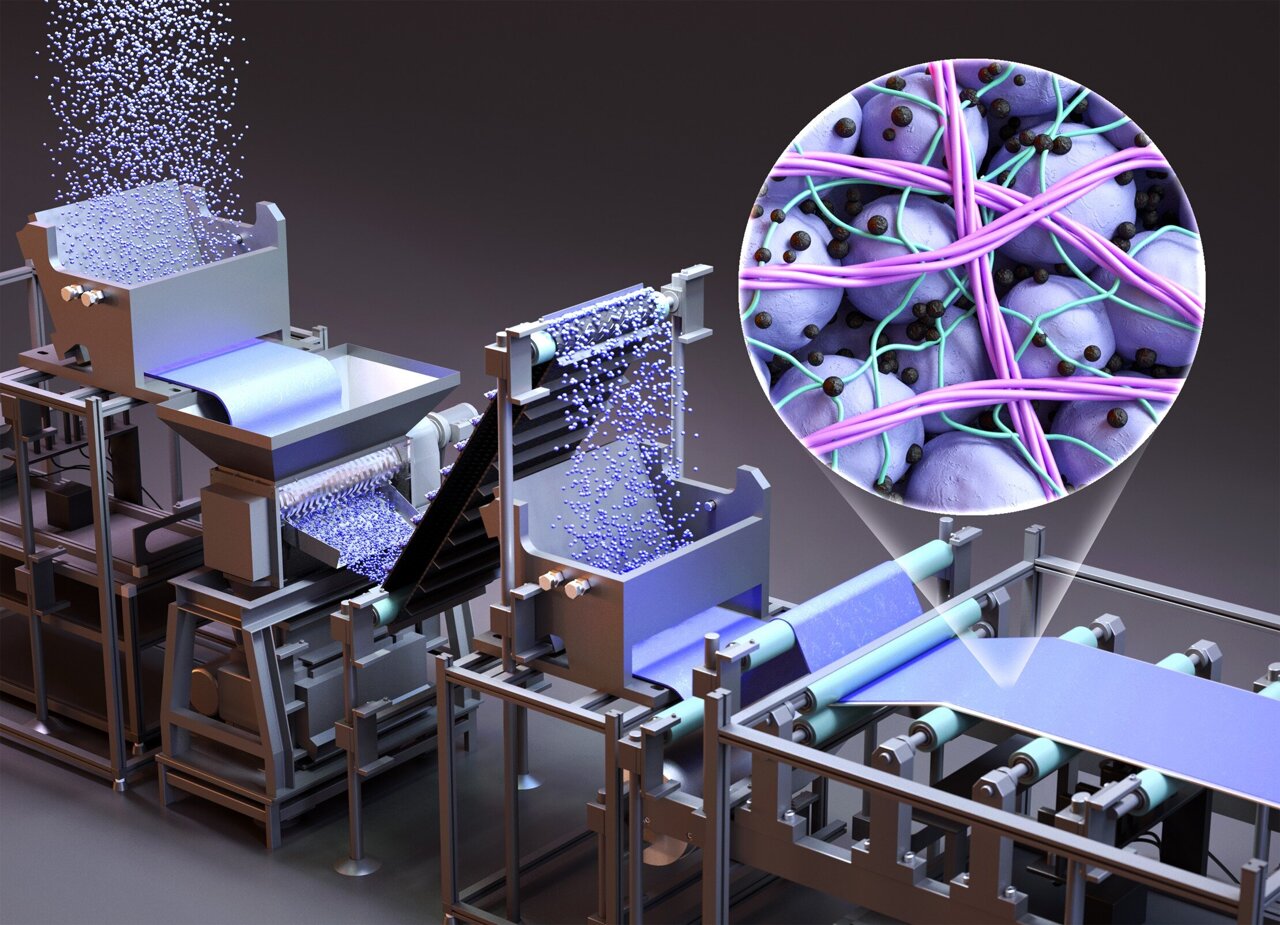
The technology was developed by a team led by Dr. Gyujin Song from the Korea Institute of Energy Research (KIER), Dr. Kwon-Hyung Lee from the University of Cambridge, and Professor Tae-Hee Kim from the University of Ulsan. The process involves a dry manufacturing method that forms a dual-fibrous structure within the electrode, resulting in both thin "thread-like" and thick "rope-like" fibers.
This dual-fiber architecture addresses two major issues in conventional dry processes: low mixing strength and performance degradation. It offers a promising alternative to traditional wet processes, which rely on toxic organic solvents and have high environmental and production costs.
Wet vs. Dry Processes in Electrode Manufacturing
Electrode manufacturing methods are typically divided into wet and dry processes based on whether a solvent is used. In the wet process, a binder dissolved in a solvent acts as an adhesive, ensuring uniform mixing of electrode materials. Due to its reliability and performance advantages, the wet process is currently the dominant method.
However, this approach comes with significant drawbacks. It uses toxic solvents, leading to environmental concerns, and requires lengthy drying and solvent recovery times, increasing production costs. As a result, there has been growing interest in developing dry-process technologies that eliminate the need for solvents.
Dry processes offer faster processing and reduce environmental pollution and energy consumption. However, without a solvent to dissolve the binder, only specific materials like polytetrafluorethylene (PTFE) can be used. These materials form fiber-like structures that physically hold particles together but often lead to poor mixing and weak cohesion, resulting in degraded performance and durability.
Overcoming Structural Limitations
To address these challenges, the researchers did not change the PTFE binder material but instead controlled its physical structure to create a "dual-fiber" design. They developed a multi-step process that divides the binder addition into two stages:
- Primary Mixing Step: A small amount of binder is added, forming a fine, "thread-like" fibrous network that densely connects the active material and conductive additive.
- Secondary Mixing Step: The remaining binder is added, maintaining the existing fibrous network while forming additional thick, robust "rope-like" fibers.
This approach results in a fine, "thread-like" fibrous network that uniformly disperses materials, improving reaction uniformity and battery performance. The thick "rope-like" fibers firmly bind the electrode, enhancing its strength and mechanical stability for mass production.
Enhanced Performance and Durability
Analysis using electrochemical reaction-resistance mapping revealed that all regions of the electrode exhibit fast and uniform reaction kinetics and resistance characteristics. This is crucial for minimizing energy loss during battery operation, preventing localized performance degradation, and extending the cell's lifespan.
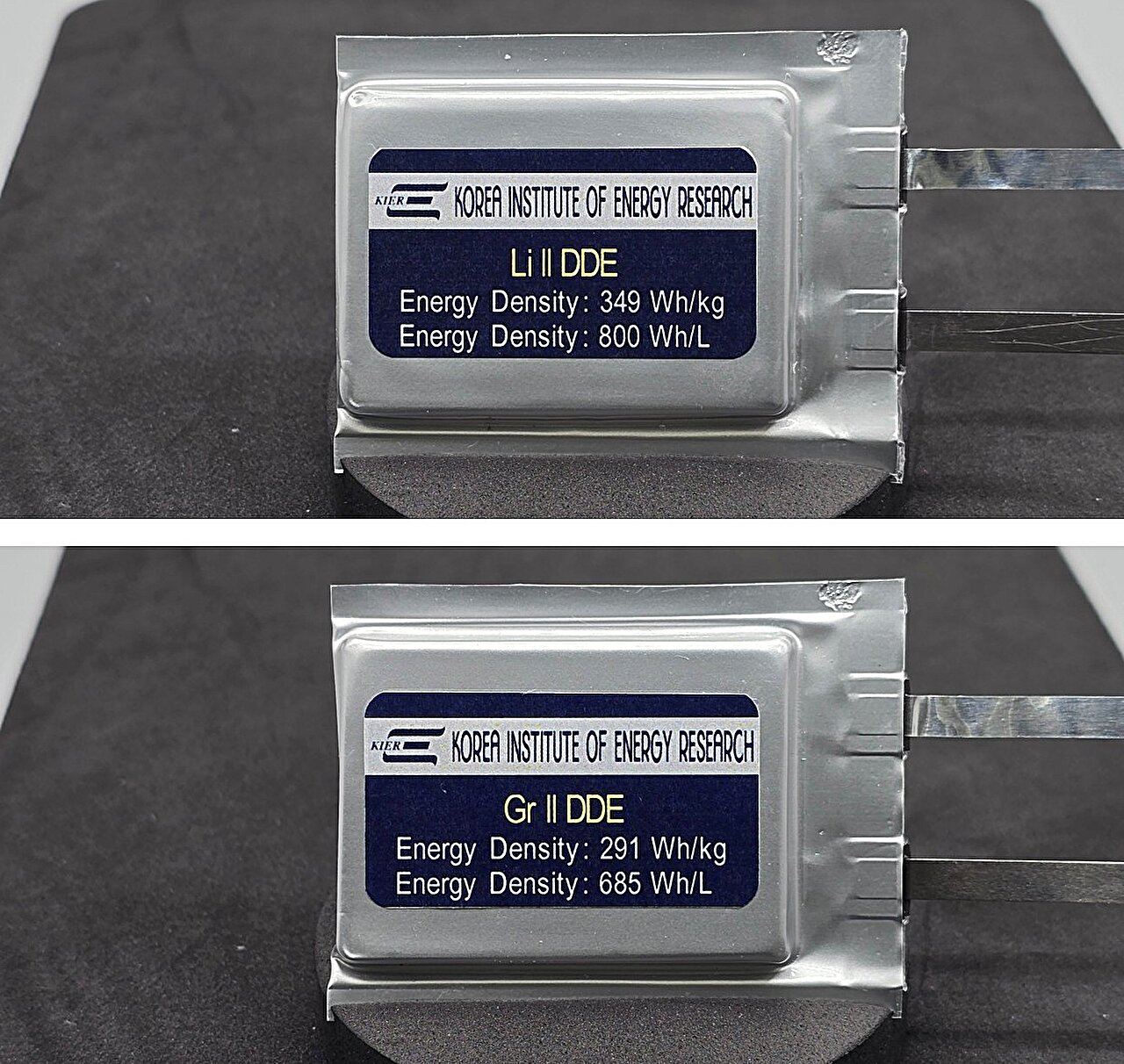
Performance evaluations showed that the dry electrode achieved a high areal capacity of 10.1 mAh/cm². A pouch-type lithium metal anode cell using this electrode reached an energy density of 349 Wh/kg, about 40% higher than commercial electrodes (around 250 Wh/kg). Additionally, a pouch cell using a graphite anode achieved an energy density of 291 Wh/kg, approximately 20% higher than a wet-process cell under similar conditions.
Future Implications
Dr. Gyujin Song, who led the research, emphasized the significance of this study. He stated, "This study is highly significant in that we have established an original process technology capable of simultaneously resolving the two core challenges of dry electrodes: electrochemical uniformity and mechanical durability. We expect it to not only enhance the cost competitiveness of the secondary battery industry, but also be applicable to electric vehicles and energy storage systems (ESS), which require high energy density."
Key Takeaways
- The new dry-process technology creates a dual-fibrous structure in electrodes, addressing previous limitations.
- It eliminates the use of toxic solvents, reducing environmental impact and production costs.
- The process improves electrochemical uniformity and mechanical durability, enhancing battery performance and lifespan.
- Potential applications include electric vehicles and energy storage systems, where high energy density is essential.
This breakthrough marks a significant step forward in the evolution of secondary battery technology, offering a sustainable and efficient alternative to traditional methods.

Posting Komentar untuk "Innovative fiber-weaving technique enhances battery electrode durability and efficiency"
Posting Komentar