
Mysterious Foot Fossil Challenges Human Evolution Story
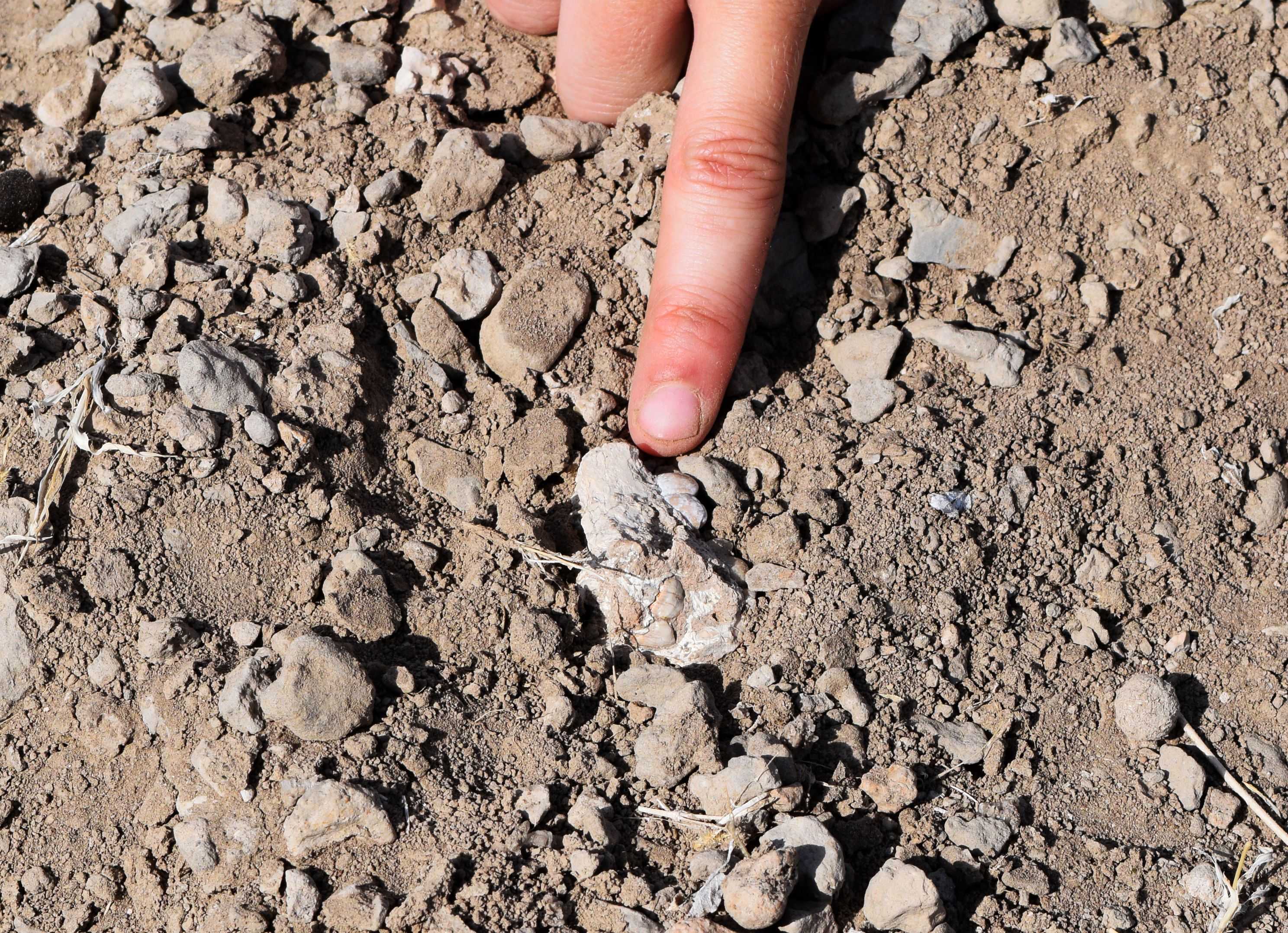
The Burtele Foot: A New Chapter in Human Evolution
In a groundbreaking study published in the journal Nature on November 26, scientists have finally solved the mystery of the Burtele foot, a set of 3.4 million-year-old bones discovered in Ethiopia in 2009. These fossils, along with more recent finds, have been linked to a little-known species known as Australopithecus deyiremeda. This species is considered more primitive than Australopithecus afarensis, the species to which the famous skeleton Lucy belongs.
If these findings hold up under further scrutiny, they could significantly shift our understanding of human evolution and potentially remove Lucy from her long-standing position as the central figure in the human family tree.
Coexisting Species and New Discoveries
The Burtele foot was first found in 2009 by a team led by paleoanthropologist Yohannes Haile-Selassie, a professor at Arizona State University and the study’s lead author. The eight foot bones were discovered in sediments dating back 3.4 million years at the Burtele locality in the Woranso-Mille area of Ethiopia’s Afar region. This site is near where Lucy's partial skeleton was found in 1974.
Initially, the team recognized that the foot belonged to a different species than Lucy’s due to its opposable toe, which suggested it had a greater ability to grasp and climb trees. However, there wasn’t enough evidence to name a new species based solely on the foot fossils.
Not long after, Haile-Selassie discovered teeth and other fossil fragments from 3.33 to 3.59 million years ago. In 2015, he reported that these belonged to a new species called Australopithecus deyiremeda. Despite this, some experts remained skeptical due to the limited number of fossils.
The latest study includes additional A. deyiremeda fossils and incorporates the puzzling foot bones into the classification. This discovery provides clear evidence that two related hominin species coexisted around the Woranso-Mille site, raising questions about how they managed to live together.
Bipedality and Diet
The study suggests that A. deyiremeda walked on two legs, but likely pushed off on its second digit rather than its big toe like modern humans. This indicates that bipedality in early human ancestors came in various forms. According to Haile-Selassie, “the whole idea of finding specimens like the Burtele foot tells you that there were many ways of walking on two legs when on the ground.”
The team also used isotope analysis on eight of the teeth to determine what A. deyiremeda ate. The results showed that the species primarily consumed trees and shrubs, while Lucy’s species had a more varied diet that included grass-based plants. This difference in diet and locomotion suggests that the two species did not compete, allowing them to coexist.
Challenging the Traditional Family Tree
Fred Spoor, a research leader at the Centre for Human Evolution Research at London’s Natural History Museum, noted that the new fossils should lead to broader acceptance of A. deyiremeda as a genuine species. He added that fitting A. deyiremeda into the evolutionary tree may result in new “twists” in the human story, potentially diminishing Lucy’s iconic status as the ancestor of all later hominins, including Homo sapiens.
Lucy, who was shorter than an average human and had an apelike face, provided the first definitive proof that ancient human relatives walked upright 3.2 million years ago. For decades, her species was thought to be the sole common ancestor group of all later hominins. However, recent discoveries of older hominins that walked upright suggest that Lucy may not have been the earliest human ancestor.
Implications for Human Evolution
The study reveals that A. deyiremeda shares some features with Australopithecus africanus, a species that Lucy was thought to have given rise to. Other features, such as its diet, resemble those of Australopithecus anamensis, a more primitive species that lived 4.2 to 3.8 million years ago. This suggests that A. deyiremeda may have descended from A. anamensis, and if so, A. afarensis might not be the ancestor of all later human species.
Ryan McRae, a paleoanthropologist at the Smithsonian National Museum of Natural History, said this study is the first to suggest that Lucy’s species could be an evolutionary dead end. While this remains a hypothesis, it highlights how our family tree continues to grow bushier with each new discovery.
Haile-Selassie plans to return to Ethiopia to search for more Australopithecus fossils, which will help expand our understanding of these species and their relationships. “We need more fossils of A. deyiremeda and A. anamensis to answer the questions we still have about them,” he said.
Conclusion
This study challenges long-held assumptions about human evolution and highlights the complexity of our ancestral lineage. As more fossils are discovered, our understanding of the human family tree will continue to evolve, revealing a richer and more diverse history of early hominins.

Posting Komentar untuk "Mysterious Foot Fossil Challenges Human Evolution Story"
Posting Komentar