
Orion Rises Tonight in the Southeast
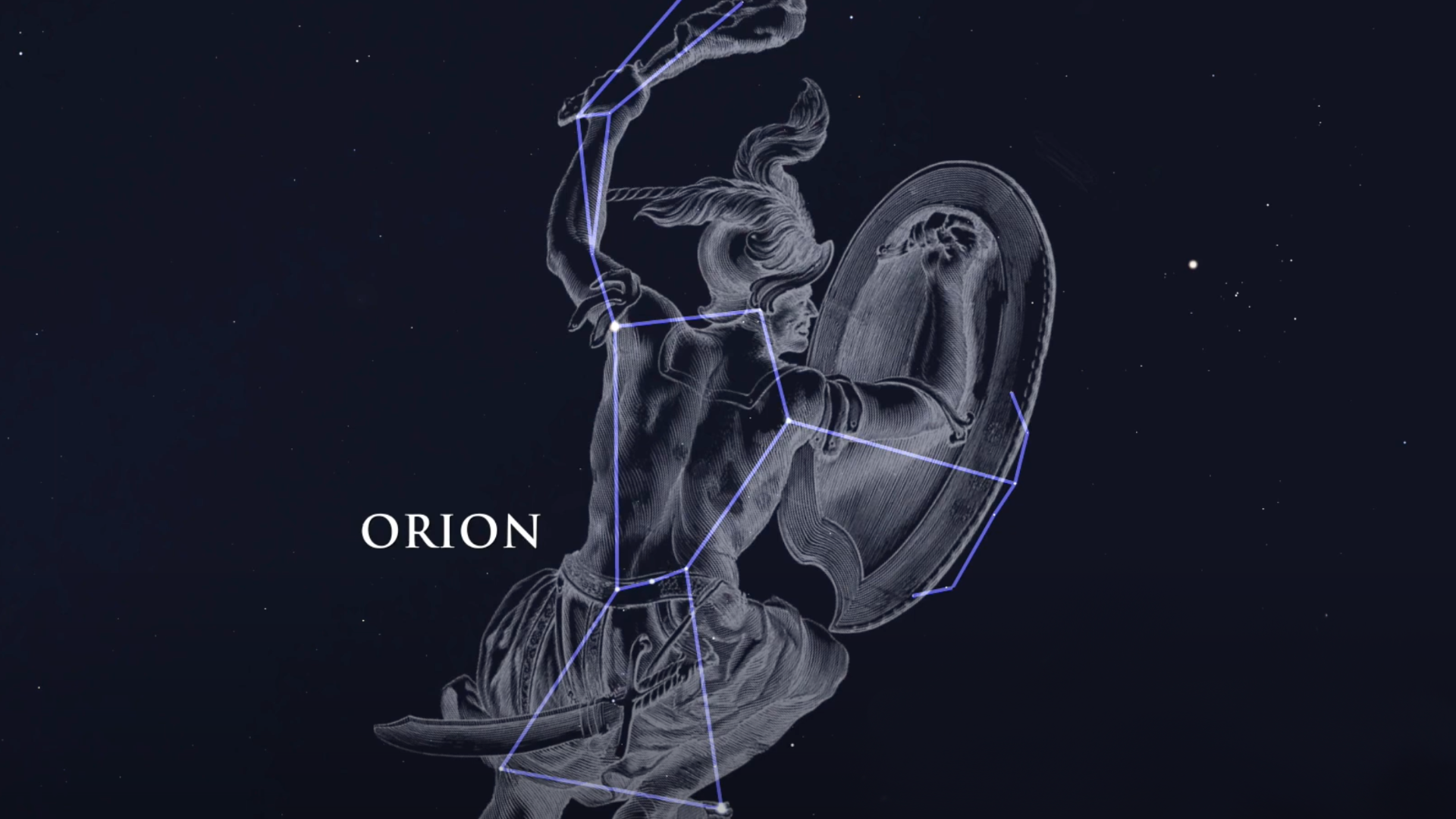
Orion constellation (Image via NASA)
Tonight, on Monday, December 8, 2025, skywatchers in the Northern Hemisphere will have a chance to observe the constellation Orion in the southeastern sky by 9 p.m. The constellation is one of the most recognizable in the night sky, and its key features are visible to the naked eye.
The entire Orion’s Belt, which consists of three blue supergiant stars—Alnitak on the left, Alnilam in the middle, and Mintaka on the right—will be clearly visible. These stars form a straight line that is easy to spot. Alongside the belt, the Orion’s Sword is also visible. However, the middle star of the sword, known as the Orion Nebula, is not easily seen with the unaided eye. This nebula is described as "the brightest stellar nursery to Earth" and is composed of gas and dust. It is a hotbed for the formation of young stars, including the Trapezium cluster.
Origin and Features of the Orion Constellation
The constellation Orion is named after the mythological hunter from Greek mythology. The Greeks believed that the shape of the constellation resembled a "giant hunter with a sword." NASA describes Orion as one of the most recognizable constellations, easily spotted by those who look up at the night sky.
According to NASA, the easiest way to locate Orion is to find "three bright stars close together in an almost-straight line" during a clear night. These stars make up what is known as Orion’s Belt. The two stars on the north side of the belt represent the hunter’s shoulders, while the southernmost star represents his feet.
Despite appearing close together from Earth, the stars in Orion’s Belt are actually quite far apart. For instance:
- Alnitak, the star on the left of the belt, is approximately 800 light-years away from Earth.
- Alnilam, the middle star, is about 1,300 light-years away.
- Mintaka, the star on the right, is roughly 900 light-years distant.
Notable Stars in Orion
Among the many stars in the constellation, two stand out due to their size and brightness: Betelgeuse and Rigel.
- Betelgeuse is a red supergiant located on the right side of Orion.
- Rigel is a blue supergiant found at the left foot of the constellation.
Interestingly, while the stars in Orion’s Belt appear as individual entities, they are actually part of larger systems. For example, Mintaka, the star on the right of the belt, is a complex system consisting of five stars. However, this detail is difficult to discern when observing from a distance.
Other Celestial Events in December 2025
December 2025 will bring several notable astronomical events for skywatchers.
On December 7, the moon and Jupiter will appear close together in the sky, creating a conjunction. Then, on December 8, the Orion constellation will be visible.
A week later, on December 13 and 14, the Geminid Meteor Shower will be active, offering a spectacular display of shooting stars.
The most anticipated event of the month will take place on December 19. The interstellar object 3I/ATLAS will come closest to Earth, providing scientists and astronomy enthusiasts with an opportunity to study it in detail.
NASA suggests that observers should look east to northeast in the early pre-dawn hours to spot 3I/ATLAS. At that time, the object will pass "right under Regulus," a bright star in the constellation Leo.
Since its discovery in July, 3I/ATLAS has generated significant interest in the astronomy community. Its arrival on December 19 will mark an important milestone for researchers, allowing them to gather more information about this mysterious object.
Stay tuned for further updates on these celestial events.

Posting Komentar untuk "Orion Rises Tonight in the Southeast"
Posting Komentar