
Record-Breaking Cosmic Blast Defies Gamma-Ray Burst Theories
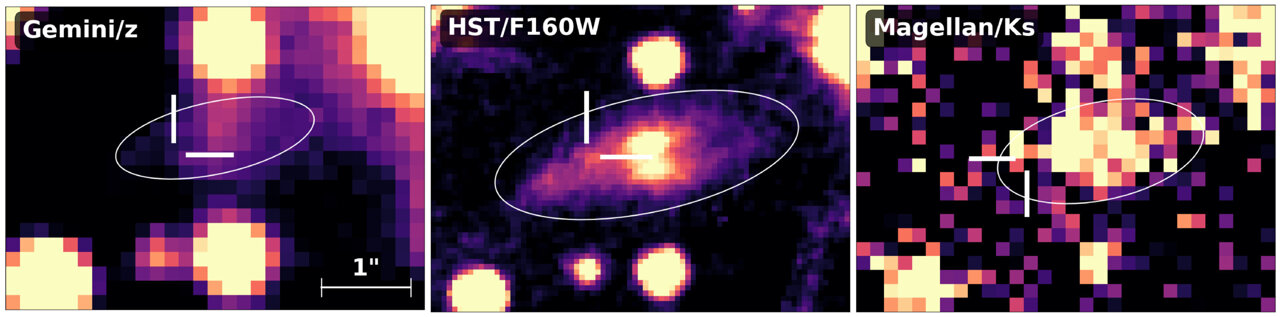
Astronomers from the University of North Carolina at Chapel Hill have contributed to a groundbreaking discovery regarding the longest gamma-ray burst ever observed. This event, named GRB 250702B, lasted for nearly seven hours and has challenged existing theories about the causes and mechanisms behind these powerful cosmic explosions.
Gamma-ray bursts are intense flashes of high-energy light that result from extreme cosmic events. Typically, these bursts last only seconds or minutes. However, GRB 250702B defied all expectations. After its initial detection by space-based observatories, researchers used some of the largest ground-based telescopes to capture images of a fading glow located in a massive, dusty galaxy.
International collaboration and possible origins
This discovery was made possible through a global effort involving multiple research teams. The UNC-Chapel Hill team led observations using some of the United States' most powerful ground-based telescopes. Their findings were combined with data from the European Southern Observatory's Very Large Telescope, NASA's Hubble Space Telescope, and X-ray observations. These data suggest that the explosion could have multiple origins, such as the collapse of a massive star, the collision of exotic stellar remnants, or even a star being torn apart by a black hole. However, current observations are not yet sufficient to determine which scenario is accurate.
"This was the longest gamma-ray burst that humans have observed—long enough that it does not fit into any of our existing models for what causes gamma-ray bursts," said Jonathan Carney, lead author of the study and Ph.D. student in physics and astronomy at UNC-Chapel Hill.
Unique features and scientific significance
Gamma-ray bursts are among the most energetic explosions in the universe, and astronomers typically rush to collect data before their light fades. GRB 250702B, however, offered a rare opportunity to study both the explosion itself and the environment of its host galaxy. Researchers discovered that the explosion originated from a distant, massive galaxy filled with dust, which blocked visible light and allowed only infrared and high-energy emissions to be detected.
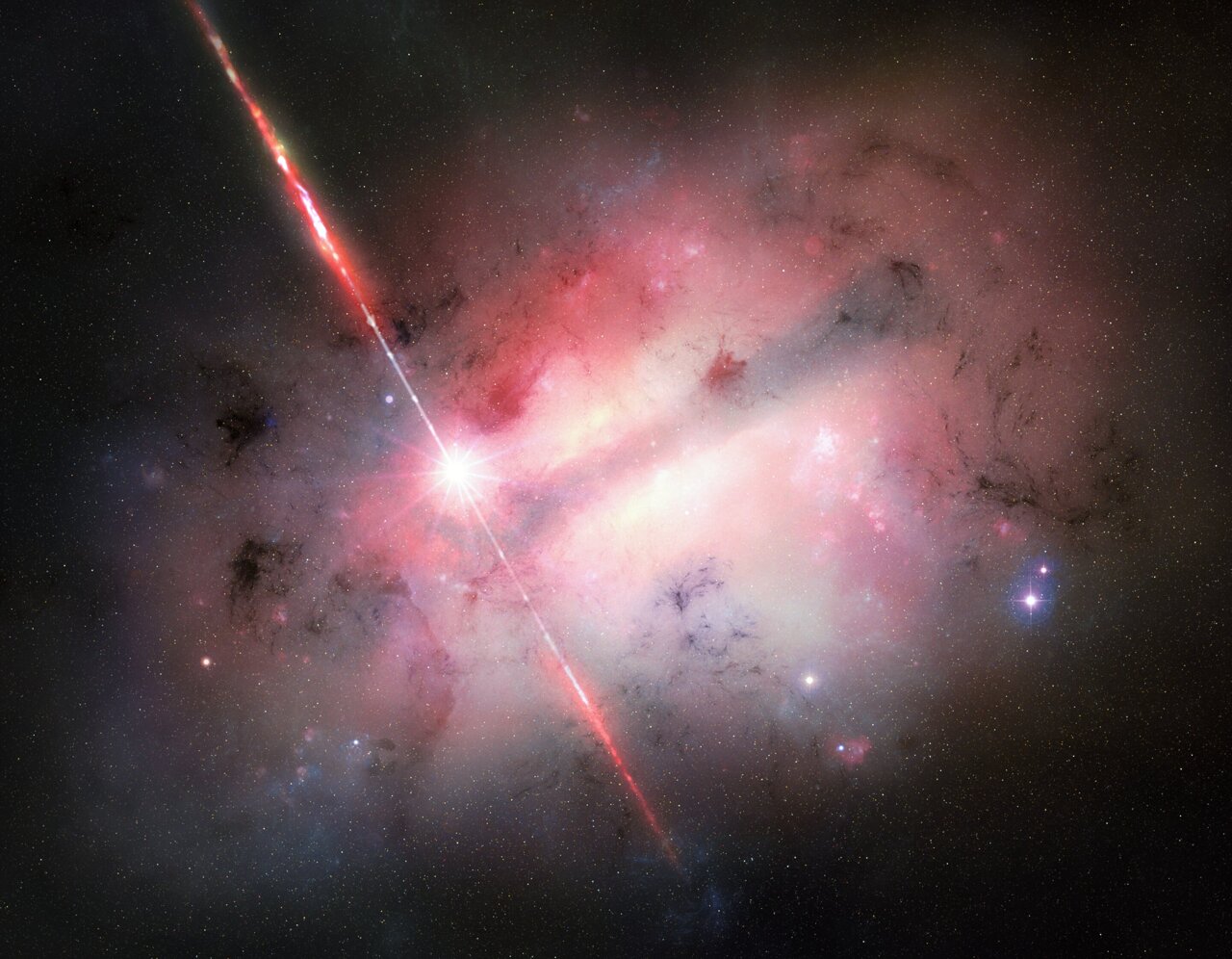
"We're not sure what caused this record-breaking event," said Igor Andreoni, co-author and assistant professor of physics and astronomy at UNC-Chapel Hill. "We know it occurred billions of light-years away in a very complex galaxy. Our data revealed that an energetic phenomenon launched a narrow jet of material in our direction that traveled at least 99% the speed of light, piercing through thick layers of cosmic dust."
Implications for future research
Understanding these massive explosions helps scientists explore some of the universe's most extreme environments, where matter moves at nearly the speed of light, densities exceed atomic nuclei, and gravity can warp spacetime. These events also play a crucial role in distributing heavy elements, including those essential for life, throughout the cosmos.
"Our analysis shows this event could have several different causes—including the death of a massive star, the collision of a helium star, or even a star being ripped apart by a black hole," Carney said. "But we can't yet tell which explanation is correct. In the future, this event will serve as a unique benchmark—when astronomers discover similar explosions, they'll ask whether they match GRB 250702B's properties or represent something different entirely."
GRB 250702B has set a new standard for how astronomers study the universe's most powerful and mysterious explosions. The research paper is available online in the Astrophysical Journal Letters.

Posting Komentar untuk "Record-Breaking Cosmic Blast Defies Gamma-Ray Burst Theories"
Posting Komentar