
Satellites to Spoil Space Telescope Photos by 2040
The Growing Threat of Satellite Constellations
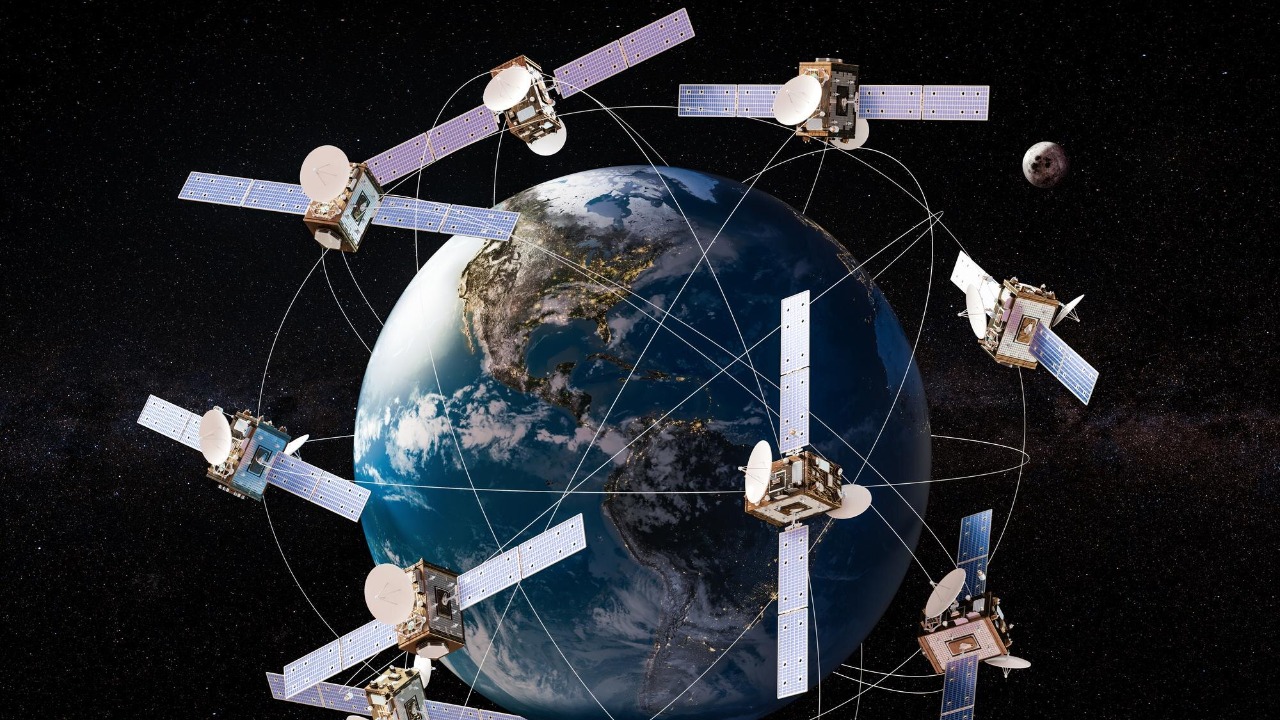
Low Earth orbit is on the verge of becoming a bustling hub for more than half a million satellites by 2040. This surge will not only transform global communications but also pose a serious threat to space telescopes. These satellites, while promising faster internet and constant connectivity, risk damaging the delicate exposures that space telescopes rely on. Once-pristine images may become marred with artificial streaks, potentially undermining our ability to study faint galaxies, dark matter, and the earliest light in the universe.
The issue is not just a minor technical problem but a significant conflict between commercial expansion and scientific research. Astronomers are sounding the alarm, warning that the current satellite population is just a small glimpse of what's to come. Without new rules and smarter engineering, future observatories might spend most of their time dodging or correcting contaminated data.
The Scale of the Satellite Surge
The scale of the planned satellite deployment is staggering. Proposals on the books could increase the number of active spacecraft from the current tens of thousands to over 500,000 by around 2040. This transformation would turn low Earth orbit into a dense shell of hardware, significantly increasing the number of reflective objects crossing telescope fields every minute.
Even now, the satellites already in orbit represent only a fraction of what is coming. A recent analysis suggests that the current count is less than 3% of the satellites expected to be launched over the next decade. This gap highlights how early we are in the megaconstellation era and how much more crowded the sky will become if all planned systems are deployed.
The Speed of the Transition
The speed at which the sky is filling up is as important as the final numbers. In 2019, there were 2,000 satellites in orbit, a figure that already reflected decades of launches. However, the number has jumped to over 15,000 today, a more than sevenfold increase in just a few years. This rapid growth has caught many observatories mid-mission, forcing them to adapt to a changing sky.
For astronomers, this leap from 2,000 to 15,000 is a lived reality. Bright streaks now cut through exposures that were once clean. Researchers describe this rapid growth as a looming crisis for space-based astronomy, warning that the same trend lines point toward much larger constellations planned for the 2030s and beyond.
Why Streaks Ruin Space Telescope Science
For the public, a satellite trail might look like an odd but harmless scratch on a pretty picture. For scientists, it can ruin the usefulness of an exposure that took hours to collect. Space telescopes like Hubble build up their views of faint galaxies and subtle structures by integrating light over long periods. A bright moving object that crosses the detector during that time can saturate pixels, leave residual artifacts, and mask the very signals astronomers are trying to measure.
New research shows that as more satellites pass through their fields of view, the number of images marred by streaks is climbing steadily. The analysis finds that with more than half a million satellites projected in orbit, the odds that any given exposure will be crossed by a bright trail rise sharply, especially during twilight periods when spacecraft are sunlit but the sky behind them is dark.
NASA’s Warning: Contamination in Most Images
NASA scientists have quantified the potential interference if current launch plans proceed. In simulations assuming hundreds of thousands of satellites in low Earth orbit, they find that streaks could interfere with a large majority of images taken by major observatories. The concern is not only the number of ruined frames but the cumulative loss of observing time and the subtle biases introduced when certain parts of the sky or observing windows become effectively unusable.
One key result from that work is stark. Under modeled conditions, satellite streaks could interfere with 40% to more than 96% of images taken by flagship space telescopes. The same analysis notes that the number of satellites has already surged and that this growth is directly linked to the risk that images of the distant universe and other key astronomical targets will be compromised.
“A Very Severe Threat” to Future Observatories
Inside the astronomy community, the tone has shifted from cautious concern to explicit alarm. Researchers who study the impact of satellite constellations on space telescopes now describe the situation as a very severe threat, not only to current missions but to the ambitious observatories planned for the coming decades. The worry is that instruments designed to push the limits of sensitivity and resolution will be hamstrung by a sky increasingly filled with moving, reflective objects.
Alejandro Borlaff of the NASA Ames Research Center has been particularly blunt, warning that almost all space telescope images could soon be contaminated if the projected satellite deployments proceed. In his assessment, the current level of interference is modest compared with what is coming, because the present population of satellites is tiny relative to the fleets on the way.
How 500,000 Satellites Change the Night Sky
Projecting forward to more than 500,000 satellites in orbit by 2040 helps clarify what is at stake. At that density, multiple spacecraft would cross the field of view of a typical space telescope during a single long exposure, and many of them would be bright enough to leave visible trails. The cumulative effect would be a sky where artificial objects are no longer occasional intruders but a constant background presence that has to be modeled, masked, and corrected in almost every dataset.
Analysts warn that these fleets will interfere not only with the images themselves but with the data they capture, especially for wide field surveys that scan large swaths of the sky. They note that more than 500,000 satellites are set to orbit Earth within the next couple of decades and that these fleets of spacecraft may end up photobombing the images captured by space telescopes, degrading the scientific return of missions that cost billions of dollars to build and launch.
Optical Streaks Are Only Part of the Problem
Most public attention has focused on visible streaks in optical images, but the interference does not stop there. Satellites also emit unintended radio signals that can swamp the faint emissions astronomers use to map hydrogen gas, study pulsars, or probe the cosmic microwave background. These emissions can leak from onboard electronics, downlinks, or other subsystems, and they are particularly troublesome because they often fall in frequency bands that radio astronomers have long relied on as relatively quiet windows.
Researchers studying these unintended emissions describe them as a new danger lurking in the sky for radio astronomy, one that adds to the already complex challenge of managing terrestrial interference from cell towers, radar, and other ground-based transmitters.
Algorithms and Clever Tricks to Salvage Data
Faced with a sky that is filling up faster than regulations can catch up, astronomers are turning to software and observing strategies to limit the damage. One line of work focuses on clever tricks to reduce the impact of satellite trails, from scheduling observations to avoid the most crowded orbital planes at certain times to adjusting exposure patterns so that a single streak does not wipe out an entire dataset.
There are also efforts to formalize best practices for satellite operators themselves. Industry guidelines to avoid satellite trails encourage companies to design spacecraft with lower reflectivity, adjust orientations during twilight passes, and share precise orbital data so observatories can plan around them.
Machine Learning Versus the Megaconstellations
As the volume of contaminated data grows, manual cleaning is no longer an option. Astronomers are increasingly turning to machine learning to detect and remove satellite trails automatically, training neural networks to recognize the characteristic linear features that streak across images. These systems can flag affected pixels, mask them out, or even attempt to reconstruct the underlying signal, salvaging exposures that would otherwise be discarded.
One promising approach combines U Net architectures with classical techniques like the Hough transform to identify trails in ground-based observations, building on the fact that historically, astronomical images have always faced various sources of interference.
What Is at Stake If the Sky Fills Unchecked
Behind the technical debates lies a broader question about what kind of sky we want to leave to future generations. If the current trajectory holds, astronomers may soon have to accept that a large fraction of their observing time will be spent working around human-made interference, and that some kinds of ultra-sensitive measurements will become impractical.
At the same time, the services provided by satellite constellations are real and significant, from global broadband to Earth observation and navigation. The challenge is to find a balance where those benefits do not come at the cost of blinding the instruments that help us understand our place in the universe. That balance will depend on technical fixes, cooperative guidelines, and ultimately, regulatory choices that recognize that low Earth orbit is not an infinite resource but a shared environment whose health matters as much for science as it does for commerce.

Posting Komentar untuk "Satellites to Spoil Space Telescope Photos by 2040"
Posting Komentar