
Scientists Confirm Feasible Warp Drive Technology
The Evolution of Warp Drive Theory
A recent research paper has introduced a groundbreaking model for a warp drive, which could potentially revolutionize our understanding of faster-than-light travel. This new concept builds upon the original Alcubierre drive, which was based on the idea of manipulating spacetime using negative energy—a force that is currently considered impossible to generate or control. While this development is exciting, it's important to note that practical applications of warp speed are still likely decades or even centuries away.
The term "warp drive" is commonly associated with science fiction, particularly in the iconic series Star Trek. In the show, the Federation's warp drive operates by colliding matter and antimatter, converting the resulting energy into propulsion. This power is then used to push the ship beyond the speed of light. However, the reality of such technology is far more complex and grounded in theoretical physics.
Understanding the Alcubierre Drive
The concept of faster-than-light travel has been a topic of scientific interest for many years. One of the most significant contributions to this field came from physicist Miguel Alcubierre in 1994. His proposed Alcubierre drive is based on Einstein’s theory of general relativity. According to Alcubierre, it is possible to achieve superluminal travel by expanding spacetime behind a spacecraft and contracting it in front of it. This would create a "bubble" of space around the ship, allowing it to move at speeds greater than light without violating the laws of physics.
In practice, the Alcubierre drive would require an immense amount of energy—more than what exists in the entire universe. Additionally, it relies on exotic matter, specifically negative energy, which is not yet understood or producible within our current scientific framework. Despite these challenges, NASA has been exploring the possibility of building a physical warp drive through its Eagleworks Laboratories, though no major breakthroughs have been made so far.
A New Approach to Warp Drive
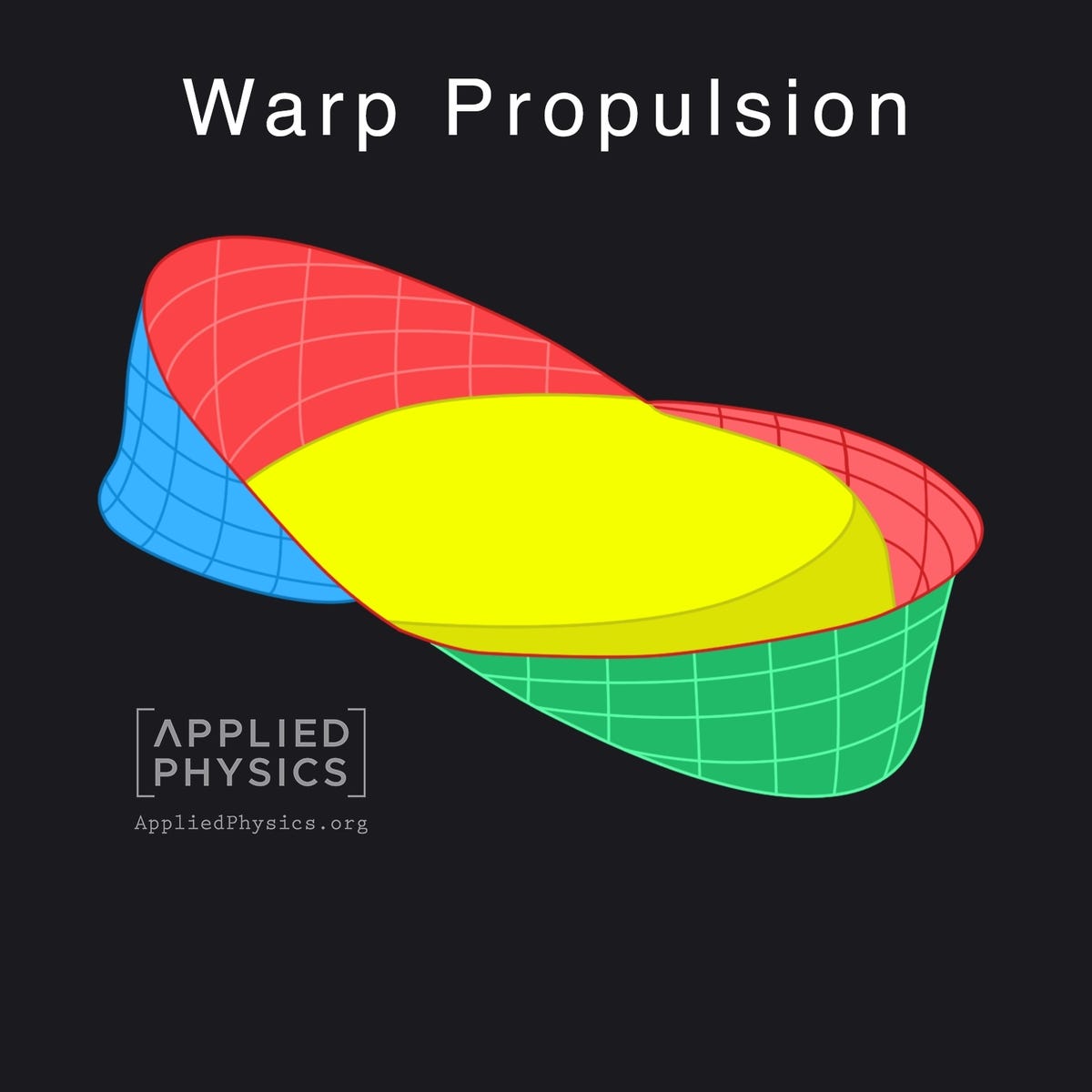
This brings us to a recent study published by scientists at the Advanced Propulsion Laboratory (APL) at Applied Physics in the peer-reviewed journal Classical and Quantum Gravity. The APL team has unveiled the first physical model for a warp drive that does not rely on negative energy. Instead, their model uses floating bubbles of spacetime, rather than traditional ships traveling through space.
According to the researchers, this new approach minimizes the need for negative energy and leverages the flexibility of spacetime bubbles. The model is not only physically comprehensible but also opens up new possibilities for how warp speed could be achieved. Alcubierre himself has endorsed this new model, which adds credibility to the research.
The Road Ahead
Despite the promising nature of this study, there are still significant hurdles to overcome. The mass requirements for constructing such a drive remain enormous, and the technology needed to implement the model is still far from realization. As the APL scientists note, their work suggests a method of constructing such objects based on fully understood laws of physics, but the path to practical application is long.
While a physical warp drive may not be achievable in the near future, this new model represents a significant step forward in the quest for faster-than-light travel. It offers hope that, with continued research and technological advancements, the dream of warp speed may one day become a reality. For now, however, it remains a fascinating concept that continues to inspire both scientists and science fiction enthusiasts alike.

Posting Komentar untuk "Scientists Confirm Feasible Warp Drive Technology"
Posting Komentar