
Starship V2 vs. V1: Key Differences Revealed
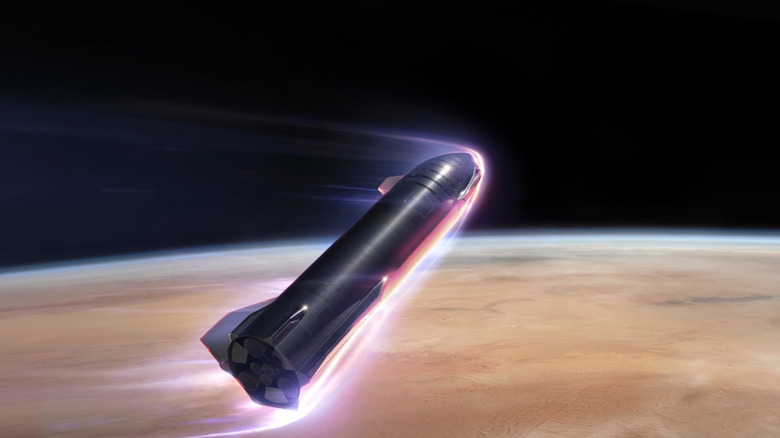
Earlier this year, SpaceX introduced an upgraded version of its Starship, which Elon Musk has referred to as the "V2 Starship." This new model builds upon the lessons learned from the V1 Starship, the prototype that provided crucial data for its development. The V2 is designed to address some of the most significant issues encountered with the V1, particularly the problem of "unscheduled disassembly."
One of the most noticeable changes in the V2 is its increased height. Standing at 171 feet (52.1 meters), it is 6 feet taller than the V1's 165 feet (50.3 meters). This added height allows for more propellant capacity—approximately 300 additional metric tons. More importantly, the V2 reduced its empty mass from 100 metric tons to 85 metric tons while increasing its fuel capacity from 1,200 metric tons to 1,500 metric tons.
Rockets are judged by their mass ratio, which is the relationship between the weight of the propellant and the dry weight of the rocket. By reducing structural weight by 15 tons while adding 300 tons of fuel, the V2 achieves better margins for orbital burns and landing. A lighter structure means more fuel is available for re-entry, and it also increases payload capacity, leading to improved performance on real missions rather than just test flights. Engineers analyzed the V1’s test flights and identified problems related to heat management and handling during re-entry, especially regarding aerodynamic stability. The V2 addresses these design flaws, fixing the weak points.
How SpaceX solved the re-entry issues
The forward flaps on the V2 have undergone significant changes compared to the V1. Originally, they were thicker, but the V2's flaps are slimmer, saving weight and aligned differently (at 140 degrees, compared to 180 degrees for the V1). These flaps have also been moved to the leeward side (the protected side during re-entry) to avoid direct heat exposure. The V2’s design solves a problem that was evident during hypersonic flight with the V1.
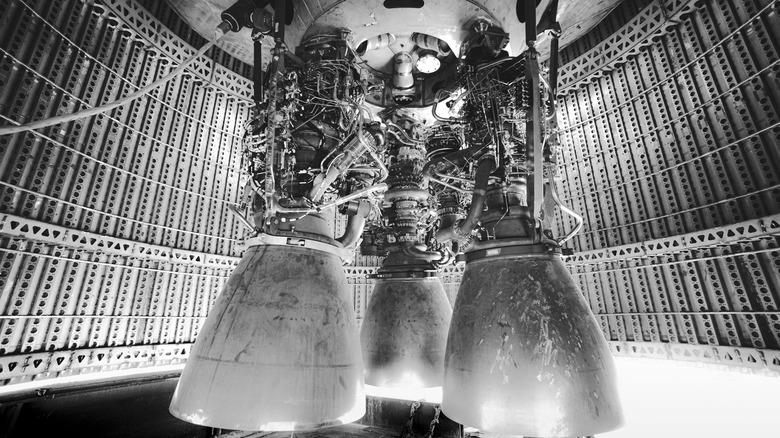
Starship V1 had conical domes between propellant tanks, but these have been replaced by elliptical domes in the V2. Propulsion delivery has also changed, with the V2 using separate downcomers for the three Raptor Vacuum engines instead of a single shared channel like the V1. While the three center Raptor engines still share one downcomer, giving the vacuum engines individual fuel feeds makes it less likely that a single point of failure will affect multiple of the six Raptor engines during sustained burns. This results in better fuel flow and engine feed reliability.
Thrust vector control systems have also been updated, with the V2 replacing hydraulic control systems and all their associated machinery with electric ones. This makes the V2’s design much cleaner and simpler than the V1. Observations from flights one to four provided insights into what needed to be changed. Heat shielding and engine feed systems were identified as potential failure points, and the V2’s design addresses those shortcomings.
V2's already been retired (but it did its job)
Despite being an upgrade, the V2 was never intended to remain in service for long. Flight 11 in October 2025 marked the V2’s final flight, and SpaceX has already shifted its focus to developing and testing the V3. Rapid development cycles are standard for the company, so this isn’t surprising. The V2 allowed SpaceX to adjust its expectations.
Originally, the V2 was expected to carry a 100 metric ton (220,000 lbs.) payload, but this was revised to 35 metric tons (77,000 lbs.), highlighting how challenging it is to engineer a spacecraft of this scale. Still, the revised payload represents a significant improvement over the V1’s demonstration-only capabilities. The biggest change between the V1 and V2 comes from the manufacturing processes. The V1 used prototype-only jigs, which were replaced by new standardized versions. The construction itself was moved to SpaceX’s new Starfactory facility, bringing with it better consistency and quality control. These improvements will carry over to the V3.
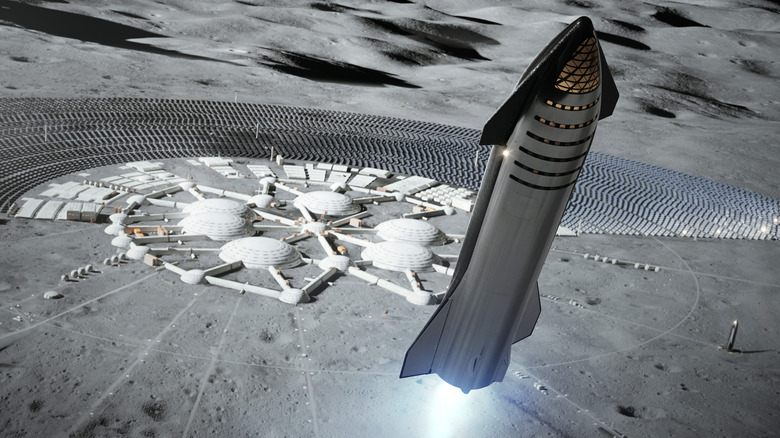
The V2 served as a stepping stone, but it proved that the concept for designing these spacecraft works, and that it has the potential to revolutionize space travel. The V1 and V2 were built as experimental craft to validate SpaceX’s approach. The V2’s successful re-entry and landing proved the design works, paving the way for V3’s operational missions. SpaceX has selected Starship for NASA’s Artemis lunar landings, and the company has Mars colonization as its ultimate goal. While the V2 was temporary, it demonstrated that the spacecraft that will get there is viable.

Posting Komentar untuk "Starship V2 vs. V1: Key Differences Revealed"
Posting Komentar