
TRAPPIST-1e May Not Be Habitable — Here's the Truth
The Quest for Life Beyond Earth
The question of whether we are alone in the universe has captivated scientists and the public alike for centuries. With over 6,000 exoplanets identified so far, astronomers have found many celestial bodies that could potentially support life. However, only a few of these planets are considered to be in the "Goldilocks zone," where conditions might allow for liquid water—and possibly life.
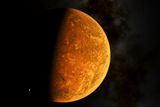
One such planet is TRAPPIST-1e, the fourth of seven rocky exoplanets orbiting the red dwarf star TRAPPIST-1, located approximately 39 light-years from Earth in the constellation Aquarius. This planet is particularly intriguing because it lies within the habitable zone, where temperatures could be just right for water to exist on its surface.
However, the presence of an atmosphere is crucial for any potential habitability. Researchers from the University of Arizona's Lunar and Planetary Laboratory, including Sukrit Ranjan, emphasize that while the theoretical possibility of an atmosphere exists, it remains uncertain.
Unveiling the Secrets of TRAPPIST-1e
In a recent study published in the Astrophysical Journal of Letters, a team of researchers used the James Webb Space Telescope (JWST) to observe TRAPPIST-1e as it passed in front of its host star. Their goal was to determine if the planet had an atmosphere. Initial findings suggested the presence of methane, which could indicate atmospheric activity.
But further analysis revealed that the methane signals were likely not from the planet itself, but rather from the star. According to Ranjan, "the previously reported tentative hint of an atmosphere is more likely to be 'noise' from the host star."
The research team conducted simulations of various atmospheric scenarios, considering different compositions and densities. They ruled out the possibility of a cloudy hydrogen-dominated atmosphere and found that both thin and thick carbon dioxide-rich atmospheres were less likely. The most plausible scenario involved a methane-rich atmosphere similar to that of Titan, Saturn’s largest moon.
Despite this, the researchers concluded that even this scenario is improbable, suggesting that the detected methane might simply be noise from the star.
Challenges in Detecting Atmospheric Signs
TRAPPIST-1 is significantly cooler than our Sun, which means that gas molecules can exist in its atmosphere. This makes it challenging to distinguish between signals originating from the star and those from the planet. As a result, the detection of methane on TRAPPIST-1e remains uncertain.
While the findings do not confirm the presence of a methane-rich atmosphere, they also do not rule it out entirely. "We just need more data," said Ranjan. The research highlights the complexity of studying exoplanets and the importance of continued observation.
The Search for Habitable Worlds
The TRAPPIST-1 system has become a focal point for astronomers due to its unique characteristics. All seven planets in the system are rocky and similar in size and mass to Earth, with temperate climates. TRAPPIST-1e, in particular, is situated in the habitable zone, making it a prime candidate for further study.
Future research using the JWST could provide more insights into the planet's atmosphere. The study authors noted that with 15 additional transits planned, there is hope for uncovering whether TRAPPIST-1e has an atmosphere or not.
Conclusion
The search for habitable exoplanets continues to push the boundaries of our understanding of the universe. While TRAPPIST-1e remains a promising candidate, the journey to confirm its habitability is ongoing. As technology advances and new data emerges, we may one day find answers to the age-old question: Are we truly alone?

Posting Komentar untuk "TRAPPIST-1e May Not Be Habitable — Here's the Truth"
Posting Komentar