
Why Your Dog Seems Sad When You're Happy and Vice Versa
Understanding Dog Emotions: A New Perspective
Dogs have long been considered man's best friend, yet there may be more to their emotional world than we realize. While humans often assume that others feel the same emotions as they do, this assumption does not hold true when it comes to our canine companions. In a recent study, volunteers who were made to feel sad rated dogs as happier, and those in a happy mood perceived dogs as sadder. This discovery challenges our understanding of how we interpret the emotions of dogs.
The research, conducted by a team of scientists, is part of an ongoing project exploring how human biases affect our perception of animal emotions. Clive Wynne, co-author and professor of psychology at Arizona State University, noted that despite the long history of coexistence between humans and dogs, there are still significant gaps in our understanding of what dogs are feeling.
The Study on Reading Dog Emotions
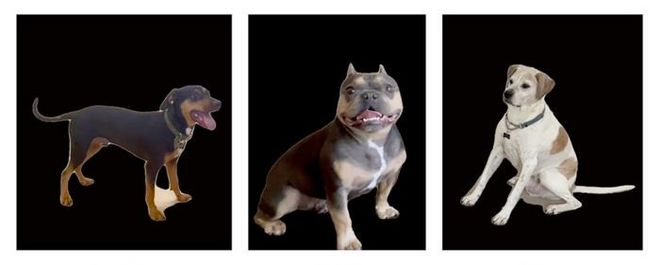
To investigate how well people can decode a dog’s emotions, the researchers recruited three dogs: Oliver, a 14-year-old mixed-breed; Canyon, a 1-year-old Catahoula; and Henry, a 3-year-old French bulldog. Each dog was filmed in three different scenarios designed to elicit either positive, neutral, or negative reactions.
For example, Oliver was shown receiving a treat (positive) and encountering a cat (negative). Canyon was presented with a toy (positive) and a vacuum cleaner (negative), while Henry saw the promise of seeing "Grandma" (positive) and another vacuum cleaner (negative). Neutral clips featured each dog simply resting or waiting for their owner.
These videos were then shown to undergraduate volunteers, who were asked to rate the dogs' emotions after being primed to feel happy, sad, or neutral themselves. Surprisingly, altering the students’ moods did not significantly impact their perception of the dogs’ emotions.
Reading Opposite Emotions
To test whether the results were influenced by the choice of priming images, the researchers repeated the experiment using images of dogs instead of human faces. They included images such as a dog playing in the park, a puppy in a teacup, or a sad-looking dog behind bars.
This time, the researchers observed a correlation between the volunteers’ moods and their ratings of the dogs, though it was not what they expected. Those in a positive mood rated the dogs as sadder, while those in a negative mood rated them as happier. Interestingly, watching the dog clips also improved the volunteers’ moods.
Limitations and Future Research
While the study provides valuable insights, it has some limitations. For instance, only nine clips from three dogs were used, which may not fully represent the range of dog emotions. However, the findings highlight potential gaps in our understanding of how dogs experience and express emotions.
Holly Molinaro, the first author of the study, hopes that improving our understanding of animals' emotions will lead to better care for pets and more appropriate handling. She emphasized that there is still much to learn about how humans perceive and interpret dog emotions.
Wynne added that the complexity of this topic continues to surprise him. “I feel like we are just scratching at the surface of what is turning out to be quite a big mystery,” he said.
Conclusion
This study underscores the importance of reevaluating how we understand and interact with our canine friends. As we continue to explore the emotional lives of dogs, we may find new ways to connect with them and ensure their well-being. The journey to fully comprehend dog emotions is just beginning, and there is much more to discover.

Posting Komentar untuk "Why Your Dog Seems Sad When You're Happy and Vice Versa"
Posting Komentar