
Android's New Safety Feature You'll Be Glad to Have, But Should Know About
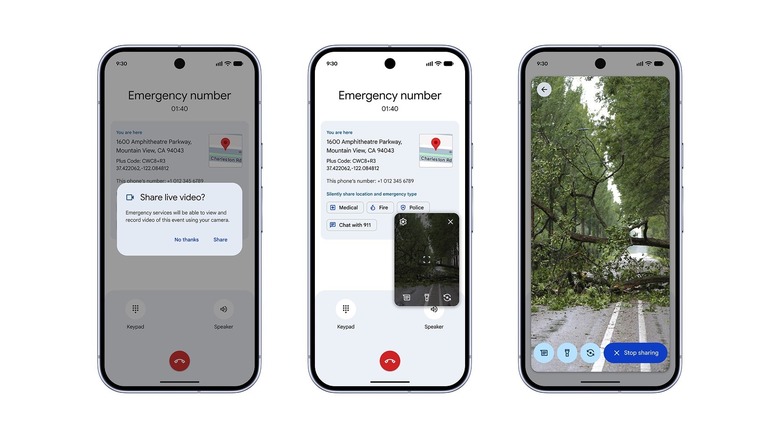
Smartphones have evolved into more than just communication tools. They now come with a range of built-in features designed to assist users in critical situations. While the most basic action during an emergency is to dial 911 or your local emergency number, modern devices offer advanced functionalities that can be invaluable. Both Android and iPhone platforms provide similar safety features, such as satellite support for emergency SOS, car crash detection, and fall detection. Starting this week, both systems also introduced live video streaming capabilities to first responders, aligning Android with Apple’s existing Emergency SOS Live Video feature.
This new Android Emergency Live Video feature is one that many hope they never need to use. It's not something people typically imagine encountering in a dangerous situation, but it could prove essential when clear communication is necessary. In high-stress scenarios, it can be difficult to convey the full context of an emergency to responders, which is where this feature comes into play. The ability to stream real-time video can help emergency personnel understand what's happening on the ground and provide more effective assistance.
How to Start an Android Emergency Live Video Stream
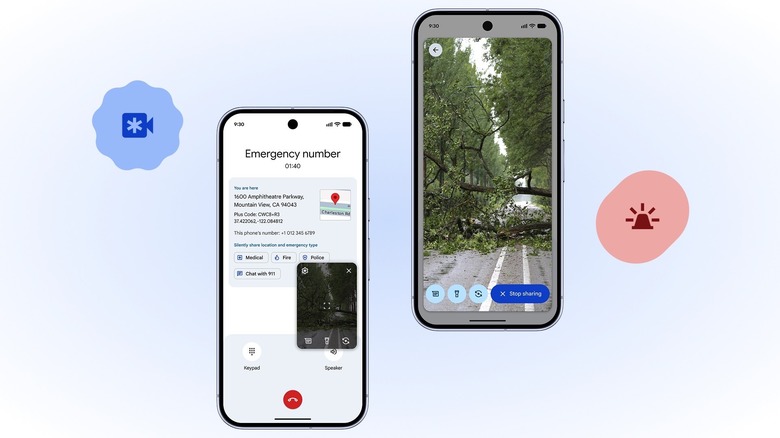
Google detailed the new safety feature in a blog post, emphasizing its simplicity and security. The Android Emergency Live Video does not require any setup; it will automatically be available on all Android 8 or later devices that come with Google Play services preinstalled. This means it works on standard Android devices, not those running custom operating systems without Google apps. The video calls are encrypted, and users have the option to end the stream at any time after accepting a call from first responders.
One key aspect of the Android Emergency Live Video feature is that users do not initiate the video call themselves. Instead, first responders will decide if a live video call is necessary and send a request to the user's device. When this happens, a prompt will appear on the screen with a "Share" button. Users will need to tap this button to begin sharing their video feed. Once the stream is active, first responders will see exactly what the user sees and can guide them in real time.
For the Android Emergency Live Video to function properly, an internet connection—either Wi-Fi or cellular—is required. Another important limitation is location-based availability. The feature is only accessible in regions where first responders are equipped to handle the technology. Currently, Google is rolling out the feature in the United States, with select areas in Germany and Mexico. It is not available in other parts of the world, though the company is working on expanding the service.
The introduction of Android Emergency Live Video marks a significant step forward in how emergency services interact with individuals in distress. By enabling real-time visual communication, it enhances the ability of responders to assess situations accurately and provide timely assistance. As this feature becomes more widely available, it has the potential to save lives by improving the clarity and efficiency of emergency responses.

Posting Komentar untuk "Android's New Safety Feature You'll Be Glad to Have, But Should Know About"
Posting Komentar