
Bezos and Musk's Space Data Race
The Race to Build Data Centers in Space
Elon Musk and Jeff Bezos have long been at the forefront of the space race, developing rockets and launching satellites. Now, they are pushing further into the future by aiming to bring the trillion-dollar data-center boom into orbit. This ambitious move is not just about launching more satellites; it's about redefining how AI computing can be done on a global scale.
Blue Origin, Bezos’ space company, has been working for over a year on technology that could enable orbital AI data centers. Meanwhile, SpaceX, led by Musk, plans to use an upgraded version of its Starlink satellites to host AI computing payloads. This initiative is part of a larger strategy that could value the company at $800 billion, according to insiders involved in the discussions.
Deploying satellites with significant AI computing capabilities presents numerous engineering challenges. These include ensuring that the systems perform as well as traditional data centers on Earth and addressing the costs associated with launching and maintaining these devices in orbit. While advocates acknowledge these difficulties, they believe the potential benefits are worth the effort.
Challenges and Skepticism
Despite the enthusiasm, there are skeptics who argue that the technical risks may be underestimated. They question whether space-based data centers will be cost-effective, especially if power and other constraints on Earth become less of an issue. However, the idea has captured the imagination of many leaders in both AI and space technologies.
One of the main advantages of deploying satellites as data centers is the ability to avoid Earthly challenges such as securing large amounts of power needed to train AI models. Proponents envision filling orbits with satellites equipped with chips that handle the computations underpinning AI applications used by consumers and companies. These satellites would harness the sun’s power to operate and transmit data back to Earth.
Will Marshall, CEO of Planet Labs, noted that taking resource-intensive infrastructure off Earth has been an idea for years but has only become feasible as launch and satellite costs have decreased. He believes they are nearing that point.
Google and Planet Labs' Test Mission
In early 2027, Google and Planet Labs plan to deploy two test satellites carrying Google’s AI chips, known as tensor processing units. This project is considered one of Google’s moonshots due to the challenges of scaling up a network of satellite data centers.
A major challenge is determining how many satellites would be needed to match the compute capacity of a gigawatt data center. According to Travis Beals, a Google executive involved in the project, it could take 10,000 satellites, assuming each is a 100-kilowatt unit. The test mission aims to demonstrate the key elements of operating satellites as AI-computing clusters, but Beals acknowledges that there is a long road ahead for optimization and cost-effective scaling.
A Growing Industry
The concept of orbital data centers is not limited to SpaceX and Blue Origin. Many companies and executives are exploring its viability. In October, Bezos mentioned during an event in Italy that shifting data centers to orbit makes sense due to the solar power available in space. He predicted that these systems could eventually outperform terrestrial AI infrastructure within 20 years or sooner.
Blue Origin has made progress this year with its New Glenn rocket, which is partially reusable and designed to carry large numbers of satellites to orbit. Other players, like Sam Altman of OpenAI and Eric Schmidt of Relativity Space, have also shown interest in the potential of orbital data centers.
IBM’s Red Hat software business and Axiom Space have already launched a data-computing prototype, while startups like Aetherflux and Starcloud are setting their own plans to compete against larger players.
Technical and Logistical Hurdles
Operating satellites as data centers involves a range of technical issues, including managing temperatures for AI chips in orbit, protecting them from radiation, and transferring data back to Earth without significant lag times. Jonny Dyer, CEO of Muon Space, believes these challenges are solvable but emphasizes that "launch" remains a critical factor.
The prospect of launching thousands of satellites as data centers could drive business across the aerospace supply chain, including rocket companies. Developing rockets is expensive, but frequent launches could help offset costs and improve margins.
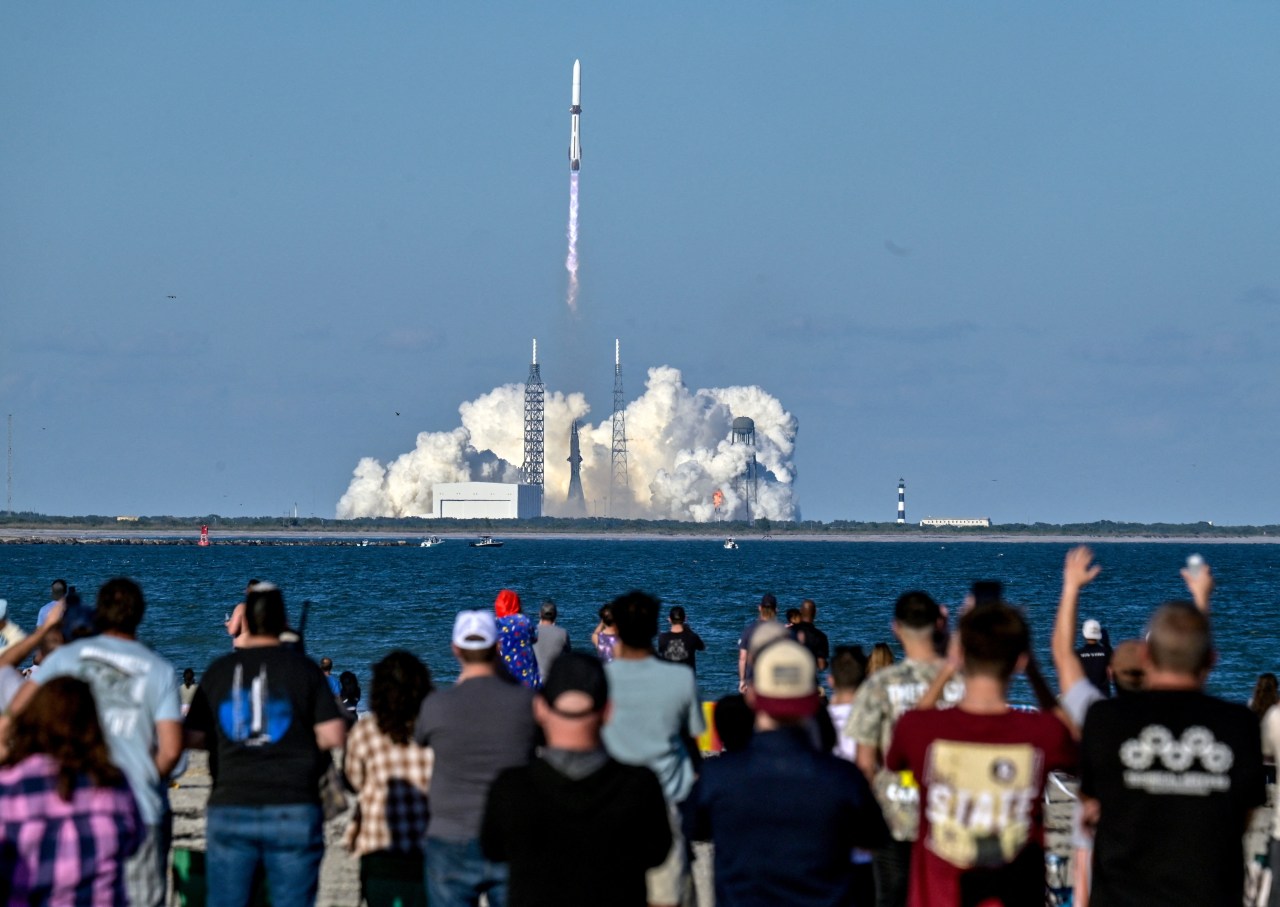
SpaceX has taken a lead in this area by launching its Falcon 9 fleet at record rates, sending up internet satellites for Starlink and carrying payloads for outside customers. The company is also working on Starship, a massive rocket aimed at even lower costs. AI-compute technology is expected to be installed on upgraded satellites designed specifically for Starship, according to insiders.
The Future of AI in Space
As the race to build data centers in space continues, it remains to be seen how viable this approach will be. While there are many challenges to overcome, the potential benefits could revolutionize how AI is developed and deployed globally. For now, the focus is on testing, optimizing, and scaling up these ambitious projects.

Posting Komentar untuk "Bezos and Musk's Space Data Race"
Posting Komentar