
Blue Origin vs. SpaceX: Race for Space AI Domination
The Rise of Space-Based Data Centers
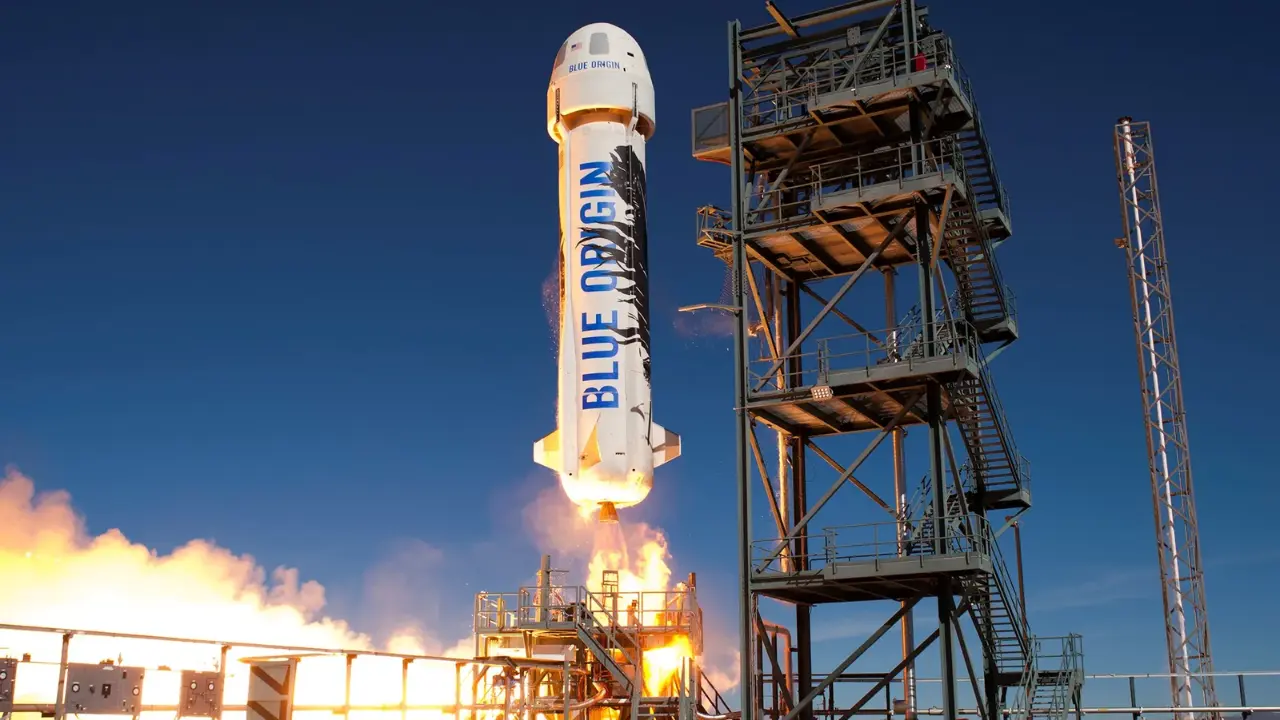
Jeff Bezos’ aerospace company, Blue Origin, has entered the competitive arena of space-based data centers, positioning itself as a direct rival to Elon Musk’s SpaceX. This development marks a significant shift in how tech giants are approaching artificial intelligence (AI) and data processing.
Blue Origin has been working on the technology required to launch data centers into space for over a year. Meanwhile, SpaceX is focusing on upgrading its Starlink satellites to handle AI computing tasks. Both companies are vying for dominance in the emerging field of space-based AI infrastructure.
Why Space Data Centers Are Gaining Attention
Traditional data centers on Earth consume vast amounts of electricity and water, making them a major contributor to global energy consumption. According to the International Energy Agency, data centers accounted for approximately 415 terawatt hours of electricity globally in 2024—roughly 1.5% of total power usage. Some large facilities can use up to five million gallons of water daily for cooling purposes.
The concept of space-based data centers is gaining traction because they could potentially reduce these environmental impacts. Jeff Bezos, the founder of Amazon, predicted that gigawatt-scale data centers would be built in space within the next 10 to 20 years. He argued that the continuous availability of solar energy in space could eventually make these facilities more cost-effective than those on Earth.
“We will be able to beat the cost of terrestrial data centers in space in the next couple of decades,” Bezos stated.
Other Players in the Space Data Center Race
Several other companies are also exploring the potential of space-based data centers:
- Starcloud, an Nvidia-backed startup, recently launched a satellite carrying an Nvidia H100 graphics processing unit. The company successfully trained and ran Google’s Gemma AI model in orbit for the first time.
- Aetherflux announced its “Galactic Brain” project on December 9. The company aims to deploy its first low Earth orbit data center node in early 2027, with thousands of satellites expected to follow.
- Axiom Space plans to launch its first two Orbital Data Center nodes to low Earth orbit by the end of 2025.
- Google unveiled a moonshot initiative called Project Suncatcher in November, which aims to place solar-powered satellites equipped with Google’s tensor processing units into space.
Challenges and Opportunities
Despite the promise of space-based data centers, several challenges remain. Analysts from Morgan Stanley have highlighted potential issues such as harsh radiation damaging computer chips, difficulties in-orbit maintenance, space debris hazards, and regulatory concerns related to data governance and space traffic management.
However, recent studies suggest that the carbon footprint associated with launching hardware into space could be offset within five years of operation. After that, these facilities could run indefinitely on renewable energy.
Future Prospects
SpaceX is reportedly looking to raise more than $25 billion through an initial public offering in 2026, which could boost the rocket maker’s valuation to over $1 trillion. This move underscores the growing interest in space-based technologies and their potential to revolutionize AI and data processing.
As competition intensifies, the race to build efficient and sustainable space-based data centers is likely to drive innovation and reshape the future of computing.

Posting Komentar untuk "Blue Origin vs. SpaceX: Race for Space AI Domination"
Posting Komentar