
Is Humanity Prepared for Alien Tech? Avi Loeb Warns as 3I/ATLAS Nears
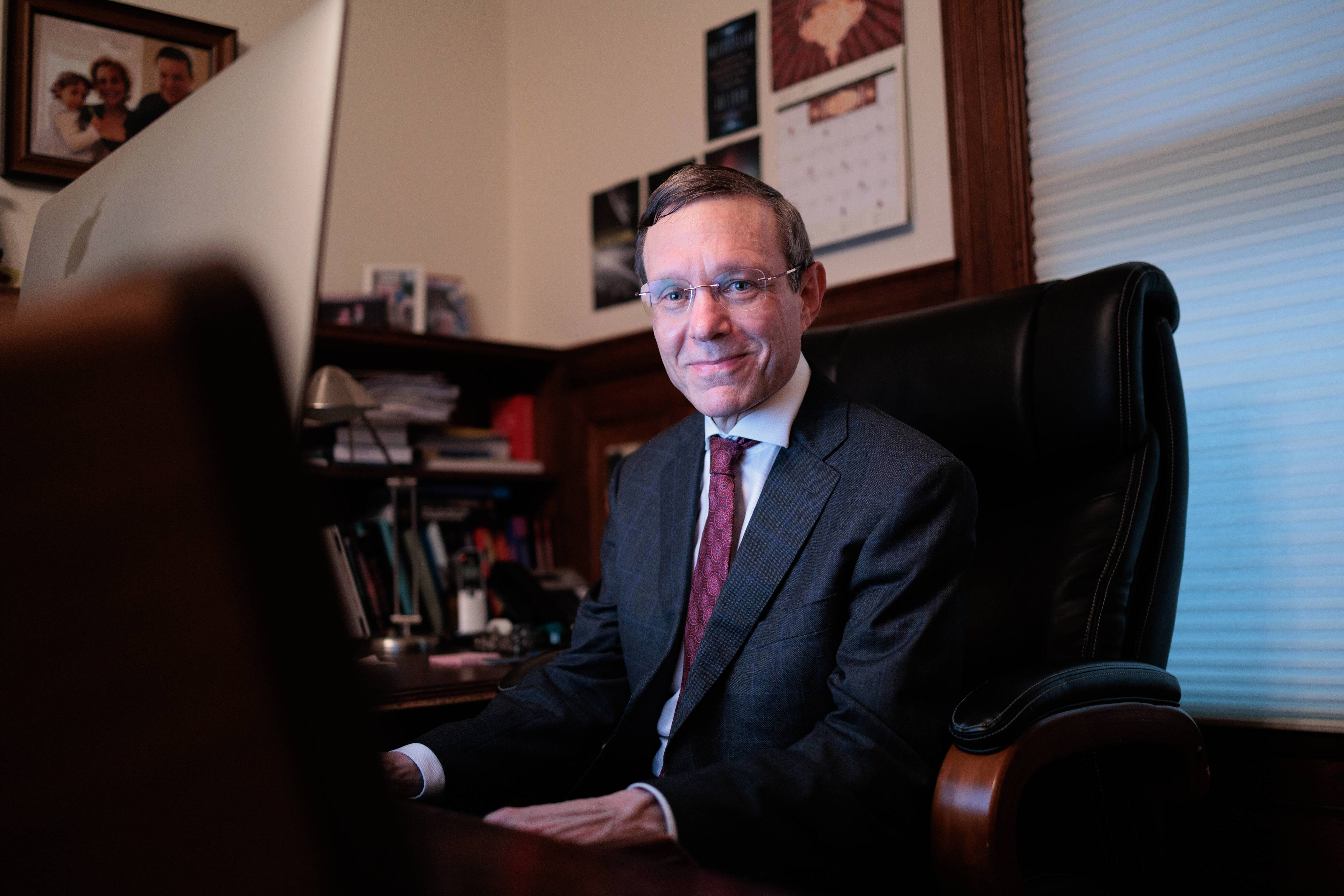 Avi Loeb (Image via Getty)
The Interstellar Object 3I/ATLAS and Its Potential Implications
The interstellar object 3I/ATLAS is gradually approaching Earth, with its closest approach scheduled for December 19, 2025. At that time, it will be approximately 170 million miles or 270 million kilometers away from the planet. While NASA has stated that 3I/ATLAS poses no threat to humans, as it is considered a natural comet, Harvard professor Avi Loeb has not entirely ruled out the possibility of its technological origin.
Loeb acknowledges that 3I/ATLAS appears to be mostly natural at this point, but he finds the anomalies that distinguish it from a typical comet to be significant. This has led him to remain skeptical about what the object could mean for human civilization if data collected after its closest approach reveals it to be technological or artificial in nature.
In a Medium blog post published on December 10, 2025, Loeb explored the potential risks humanity might face if 3I/ATLAS were determined to be of artificial origin. He emphasized that the world is currently unprepared for any encounter with alien technology or extraterrestrial beings, as there is no established “response protocol for alien technology.” However, he believes that if 3I/ATLAS is declared technological, reforms will likely follow, and steps will be taken to change the current state of space exploration.
Risks and the Need for Scientific Study
Loeb highlighted the importance of studying the possibility of a technological origin for interstellar objects like 3I/ATLAS. In his blog post, he argued that if 3I/ATLAS turns out to be of artificial origin, it "could pose a threat to humanity," contrary to the assessments of NASA and other astronomers. According to him, the main concern is the lack of a "response protocol" for alien technology.
Despite this, Loeb expressed hope that the first encounter with such an object could lead to changes in how experts view and study interstellar objects, provided humanity survives it. He suggested that after the first encounter, there would be political will to invest trillions of dollars in a warning system of interceptors capable of taking close-up photos of anomalous interstellar objects.
However, Loeb also expressed concerns about the timing of the object’s closest approach, which coincides with the holiday season. He hoped that 3I/ATLAS would not bring "unwanted gifts for the holidays" as the date approached.
Criticism of Scientific Practices
Loeb went on to discuss the risks of ignoring the anomalies displayed by interstellar objects like 3I/ATLAS. He described science as a "continuous process," not a "finished product," and stressed the need for astronomers to continue collecting evidence and remaining skeptical in their studies of such objects.
He criticized how some scientists rely on past data and classify 3I/ATLAS as natural, despite its anomalies, refusing to adapt. Loeb pointed out that present-day scientists often minimize the risk to their reputations by not sharing error-corrections from data and only communicating with the public once they have final answers.
According to Loeb, keeping the public in the dark and only informing them of what they "need to know" undermines the urgency of the situation and portrays science as an "occupation of the intellectual elite." He emphasized that science is a "work in progress," and anomalies must be studied closely as they allow for "a multitude of interpretations."
Funding and Public Interest
Loeb also raised concerns about the allocation of funds for research. He noted that while $10 billion has been assigned to the search for microbes, none has been directed toward the study of "technological signatures." This, he argued, poses a threat to the accumulation of information and prevents astronomers from conducting in-depth research and preparing for potential future contact with artificial entities.
He pointed out that the public is more passionate about the search for aliens than the search for microbes. Loeb urged scientists to consider the public's interest when defining research priorities, as taxpayers fund science. He concluded that it would be more logical to "hedge our bets and invest billions" in the study of both technological entities and microbes simultaneously.
Stay tuned for more updates.

Posting Komentar untuk "Is Humanity Prepared for Alien Tech? Avi Loeb Warns as 3I/ATLAS Nears"
Posting Komentar