
OpenAI's fragile foundation teeters on collapse
The Decline of OpenAI's Dominance
OpenAI, once a dominant force in the AI landscape following the public release of ChatGPT, is now facing a significant decline in its market position. In 2022, the sudden popularity of ChatGPT sent shockwaves through the tech industry, particularly at Google, which was deeply concerned about the potential disruption to its Search business. This fear led to a "code red" alert within the company, with executives even bringing back Sergey Brin and Larry Page to help formulate a response. Google quickly launched Bard, its first commercial chatbot, on February 6, 2023. However, the company's stock plummeted days later after the AI incorrectly answered a question about NASA's James Webb Space Telescope during a public demo.
While Google sought to compete with OpenAI, other tech giants like Microsoft and Apple formed partnerships with the company to integrate its technology into their products and services. These deals promised to revolutionize various aspects of the economy through AI advancements.
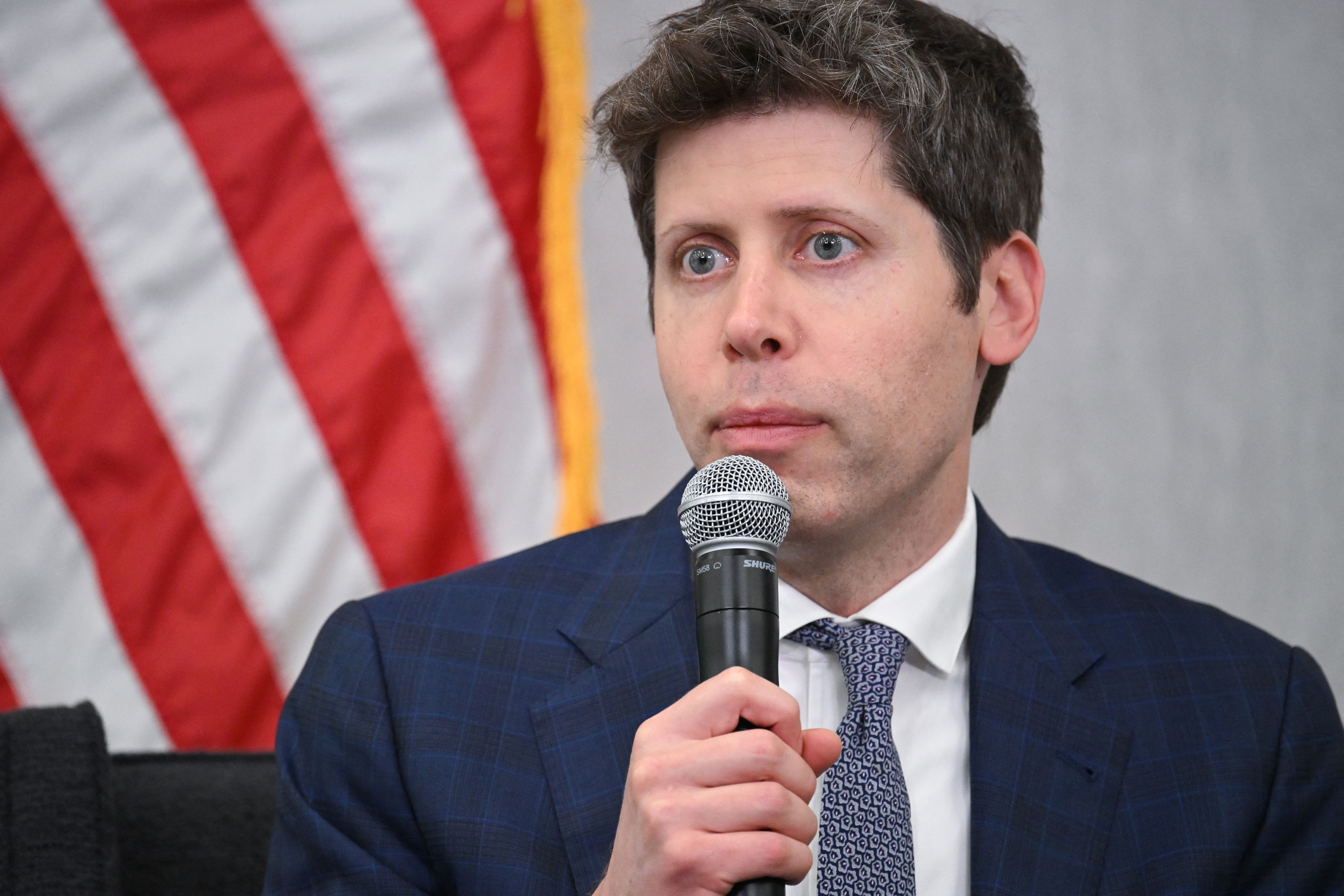
However, OpenAI's lead has since diminished, with a series of setbacks throughout 2025. On January 20, as Sam Altman was mingling with tech leaders at Donald Trump’s inauguration, China’s DeepSeek quietly released its R1 chain-of-thought model. A week later, the startup's chatbot surpassed ChatGPT as the most-downloaded free app on the US App Store. This overnight success resulted in a $1 trillion loss in stock market value and left OpenAI caught off guard.
In response, OpenAI demonstrated renewed urgency by releasing both o3-mini and Deep Research within a single week. It even announced the latter on a Sunday evening. Despite this, the company's most anticipated release of the year, GPT-5, failed to meet expectations. OpenAI touted GPT-5 as smarter, faster, and better than previous models, but users reported surprising errors and a lack of personality. Many found GPT-5 to be a step backward compared to the older GPT-4o, a position no AI company would want to be in, especially one with as much investment as OpenAI.
Anthropic capitalized on this weakness by signing a deal with Microsoft to bring its Claude models to Copilot 365. Previously, Microsoft had relied solely on OpenAI for partner models in Copilot. Before the integration, reports from The Information indicated that Microsoft made the decision based on the strength of Anthropic's Sonnet 4.0 model, which performed "better in subtle but important ways" compared to OpenAI's offerings.
The defining moment came a few weeks after OpenAI announced the end of its restructuring. On November 18, Google released Gemini 3 Pro, which immediately outperformed the competition, including GPT-5. As of this article's writing, Google's new model ranks at the top of LMArena, a site where humans compare outputs from different AI systems and vote on the best one. GPT-5, in contrast, is currently ranked sixth overall, behind models from Anthropic and Elon Musk's xAI.
According to a December 2 report from The Wall Street Journal, Sam Altman sent a companywide memo following the release of Gemini 3 Pro. He called for a "code red" effort to improve ChatGPT, instructing employees to temporarily reassign tasks and delay some products to catch up with Google and Anthropic.
Despite having around 800 million monthly users, OpenAI faces growing challenges. Google is catching up, with its Gemini app reaching 650 million users in October, up from 450 million in July. This growth is attributed to the popularity of its Nano Banana Pro image generator.
More importantly, OpenAI has an inherent disadvantage against Google. For the search giant, AI touches every aspect of its operations, but Gemini is just one product in a vast portfolio that includes many other popular services. Google can fund its AI advancements with revenue from other areas, while OpenAI must constantly raise money to stay afloat. According to a financial roadmap obtained by The Journal, OpenAI needs its revenue to grow to about $200 billion annually to become profitable by 2030. In November, Altman stated on X that the company was on track to hit above $20 billion in annualized revenue this year.
To boost revenue, Altman and his team have adopted a risky strategy, signing over $1.4 trillion worth of infrastructure deals to outscale the competition. Many of these agreements are circular, and concerns about a financial bubble are real. In the first half of 2025, investment in data centers accounted for nearly all of US GDP growth. Even if a repeat of the 2008 housing market crisis or the dot-com crash doesn't occur, the AI boom is poised to make everyday electronics and utilities more expensive for regular people in the short term.
Since late October, demand for server-grade computer components, including memory and storage, has driven up the prices of consumer PC parts. Manufacturers have redirected production capacity and wafers to high-margin customers like OpenAI and Google. Since late October, the cost of most RAM kits has doubled or tripled. In November, some SSDs saw price increases of up to 60 percent. Next year, the cost of LPDDR5X memory, used in smartphones and NVIDIA servers, is expected to rise as well.
"Be it carmakers, smartphones, or consumer electronics, everyone that uses memory is facing pressure from price hikes and supply constraints in the coming year," said Zhao Haijun, co-CEO of memory manufacturer SMIC, per Bloomberg.
Gita Gopinath, former chief economist for the International Monetary Fund, recently estimated that if the AI bubble were to burst, it could wipe out $20 trillion in wealth held by American households. The Great Recession reduced US household net worth by $11.5 trillion, and it took years for families to rebuild their wealth to pre-recession levels.
While the modern AI bubble may have started with ChatGPT, it won't necessarily pop if OpenAI fails. However, with novelty and technical prowess no longer on its side, it's now up to Altman to prove why his company still deserves such unprecedented levels of investment.

Posting Komentar untuk "OpenAI's fragile foundation teeters on collapse"
Posting Komentar