
Rimac's Solid-State Batteries Boost Power, Reduce Weight for Future Bugatti
Innovations in Electric Powertrain and Battery Technology
Nurdin Pitarevic, the chief operating officer of Rimac Technology, shared insights into the company's advancements in solid-state batteries and next-generation e-axles during an interview. These developments are set to redefine the future of high-performance electric vehicles, particularly for Bugatti.
The solid-state batteries offer a 30 percent increase in energy density and are approximately 66 pounds lighter than current models. This innovation could be introduced in a new Bugatti model as early as 2030. The e-axles, which integrate the motor, gearbox, and control systems, are designed to deliver significant power outputs while reducing weight by over 100 pounds.
Evolution of Bugatti’s Technology
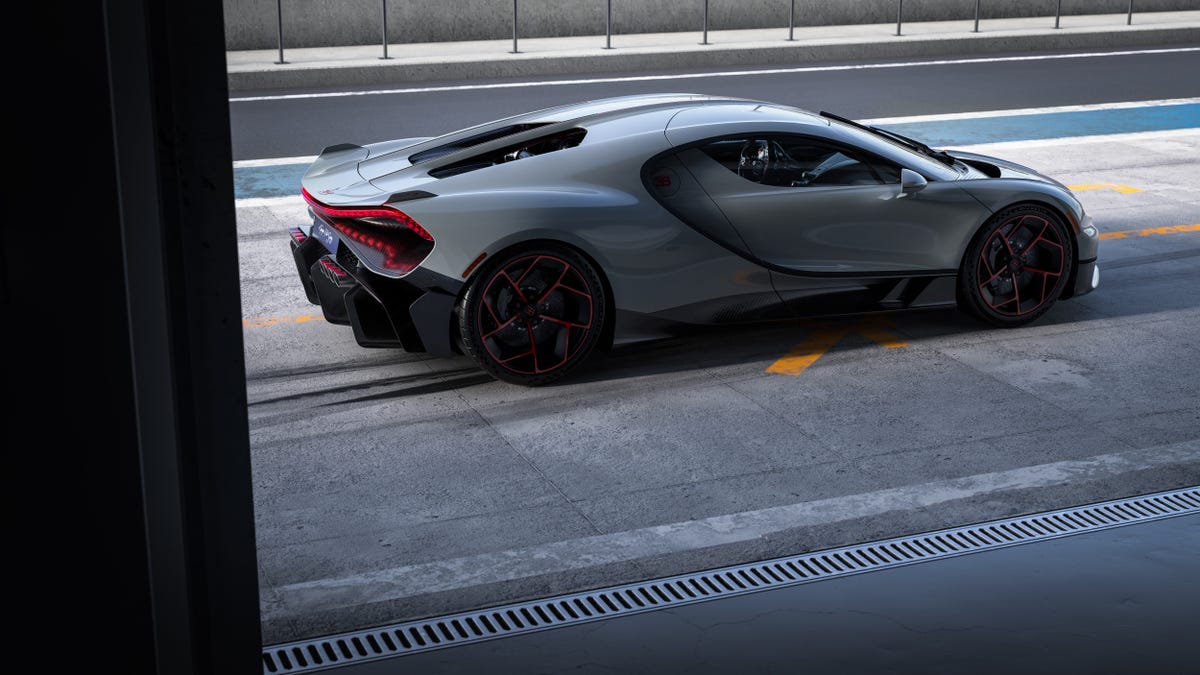
Bugatti is undergoing a transformation, with the W-16 engine, once iconic in the Veyron, now retired after the final Bolide was completed in late November. The upcoming Tourbillon retains 16 cylinders but introduces electric assistance. This shift reflects the impact of the 2021 merger between Bugatti and Croatian EV startup Rimac. Although future Bugattis will be electrified, the brand remains committed to pushing technological boundaries.
Rimac has been developing new solid-state batteries that could debut in a new Bugatti model in 2030. This information comes from an interview with Nurdin Pitarevic, who emphasized the company’s focus on creating advanced battery technology and compact, powerful e-axles.
Development and Testing of Solid-State Batteries
The development of solid-state batteries is already well underway, with collaboration between Rimac and ProLogium, a cell manufacturer, as well as composite materials teams at Mitsubishi. Testing is scheduled to begin soon, and Pitarevic aims to launch these batteries in a new Bugatti in 2030, described as mid-volume production. While the exact implications of this remain unclear, it could signify a more affordable supercar beneath the Tourbillon. However, production would still be limited compared to mainstream automakers.
Pitarevic also noted that the solid-state batteries are expected to reach cost parity with current NMC batteries by 2035. Although Rimac does not plan to produce enough volume to supply mainstream vehicles, the company may consider licensing the technology to interested automakers.
Advancements in Battery Performance
The solid-state batteries promise substantial improvements. A prototype with a capacity of 100 kWh is reported to be 20 to 30 percent more energy dense and around 66 pounds lighter. The reduced weight is largely due to a new ultra-stiff composite housing from Mitsubishi. Additionally, these batteries can charge much faster while maintaining safety.

New E-Axles and Their Applications
These batteries will be paired with new e-axles, which include the electric drive motor, gearbox, and control electronics. According to Pitarevic, these units can generate between 200 and 470 horsepower and are compatible with front-wheel-drive, rear-wheel-drive, and all-wheel-drive layouts. They can also be used in both EVs and hybrids.
Several companies have already signed up as customers for these e-axles, including BMW, Porsche, and CEER, an EV startup backed by the Saudi Public Investment Fund. Pitarevic mentioned specific examples, such as an e-axle being developed for an SUV from CEER. This unit weighs 291 pounds but delivers power comparable to one of the 612-hp, 436-pound rear motors on the Rimac Nevera.
Rimac is also working on an e-axle with around 500 hp that weighs just 106 pounds. While many of these innovations are still several years away, Rimac's rapid growth and impressive electric supercars indicate a promising future for the company's technology.

Posting Komentar untuk "Rimac's Solid-State Batteries Boost Power, Reduce Weight for Future Bugatti"
Posting Komentar