
Satellite Swarms Threaten 96% of Space Telescope Images
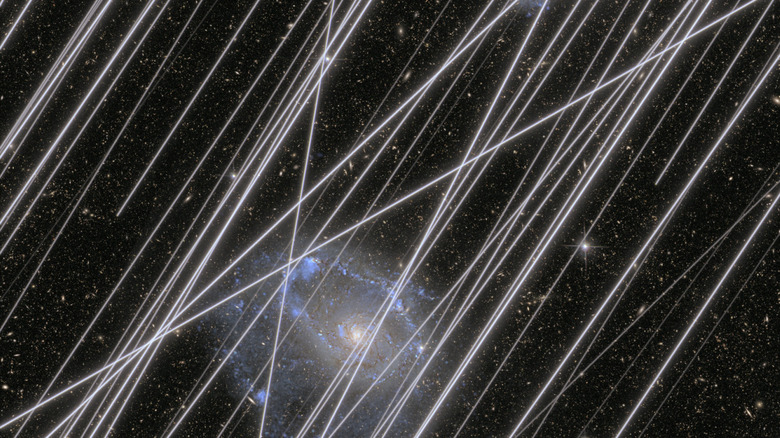
There has been growing concern about the impact of new satellite constellations on ground-based astronomy. These satellites often leave visible streaks in long-exposure images captured by observatories, which can interfere with scientific research. While it was once possible to wait for a satellite to pass through an image, the increasing number of satellites in low-Earth orbit (LEO) is making this more challenging. A recent study by NASA has revealed that the problem is even more severe than previously thought, affecting not just ground-based telescopes but also space-based ones like the Hubble Space Telescope.
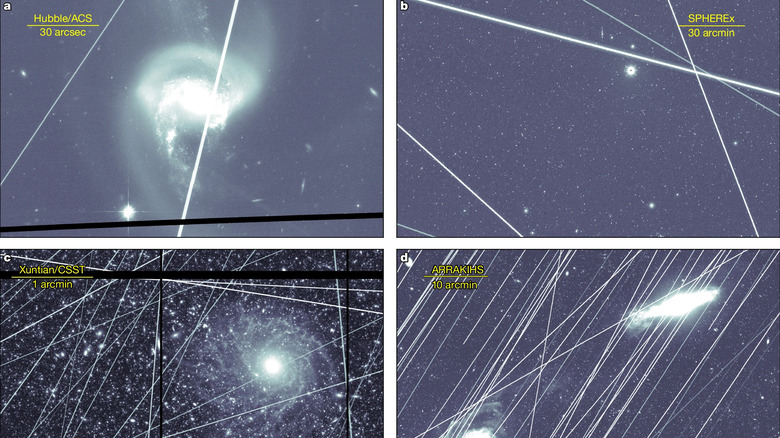
According to a report published in Nature, NASA predicts that approximately 40% of all Hubble images will have at least one satellite streak. This is just the beginning, as the report also forecasts that three other space telescopes could face contamination rates as high as 96%. This level of interference would significantly reduce the effectiveness of these expensive and powerful instruments, posing a serious threat to astronomical research. It's difficult to conduct meaningful observations when the images are marred by streaks that resemble old 8mm film.
How We Got Here and What Can Be Done
NASA's analysis assumed that all currently proposed satellites would be launched successfully, resulting in over 560,000 satellites in LEO. For context, there are currently around 20,000 tracked objects in LEO, and this number has already increased dramatically since the launch of Starlink in 2019. The cost of launching satellites has decreased significantly due to advancements like SpaceX's Falcon 9 rocket, enabling companies such as Amazon and China to pursue their own satellite constellations. This rapid expansion has left astronomers struggling to keep up.
The situation is particularly dire for ground-based observatories. The Vera C. Rubin Observatory, one of the most advanced telescopes ever built, is designed to collect more data in its first year than all other telescopes combined. However, NASA's study suggests that even if the number of satellites remains under 50,000, up to 80% of its images could be compromised. Unlike space-based telescopes, the Rubin Observatory cannot relocate to avoid the interference.
The report outlines several potential solutions to mitigate the issue, though many are still in the early stages of development. One idea is to use Vantablack paint on satellites to reduce their visibility. While this could help, it is not a complete solution. In the worst-case scenario, only the James Webb Space Telescope, located far beyond LEO, might be able to capture usable images consistently.
Potential Solutions and Future Outlook
Addressing the problem of satellite interference requires a combination of technological innovation and policy changes. Some proposed measures include:
- Implementing darker satellite designs to minimize their brightness
- Adjusting satellite orbits to avoid critical observation periods
- Developing software to automatically detect and remove satellite streaks from images
Public awareness and pressure may play a crucial role in pushing for these solutions. As more iconic space images become affected by satellite streaks, there could be increased demand for regulatory action. However, the challenge remains significant, given the scale of the satellite industry and the pace of its growth.
In the coming years, scientists and policymakers will need to work together to find a balance between expanding satellite capabilities and preserving the integrity of astronomical observations. Without effective solutions, the future of both ground-based and space-based astronomy could be at risk.

Posting Komentar untuk "Satellite Swarms Threaten 96% of Space Telescope Images"
Posting Komentar