
Trump's AI Executive Order Meets Pushback from Both Red and Blue States
The Debate Over AI Regulation: Federal vs. State Control
President Donald Trump has made it clear that his administration is preparing to issue an executive order aimed at establishing a national standard for Artificial Intelligence (AI) development. This move comes amid growing concerns about the potential for 50 different state regulations to complicate the industry and hinder innovation. However, the proposal has sparked significant pushback from both Republican and Democratic states, each with its own vision for how AI should be governed.
A Call for a Single Rulebook
Trump emphasized the need for a unified approach to AI regulation, stating on Truth Social, "There must be only One Rulebook if we are going to continue to lead in AI." He argued that the current system of having 50 states with varying rules could slow down progress and create inefficiencies for businesses. "You can't expect a company to get 50 Approvals every time they want to do something. THAT WILL NEVER WORK!" he said.
This stance reflects a broader concern that without federal oversight, the U.S. risks falling behind global competitors like China in the AI race. However, the proposed executive order remains vague, and its details have not been fully disclosed.
Pushback from Conservative Governors
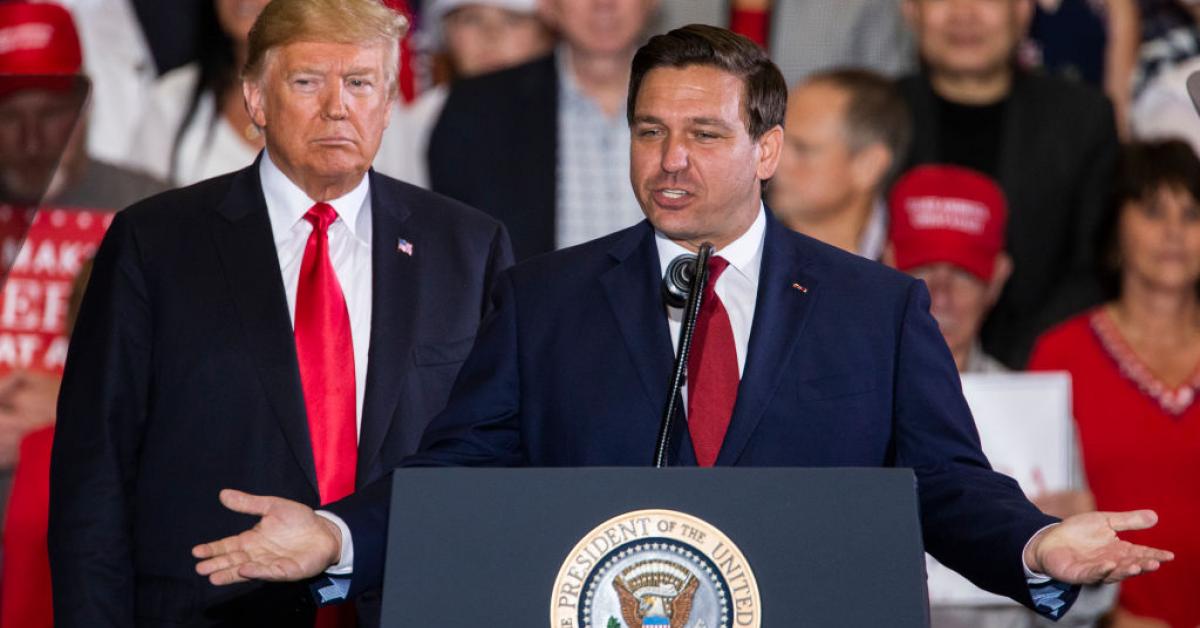
Despite the administration's position, several conservative governors have voiced opposition to the idea of federal control over AI regulation. Florida Governor Ron DeSantis, for example, has introduced a "Citizens Bill of Rights for Artificial Intelligence" that includes measures to prevent subsidies for big tech companies and implement new privacy protections. He has also criticized the notion that an executive order could override state laws, noting that such power would require congressional action.
DeSantis pointed out that Congress has not yet proposed a coherent regulatory framework, and instead, some lawmakers have sought to block states from regulating AI for 10 years, which he called an "AI amnesty." He argued that this approach would not align with the principles of the U.S. Constitution, which allows states to act independently on issues affecting their citizens.
The Challenge of State-Level Regulations
The debate over AI regulation is not limited to conservative states. Several blue states, including Colorado, California, and Illinois, have implemented policies targeting algorithmic discrimination. For instance, Colorado’s law requires AI developers to protect users from "algorithmic discrimination," defined as differential treatment or impact based on factors like race, national origin, or disability.
Neil Chilson, former Chief Technologist at the Federal Trade Commission and current Head of AI policy at the Abundance Institute, has warned that these state-level regulations could pose a threat to the AI industry. He noted that while some state laws are designed for good governance, others are overly invasive and could stifle innovation.
Chilson highlighted that the Trump administration views these state regulations as a potential obstacle to U.S. competitiveness. He pointed to the Justice Department's recent rewrite of Title VI regulations, which eliminated "disparate impact liability" — a legal standard used to challenge policies that result in discriminatory outcomes, even if unintended.
The Commerce Clause Argument
White House AI Czar David Sachs has defended the administration’s stance by invoking the Commerce Clause of the U.S. Constitution. He argued that AI models developed in one state and used across multiple states fall under interstate commerce, which the federal government is responsible for regulating.
"First, this is not an ‘AI amnesty' or ‘AI moratorium.' It is an attempt to settle a question of jurisdiction," Sachs wrote. He warned that allowing 50 different AI models for 50 different states would create a regulatory mess, similar to what exists in Europe, and could hinder innovation, particularly for small startups.
However, Sachs acknowledged that a federal framework would not necessarily prevent states from implementing their own regulations. For example, states could still choose to protect children, regulate data centers, or enforce strict copyright protections.
The Path Forward
As the debate over AI regulation continues, the tension between federal and state authority remains a central issue. While the Trump administration seeks to establish a single rulebook, many states believe that local control is essential for addressing unique challenges and protecting citizens’ rights.
The outcome of this discussion will likely shape the future of AI in the United States, influencing everything from innovation to international competition. Whether a federal approach will prevail or if a patchwork of state regulations will remain is still uncertain, but the stakes are high for the future of the AI industry.

Posting Komentar untuk "Trump's AI Executive Order Meets Pushback from Both Red and Blue States"
Posting Komentar