
The Ultimate TikTok Ads Lookalike Audience Guide for Marketers
TikTok has evolved from a platform for short-form entertainment into a powerful marketing tool that brands can leverage to reach new audiences, drive engagement, and boost sales. One of the most effective strategies for maximizing ROI on TikTok ads is using lookalike audiences. This guide will walk you through everything you need to know about creating and optimizing lookalike audiences on TikTok, helping you expand your reach while maintaining relevance and performance.

What Are Lookalike Audiences?

A lookalike audience is a group of users who share similar characteristics with your existing customers or engaged users. These audiences are identified by TikTok’s algorithm based on factors like behavior, interests, and demographics. By targeting these users, you can effectively expand your reach to people who are more likely to be interested in your brand, product, or service.
Why Use Lookalike Audiences on TikTok?
- Higher Conversion Rates: Since lookalike audiences are built from your existing customer base, they are more likely to engage with your content and convert.
- Efficient Ad Spend: Targeting users who resemble your best customers means you’re not wasting budget on irrelevant audiences.
- Scalability: Once you have a proven audience, lookalike audiences allow you to scale your campaigns without starting from scratch.
- Improved Relevance: TikTok's algorithm prioritizes content that resonates with users, making lookalike audiences a strategic choice for better ad performance.
How to Create a Lookalike Audience on TikTok
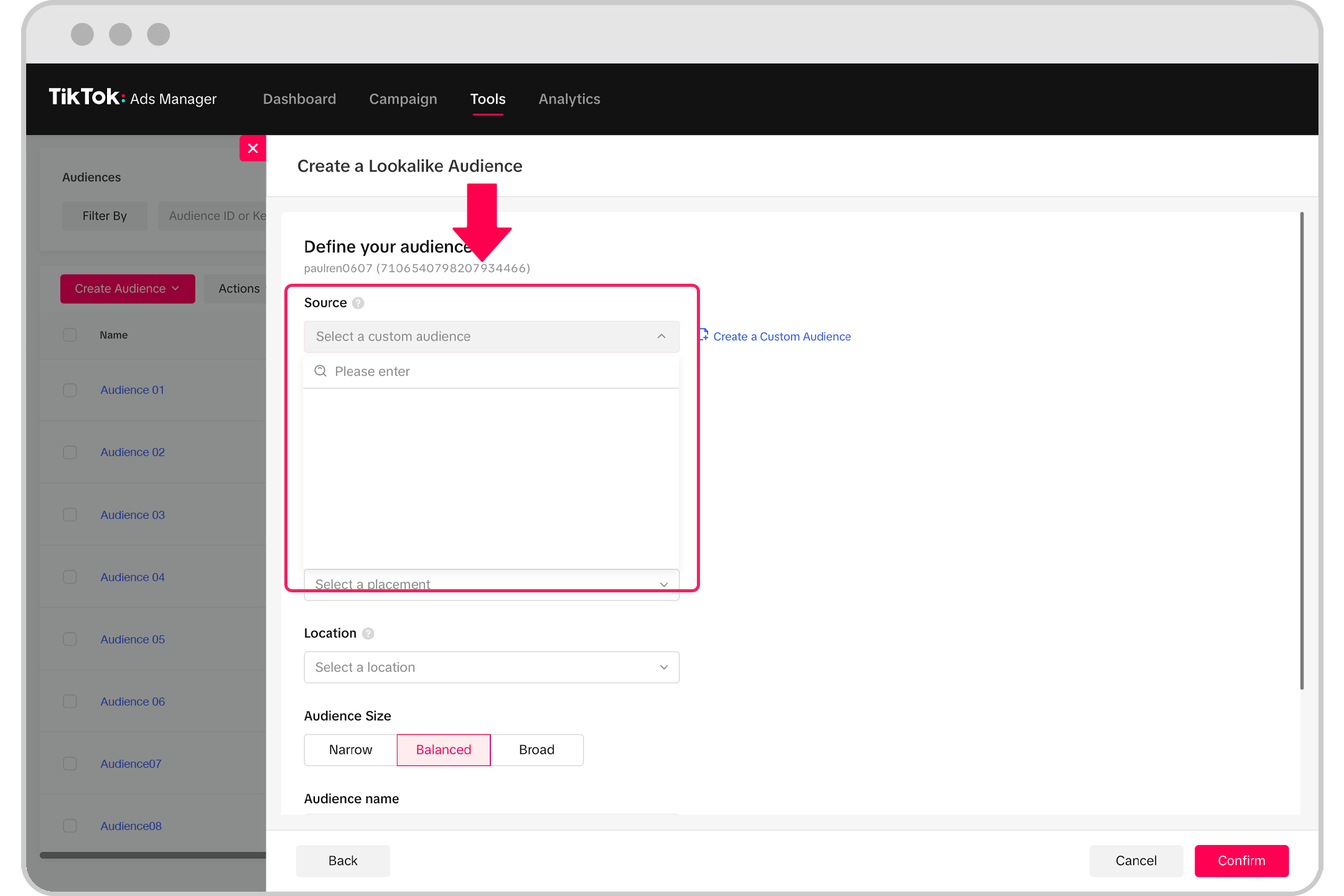
Creating a lookalike audience on TikTok involves several steps, including data preparation, audience creation, and optimization. Here’s a step-by-step breakdown:
1. Define Your Source Audience
Before you can create a lookalike audience, you need a source audience. This could be: - Your existing customers (from your CRM or e-commerce platform). - Users who have engaged with your TikTok content (e.g., liked, commented, shared, or followed your account). - Users who have interacted with your website or app.
Ensure your source audience is large enough—ideally, at least 10,000 users—to give TikTok’s algorithm enough data to work with.
2. Access TikTok Business Tools
To create a lookalike audience, you’ll need a TikTok Business Account. If you don’t have one, sign up for free at business.tiktok.com. Once logged in, navigate to the Audience Manager section under the Tools tab.
3. Upload Your Customer Data
If you’re using a source audience from your CRM or e-commerce platform, upload the user data (email addresses, phone numbers, etc.) to TikTok. Make sure the data is clean and properly formatted to avoid errors.
4. Create the Lookalike Audience
Once your data is uploaded, select the Lookalike Audience option. You’ll be prompted to choose the size of the lookalike audience (e.g., 1%, 5%, 10%). A smaller percentage gives a more precise match, while a larger percentage expands your reach.
5. Set Targeting Parameters
After creating the lookalike audience, you can further refine it by adding additional targeting parameters such as: - Age - Gender - Location - Interests - Behaviors
This helps ensure that your lookalike audience is as relevant as possible.
6. Launch Your Campaign
With your lookalike audience created, you can now launch your TikTok ad campaign. Choose the right ad format (in-feed video, TopView, Spark Ads, etc.), set your budget, and define your campaign goals (e.g., traffic, conversions, brand awareness).
Best Practices for Optimizing Lookalike Audiences

To get the most out of your lookalike audiences, follow these best practices:
1. Start with a Strong Source Audience
The quality of your lookalike audience depends on the quality of your source audience. Ensure that your source audience is active, engaged, and represents your ideal customer.
2. Test Multiple Lookalike Sizes
Experiment with different lookalike sizes (e.g., 1%, 5%, 10%) to see which performs best. Smaller audiences may yield higher conversion rates, while larger ones can help you scale faster.
3. Combine with Other Targeting Strategies
Use lookalike audiences in conjunction with other targeting methods, such as interest-based targeting or behavioral segmentation. This helps you reach a broader, more diverse audience while maintaining relevance.
4. Monitor Performance Regularly
Track key metrics such as click-through rate (CTR), conversion rate, and cost per acquisition (CPA). Use this data to refine your lookalike audiences and improve performance over time.
5. Update Your Source Audience Frequently
As your business evolves, so should your source audience. Regularly update your customer data to ensure that your lookalike audiences remain accurate and effective.
6. Use A/B Testing
Test different ad creatives, headlines, and calls-to-action (CTAs) to see what resonates best with your lookalike audience. A/B testing helps you identify the most effective strategies for driving engagement and conversions.
Common Mistakes to Avoid

While lookalike audiences are a powerful tool, there are some common mistakes that marketers make when using them:
1. Using a Small or Inactive Source Audience
If your source audience is too small or inactive, your lookalike audience won’t be effective. Always use a robust, engaged source audience.
2. Not Refining Your Targeting
Don’t rely solely on lookalike audiences. Combine them with other targeting strategies to ensure that your ads are reaching the right people.
3. Ignoring Performance Metrics
Failing to track and analyze performance metrics can lead to wasted ad spend. Always monitor your campaigns and adjust your strategy accordingly.
4. Overlooking Ad Creativity
Even the best lookalike audience won’t perform well if your ad creative isn’t engaging. Invest in high-quality, relevant content that resonates with your target audience.
5. Not Updating Your Data
Your source audience should reflect your current customer base. Failing to update your data can result in outdated lookalike audiences that no longer align with your business goals.
Conclusion

Lookalike audiences are a powerful way to expand your reach on TikTok while maintaining relevance and performance. By following the steps outlined in this guide, you can create and optimize lookalike audiences that drive real results for your brand. Whether you're a small business or a large enterprise, leveraging lookalike audiences can help you connect with new customers, boost engagement, and increase conversions.
Remember, the key to success on TikTok is consistency, creativity, and data-driven decision-making. By combining lookalike audiences with other marketing strategies, you can build a comprehensive TikTok advertising plan that delivers long-term growth and ROI.

Posting Komentar untuk "The Ultimate TikTok Ads Lookalike Audience Guide for Marketers"
Posting Komentar