
The Ultimate TikTok Ads Mobile Campaign Guide for 2024
TikTok has become one of the most powerful platforms for digital marketing, with over 1.5 billion monthly active users. For businesses looking to expand their reach and engage with a younger, highly active audience, TikTok Ads is an essential tool. However, launching a successful mobile campaign on TikTok requires more than just a good video—it involves understanding the platform’s structure, optimizing performance, and leveraging the right strategies. This guide will walk you through everything you need to know to create a high-performing TikTok mobile ad campaign in 2024.

Understanding TikTok Campaigns
A TikTok campaign is the top-level structure in TikTok Ads Manager that defines your advertising objective, budget, and overall strategy. When you create a TikTok ad campaign, you choose what you want to achieve—such as increasing brand awareness, driving traffic to a website, or boosting app installs. TikTok then uses this objective to optimize ad delivery.
Each campaign can include multiple ad groups, which contain targeting, placements, and bidding settings. Within each ad group, you can add one or more ads, which are the actual videos shown to users.
Think of a TikTok campaign as the foundation that guides all lower-level ad activity. If your campaign objective doesn’t match your true goal, or if the structure isn’t set up correctly, performance may suffer no matter how good your creatives are.
Types of TikTok Campaigns
There are several ways to categorize TikTok campaigns based on objectives, setup methods, and ad formats:
1. Campaigns by Objective
- Reach Campaigns: Focus on showing your ad to the largest number of users to increase brand awareness.
- Traffic Campaigns: Designed to drive users to a website or landing page.
- Video View Campaigns: Maximize exposure and watch time for your videos.
- Lead Generation Campaigns: Use TikTok’s built-in forms to collect customer data.
- App Promotion Campaigns: Aim to increase app installs or in-app engagement.
- Conversion Campaigns: Target specific actions like purchases or sign-ups on your site.
- TikTok Shop Campaigns: Drive sales directly within TikTok’s e-commerce ecosystem.
2. Smart+ vs Manual Campaigns
- Manual Campaigns: You manually control every setting—targeting, bidding, placements, and creative delivery. These are ideal for advertisers who want detailed control and customization.
- Smart+ Campaigns: AI-powered campaigns that automatically optimize targeting, creatives, and bidding. They’re fast to set up and work well for advertisers looking for efficiency and scale without manual adjustments.
3. Campaigns by Ad Format
Although TikTok doesn’t officially categorize campaigns by format, marketers often refer to campaign types based on the ad formats used: - In-Feed Ads: Appear in the For You feed as native-style videos. - TopView Ads: High-impact ads that appear when users first open TikTok. - Search Ads: Appear within TikTok’s search results when users enter relevant keywords. - Branded Hashtag Challenge Campaigns: Encourage users to participate in trending challenges with your brand theme. - Branded Effect Campaigns: Let users engage with your brand using interactive AR filters and effects.
How to Set Up a TikTok Campaign Step-by-Step
Once you’ve decided on the campaign type for your objective, the next step is setting it up correctly in TikTok Ads Manager. Follow this step-by-step guide to build a campaign that’s optimized from the start:
Step 1: Create Your TikTok Ads Manager Account
Set up your account via TikTok Ads Manager. Provide your business info, and billing details, and upload any required documents (e.g., ID or business registration).
Step 2: Launch a New Campaign
Navigate to the Campaign tab → click Create. You’ll need to: - Choose your campaign objective (Awareness, Consideration, or Conversion category) - Name your campaign - Optionally enable Campaign Budget Optimization (CBO) and set your campaign-level budget
Step 3: Set Up Ad Group Level
After choosing your campaign objective, set up your ad group: - Placements: Use auto-placement or customize across TikTok and partner apps - Targeting: Configure demographics (age, gender, location), interests, behaviors, and device info - Schedule & Budget: Define daily or lifetime budgets and set campaign timing - Bidding Strategy: Choose between Lowest Cost or Cost Cap and align bidding optimization with your objective (e.g., clicks, conversions)
Step 4: Create Your Ad
Within your ad group: - Upload new creative or use an existing post (for Spark Ads) - Name your ad, configure branding elements (e.g., display name, profile image) - Write compelling ad copy, add a CTA, and specify your destination URL (or TikTok Shop link) - For performance tracking: Add UTM parameters, install the TikTok Pixel, and configure conversion events
Step 5: Review, Submit & Launch
Check all settings via Ads Manager’s review interface. Submit the campaign for TikTok review (typically completed within 24 hours), and your ad will go live on the scheduled date/time.
If you’d like, use Smart+ Campaigns (TikTok’s AI-powered format) to automate targeting, bidding, creative rotation, and optimization. Smart+ supports major objectives like web conversions, app installs, leads, and traffic, simplifying the setup process.
Factors That Impact TikTok Campaign Performance
Even with the right setup, your TikTok campaign’s performance can vary greatly depending on several key factors. Below are the most important elements that influence how well your campaign delivers and converts:
1. Campaign Objective Alignment
One of the most important factors affecting campaign performance is how well the selected objective aligns with the campaign’s actual goal. TikTok’s ad system delivers and optimizes based on the objective chosen during setup, such as Traffic, Conversions, or App Promotion.
When this doesn’t match the intended user action, the algorithm sends the ad to users less likely to convert. For instance, choosing a Traffic objective for a sales campaign may drive high clicks but low purchases, because the system is optimizing for link visits, not buying behavior.
2. Ad Creative
The creative used in a TikTok campaign plays a central role in how the system ranks and delivers the ad. Creatives that mimic organic TikTok content—vertical video, native audio, fast pacing—tend to perform better because they match user expectations.
On the other hand, overpromoting videos often underperform due to low watch time. If the creative does not match TikTok’s content style, the platform may suppress delivery even if targeting and bidding are correct.
3. Tracking Infrastructure and Event Configuration
TikTok’s ability to optimize and scale ad delivery depends heavily on accurate conversion tracking through the Pixel or App Events SDK.
Without proper event setup, such as View Content, Add to Cart or Complete Payment, the algorithm lacks the data needed to learn which users are most valuable. Consequently, campaigns often rely only on clicks or views, which do not reflect true outcomes.
4. Audience Targeting Method
The targeting method is not just a setup detail. It directly impacts how efficient and scalable your campaign becomes. TikTok’s system is designed to work best with broad targeting, especially for Smart Performance Campaigns or when using automatic targeting. Narrow, layered targeting often limits learning and increases the cost per result.
5. Placement Selection and Distribution
TikTok campaigns can be shown across multiple placements, including TikTok, Pangle (for Android apps), and other partner apps. The way placements are selected affects both visibility and cost.
TikTok’s auto-placement option is designed to maximize delivery. But it may push more budget toward lower-cost channels, which may not align with your campaign goals. On the other hand, restricting placements to TikTok only may improve relevance but limit reach or drive up costs.
6. Budget Allocation
Budget is another key factor that affects the performance of a TikTok campaign. A limited budget can slow down optimization, while a high budget without clear targeting or structure can lead to fast spending with low returns.
TikTok requires at least $50 per day at the campaign level and $20 per day at the ad group level, but going just above the minimum doesn’t guarantee success. Consequently, if the daily budget is too low, the campaign may not exit the learning phase, resulting in unstable delivery and inconsistent results.
Tips to Optimize Your TikTok Campaign Performance
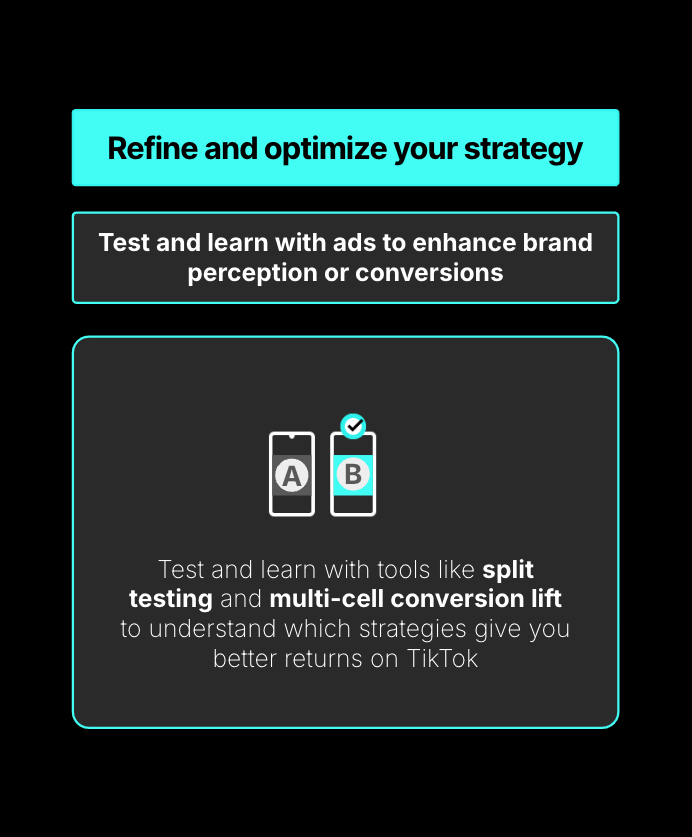
Once your TikTok campaign is up and running, the real work lies in refining it for better results. Use the following tips to optimize performance and maximize your return on ad spend.
1. Respect the Learning Phase
A TikTok campaign begins in a learning phase when the algorithm collects data to optimize delivery. During this time, performance metrics such as cost per action may fluctuate because the system is still figuring out who to show your ads to.
Hence, rushing or making major changes during this critical period, such as altering your creative, targeting, budget, or bids, can reset the learning phase and delay optimization.
TikTok itself advises avoiding adjustments before the group reaches approximately 50 conversions. Campaigns that respect this 5–7-day learning window also tend to stabilize faster and deliver more efficient results once the system has learned the optimal audience.
2. Test Hook Variations Across Ads
The opening hook of your TikTok ad directly influences whether viewers stop scrolling, and TikTok rewards ads that hook early. One of the most important signals is the hook rate, which tells you what percentage of people watched at least the first 2 seconds of your video.
If your hook rate is low, TikTok sees your ad as less engaging and may limit delivery or raise costs. According to benchmarks from Tuff Growth, the average hook rate on TikTok Ads is around 30.7%, while top-performing ads hit 40-45%.
Testing hook variations is one of the easiest ways to improve this. For example, a nutrition brand could try three opening lines: “Struggling to lose weight?”, “This daily snack melts fat,” and a silent smoothie visual to see what drives better view counts.
3. Start Broad, Then Narrow
TikTok’s system is built to thrive when given flexibility, and broad targeting at campaign launch gives the algorithm room to optimize efficiently.
According to TikTok’s April 2026 update, setting a “fairly broad” audience that is, covering around 80% or more of a country’s users, tends to result in 15% lower cost-per-action and 20% higher conversion rates compared to narrowly targeted campaigns.
Therefore, you should start with a wide audience to let TikTok identify high-performing users. Once you see where your ads gain traction, narrowing or layering additional segments on top can help fine-tune costs and boost ROI, but only after the initial broad pool has informed the algorithm.
4. Analyze Drop-Off Points in Funnel
You need to study funnel drop-off because this rate might weaken TikTok’s optimization. If users click but don’t convert, the algorithm receives misleading signals and may show your ads to people unlikely to take action.
For example, a brand noticed a strong click-through rate but saw only a few purchases. An audit revealed many users were dropping off during the checkout process on their mobile site. This helps them better understand the mobile site’s structure or page loading problem and upgrade it timely.
5. Duplicate Winning Ad Groups for Scaling
Once an ad group is performing well, duplicating it is one of the safest ways to scale without hurting current results. This gives TikTok a fresh chance to find new audiences using assets that already convert. You can also use duplication to test new placements, bid types, or time-of-day settings.
For example, if one ad group using lowest-cost bidding performs well, you can duplicate it and try a cost cap strategy to see if you can maintain volume with more predictable results. Or you can keep the same setup but raise the budget slightly in the new copy, letting it scale independently while preserving performance in the original.
Real Examples of Successful TikTok Ad Campaigns
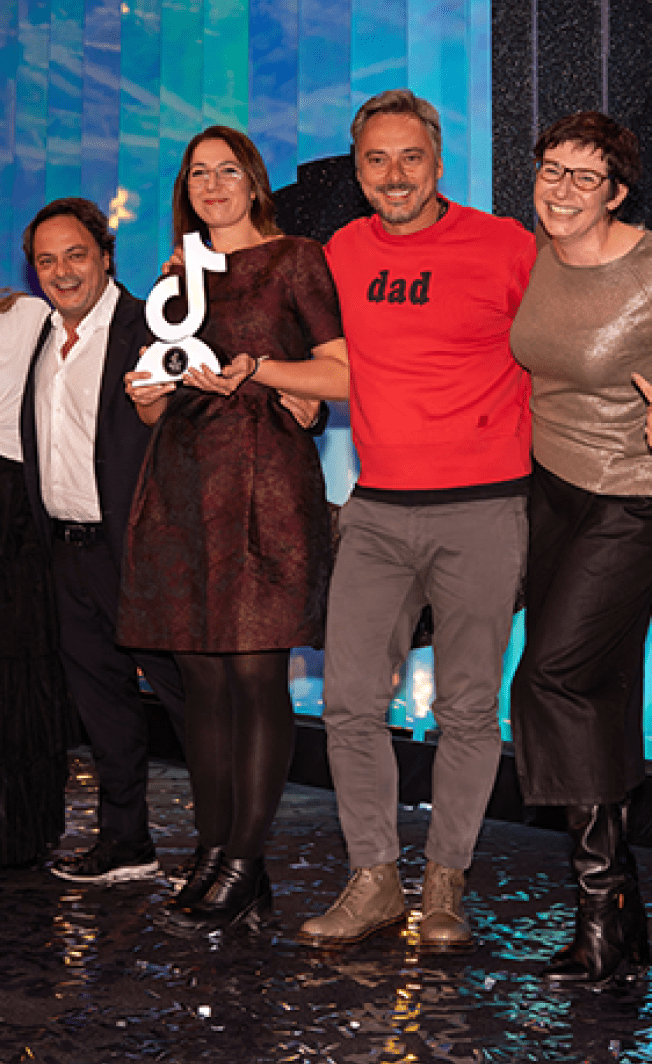
Seeing how other brands run effective TikTok ad campaigns can offer practical insights you can apply to your own. Below are real examples that show how different strategies and ad formats deliver measurable results:
1. Maybelline – Using Spark Ads & Creators
To launch its Colossal Curl Bounce Mascara, Maybelline partnered with seven TikTok creators and ran a combined campaign using Spark Ads and standard In-Feed Ads. The campaign featured creators with native-style videos blending into the For You feed.
This approach helped Maybelline reach 28 million views, drove a 4.9% uplift in sales, and lifted product awareness by 12%, according to TikTok.
2. Amazon Singapore – Hashtag Challenge
For Prime Day, Amazon Singapore launched the #UnboxAmazonPrimeSG Branded Hashtag Challenge, encouraging users to film unboxing reactions using a branded effect. To maximize visibility, the campaign was supported by TopView and One Day Max ad formats.
The results? 909,000 unique users, 3.6 million views, and over 9,100 UGC videos submitted!
Wrap Up
Running a successful TikTok ad campaign takes more than just a good video. It requires the right setup, creative strategy, and ongoing optimization. From choosing the right objective to analyzing performance and scaling what works, every step matters.
If you want expert help planning and managing your TikTok ad campaign, check out Mega Digital’s TikTok advertising service to get started with a team that understands how to drive real results!

Posting Komentar untuk "The Ultimate TikTok Ads Mobile Campaign Guide for 2024"
Posting Komentar