
Understanding TikTok Ads Reporting and Analytics: A Complete Guide
TikTok has become a powerful platform for brands to reach a massive audience, especially Gen Z and millennials. However, with the rise in popularity comes the challenge of understanding how to effectively measure and optimize ad performance. This is where TikTok Ads reporting and analytics come into play. By leveraging the right tools and metrics, businesses can gain valuable insights into their campaigns, refine their strategies, and ultimately achieve better results.
What Are TikTok Ads Metrics?

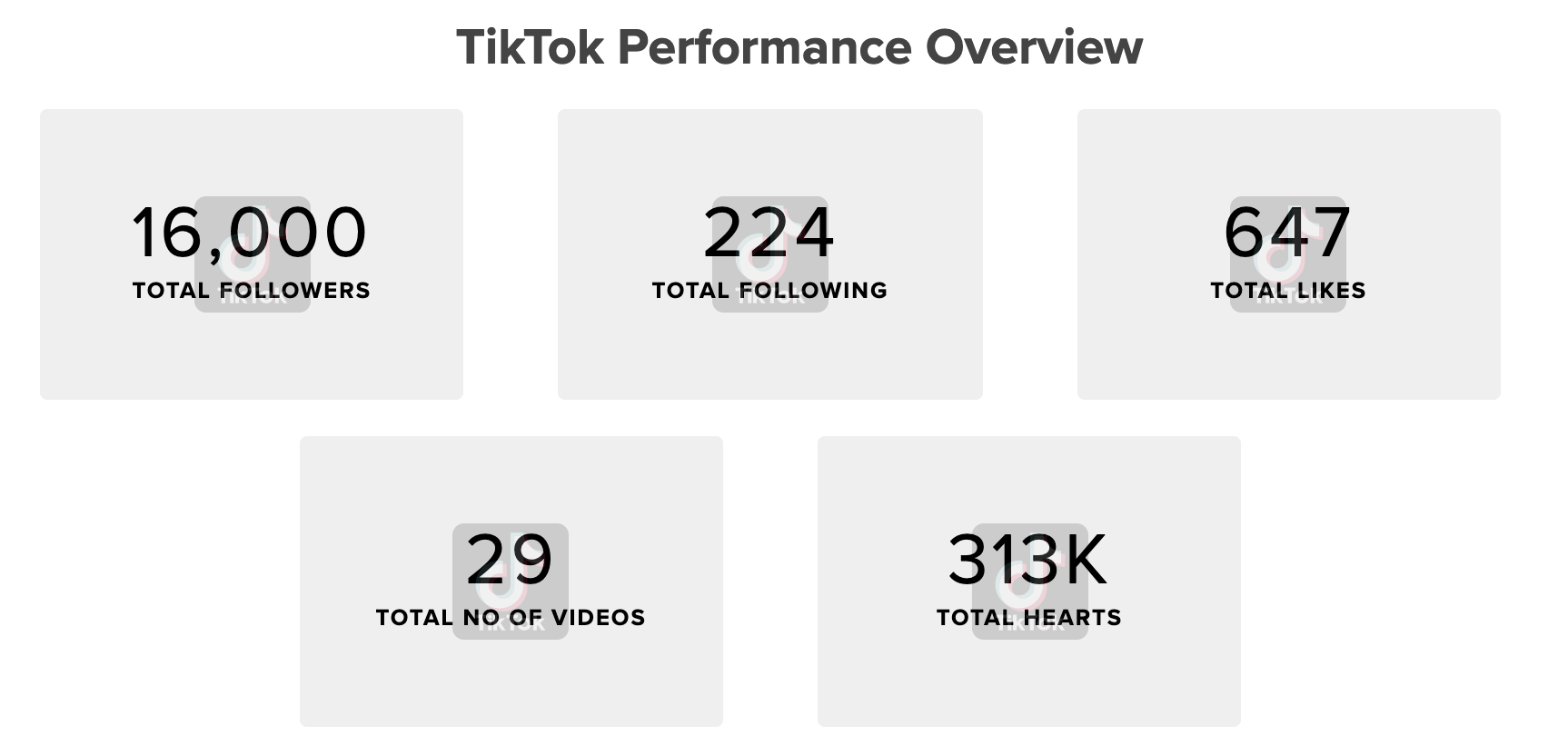
TikTok Ads metrics are the performance data points that show how your ad campaigns are doing on the platform. These metrics include numbers like impressions, reach, CTR (Click-Through Rate), and more. They help you understand what’s working, what’s not, and where to adjust, whether you’re aiming for awareness, clicks, or conversions.
These metrics are available in TikTok Ads Manager and other tracking tools like TikTok Pixel or Events API. They provide a comprehensive view of your campaign's effectiveness, allowing you to make informed decisions and optimize your budget wisely.
Why Measuring TikTok Ads Metrics Matters

Measuring TikTok Ads metrics is essential for several reasons:
-
Improve Ad Performance: Tracking the metrics can help businesses get deeper insights into how well their ad campaigns are performing. If the metric is lower than expected, brands should be checking on the creative assets to see if it’s targeting a specific audience size. Hence, they can identify the problem more easily and fix the creatives or targeting timely.
-
Cut Down Promotional Costs: TikTok ads require creators to spend at least $500 for an ad campaign, which is quite expensive if it is not bringing back results. By optimizing TikTok Ads metrics, brands are able to cut down TikTok ads costs and save that money for different types of investment.
-
Make Data-Driven Decisions: With accurate metrics, brands can make informed decisions about their ad strategies, ensuring that every dollar spent is contributing to measurable outcomes.
11 Most Important TikTok Metrics to Track
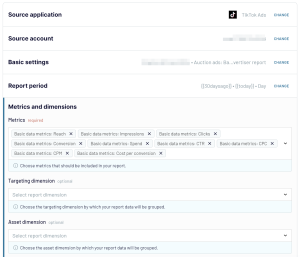
Tracking the right metrics is the only way to truly understand how your TikTok ads are performing. Below are 11 of the most important TikTok metrics to focus on in 2026 and what they actually tell you:
1. Impressions
Impressions tell you how many times your ad is shown on TikTok. Every time your ad appears on someone’s screen, even if they don’t interact with it, it counts as one impression. If the same person sees your ad more than once, each view still adds to the total. This number helps you understand how often your ad is being delivered to users.
Benchmark: There is no universal “good” number because it depends on your campaign budget and audience size. However, frequency is a key indicator of whether impressions are reasonable.
2. Reach
Reach tells you how many different people saw your ad. It doesn’t matter if one person sees the ad 3 or 10 times. They still count as one in Reach. That’s why Reach is useful when you want to know how wide your ad actually spreads.
Benchmark: For smaller test campaigns, 10,000 to 50,000 users reached is solid. For broader brand awareness efforts, aim for 100,000 or more users reached.
3. Frequency
Frequency tells you how often the average user saw your ad during the campaign. This helps you spot two things: too little exposure or overexposure.
Benchmark: For awareness campaigns, aim for a frequency of 3 to 5. For conversion-focused campaigns, aim for 5 to 7.
4. Clicks (Destination)
This metric counts how many people clicked on your ad and were taken to your website, app, or product page. It does not include likes, shares, or other interactions — just the actual clicks that move users to where you want them to go.
Benchmark: There is no fixed benchmark for raw click numbers, since it depends on your budget and reach. However, a related metric, CTR (click-through rate), is commonly used to evaluate click performance.
5. CTR (Click Through Rate)
CTR shows how many people clicked your ad after seeing it. On TikTok, this is based only on meaningful clicks, like a tap on your call to action, not likes or comments.
Benchmark: The average CTR for TikTok ads is around 0.84 percent across industries. For In-Feed ads specifically, a range of 1.5 to 3 percent is considered good.
6. CPC (Cost per Click)
CPC tells you how much money you are spending for each click on your ad. It is one of the best ways to measure how efficiently your budget turns into real actions.
Benchmark: According to Varos (April 2026), TikTok’s median CPC is around $0.99. A healthy range is $0.20 to $0.50, though this varies by industry, objective, and ad format.
7. CPM (Cost per Thousand Impressions)
CPM tells you how much you pay for every 1,000 views of your ad. It is a simple way to measure how efficiently you’re buying visibility.
Benchmark: TikTok’s average CPM is around $3.21, according to Lebesgue. During big events or holidays, CPM can go up to $10 or more.
8. CPV (Cost per View)
Cost per View tells you how much each video view costs. On TikTok, a “view” typically means someone watches at least 6 seconds of your video, or interacts with it during that time.
Benchmark: TikTok benchmarks suggest $0.10 to $0.30 is a solid CPV range for most ads.
9. CPA (Cost per Action or Conversion)
CPA tells you how much, on average, each conversion costs, like a purchase, signup, download, or any goal you set. It shows how efficiently your ad turns clicks or views into real results.
Benchmark: Reports show a typical TikTok CPA ranges from $10 to $30 for e-commerce campaigns, depending on product and industry.
10. CVR (Conversion Rate)
CVR shows the percentage of people who converted after clicking your ad. A “conversion” depends on your goal. It could be a purchase, app install, form submission, or other action.
Benchmark: According to Lebesgue, the average CVR for TikTok Ads is 2.5 percent, but high-performing campaigns can reach 5 to 10 percent, especially in e-commerce.
11. ROAS (Return on Ad Spend)
ROAS tells you how much revenue you earn for every dollar you spend on ads. It is one of the most important metrics for measuring whether your ad campaign is truly profitable.
Benchmark: A ROAS of 2.0 or higher is often seen as the break-even point for e-commerce, depending on product margins. Strong campaigns can hit ROAS of 3 to 4, and some high-performing brands report 5+ during sales or seasonal campaigns.
Analytics Tools to Track TikTok Ads Metrics
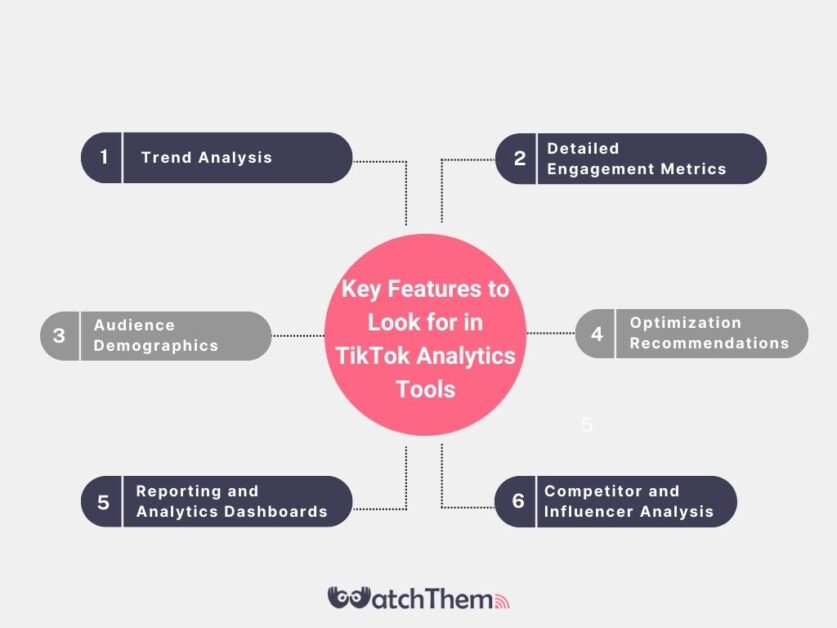
To measure your TikTok ads performance accurately, you need the right tracking tools, not just the metrics themselves. Below is a breakdown of the main tools you can use to collect, view, and analyze those metrics effectively.
1. TikTok Ads Manager
TikTok Ads Manager is the main tool for tracking the performance of your paid campaigns. It gives you access to all key ad metrics like impressions, clicks, CTR, CPM, CPC, CVR, ROAS, and more.
2. TikTok Pixel
If your campaign is focused on sales, leads, or other actions beyond just clicks, the Pixel is a must-have for accurate tracking. TikTok Pixel lets you measure what users do after they click on your ads, like viewing a product, adding to cart, or making a purchase.
3. TikTok Events API
TikTok Events API works alongside or in place of the Pixel to track conversion events more accurately. Instead of relying on browser activity, it sends data directly from your server to TikTok. This reduces the risk of missed conversions due to ad blockers, slow-loading pages, or tracking restrictions.
Common Issues with TikTok Ads Metrics and Fixes
If your TikTok Ads metrics aren’t showing up in the dashboard, don’t panic. Here are some common causes and quick fixes:
- Attaching Reach-based metrics: Ensure the "Total of" section is checked in the metrics dropdown to avoid counting duplicates.
- Using dimensions that identify users while adding metrics: Avoid overlapping dimensions when comparing raw totals.
- Deleted campaigns are not included in your total: Include deleted items in your filters to ensure all data is displayed.
Conclusion
Understanding TikTok Ads reporting and analytics is crucial for any business looking to maximize the impact of their ad campaigns. By focusing on the right metrics, using the appropriate tools, and addressing common issues, brands can gain valuable insights, optimize their strategies, and achieve better results on TikTok. Whether you're a small business or a large enterprise, leveraging these analytics will help you stay competitive in the ever-evolving world of digital marketing.

Posting Komentar untuk "Understanding TikTok Ads Reporting and Analytics: A Complete Guide"
Posting Komentar