
How to Create a Step-by-Step TikTok Advertising Campaign in 2024

TikTok has evolved from a platform for short-form entertainment into a powerful tool for brands looking to connect with audiences, drive engagement, and boost sales. With its unique algorithm and focus on discovery, TikTok offers a fresh approach to digital marketing that can be highly effective when executed properly. If you're looking to create a step-by-step TikTok advertising campaign in 2024, this guide will walk you through the essential steps to build a successful strategy.
Understanding TikTok's Unique Marketing Landscape

TikTok is fundamentally different from other social media platforms like Instagram or YouTube. Its algorithm prioritizes content performance over follower count, meaning that even smaller accounts can gain significant traction if their content resonates with users. The platform’s For You Page (FYP) is the primary driver of visibility, making it crucial to create content that captures attention quickly and keeps viewers engaged.
Why TikTok Matters for Brands
- Massive Organic Reach Potential: Unlike traditional platforms, TikTok allows brands to reach non-followers through its FYP-based distribution model.
- Lower Ad Costs: TikTok's cost-per-thousand impressions (CPM) is often lower than Meta's platforms, making it an efficient choice for testing creatives.
- Stronger Engagement Rates: TikTok users tend to engage more with content that is entertaining, immersive, and native to the platform.
- Social Commerce Growth: With features like TikTok Shop, brands can now convert views into sales directly within the app.
Step 1: Define Your Goals

Before launching your TikTok advertising campaign, it's essential to define clear objectives. What do you want to achieve? Common goals include:
- Brand Awareness: Increase visibility and recognition among your target audience.
- Lead Generation: Drive traffic to landing pages, quizzes, waitlists, or newsletters.
- Direct Sales: Convert views into purchases using TikTok Shop or affiliate links.
- App Installs: Promote mobile applications by showcasing their value and functionality.
Tip: Focus on one primary goal at a time. A clear objective will help shape your content, messaging, and metrics for success.
Step 2: Identify Your Target Audience
Understanding who your audience is on TikTok is critical. Unlike traditional social media, TikTok users are often driven by interests rather than existing connections. To identify your target audience:
- Behavioral Segmentation: Analyze what actions your audience takes—searching, saving, commenting, or buying.
- Interest Clusters: Identify topics your customers binge-watch. For example, a skincare brand might focus on "acne solutions," "derm tips," or "product dupes."
- Trend Participation Patterns: Observe which trends your audience engages with most—tutorials, reviews, or viral challenges.
Quick Win: Pull 20 top videos from your niche and label them by viewer intent (learn, laugh, compare, buy). This gives you a starting blueprint for your content.
Step 3: Analyze Competitors and Viral Content

To refine your strategy, study what competitors are doing—and where they might be falling short. Look for:
- Content Gap Analysis: Identify what competitors post repeatedly and what they fail to explain well (e.g., pricing clarity, product benefits).
- Hook Patterns: Save openings that consistently win—bold claims, unexpected reveals, quick demos, or "3 mistakes" formats.
- Video Structure: Most viral brand videos follow a simple sequence: Hook → Proof → Payoff → CTA. Reverse-engineer these formats to improve your own content.
Pro Tip: Separate "viral entertainment" from "viral conversion." While both are valuable, knowing which one you're building helps you tailor your approach.
Step 4: Build a TikTok Content Strategy
Once you have a clear understanding of your goals and audience, it's time to build a content system that aligns with TikTok’s culture.
Content Pillars
Create a mix of content types to keep your audience engaged: - Educational: Tutorials, myths, tips, and breakdowns. - Entertaining: Trend-led videos, relatable humor, and POVs. - Promotional: Demos, offers, testimonials, and comparisons.
Trend Hijacking
Use trends as a delivery mechanism for your message. Don’t force it—only engage with trends that align with your brand and customer problems.
Storytelling Formats
Experiment with formats like “Day in the Life,” “Behind the Product,” or “From Problem to Result” to tell compelling stories that resonate with your audience.
Step 5: Create a Posting & Testing Framework
Consistency is key, but so is learning. Build a system that allows you to maintain quality while iterating on what works.
- Posting Frequency: Start with 3–5 posts per week. Quality and retention matter more than volume.
- A/B Testing Hooks: Test one variable at a time—hook line, first visual, angle, or CTA. Keep the rest similar to isolate what drives performance.
- First 3-Second Retention Strategy: Use movement, a clear promise, a bold result, or instant proof to stop the scroll.
Simple Testing Loop: Post → Review Retention + Shares → Make 2 Improved Versions → Repeat Weekly.
Step 6: Leverage TikTok SEO
TikTok is now a search-driven platform. Optimize your content for long-term discoverability by:
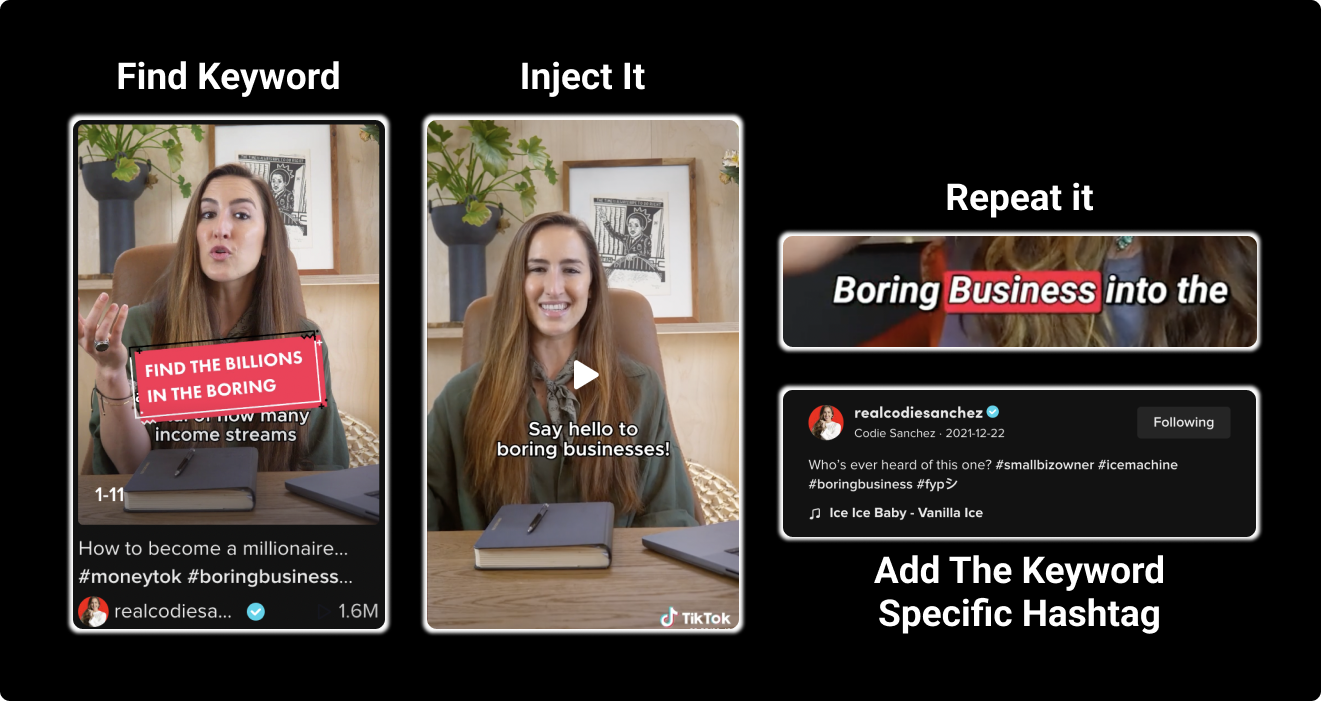
- Keyword-Based Captions: Write captions like mini search answers. Include your primary keyword naturally (e.g., “TikTok marketing strategy for brands”) plus a specific angle (“for ecommerce,” “for small business”).
- On-Screen Text Optimization: Put the main keyword or question on screen. TikTok often reads this text, and users scan it while scrolling.
- Voiceover Keywords: Say the keyword out loud in the first 5–8 seconds. Spoken words reinforce relevance for search discovery.
- Search Intent Targeting: Create videos that match real queries like “how to develop a TikTok marketing strategy” or “TikTok strategy for brands.”
Best Practice: Build a “TikTok search series” alongside your trend content for stable, compounding views.
Step 7: Implement Paid Ads Strategically
Once your organic content proves traction, paid ads can accelerate growth. Consider these ad formats:
- In-Feed Native Ads: Native-style TikTok ads that appear in the For You Page. Best for performance campaigns and creative testing.
- TopView Ads: High-impact placements shown when users open the app. Ideal for major launches or brand awareness pushes.
- Spark Ads: Boost high-performing organic or creator content. This keeps social proof intact while scaling reach.
- Retargeting Funnel: Build audiences from video viewers, profile visitors, and add-to-cart users. Retarget with testimonials, comparison videos, and limited-time offers to drive conversions.
Creative Testing Framework: Test variables in structured batches—hook variations, different CTAs, problem vs benefit angle, UGC-style vs brand-shot. Pause low-retention ads quickly and scale those with strong watch time and high CTR.
Final Thoughts
Creating a step-by-step TikTok advertising campaign requires a blend of creativity, data, and consistency. By defining clear goals, understanding your audience, and leveraging TikTok’s unique features, you can turn views into clicks, leads, and sales. As the platform continues to evolve, staying agile and experimenting with new formats and strategies will be key to long-term success.

Posting Komentar untuk "How to Create a Step-by-Step TikTok Advertising Campaign in 2024"
Posting Komentar